


New VR-funded project explores how speaker efficiency reshapes grammar

Speakers are efficient: they balance minimal effort against the need to be understood, and so they shorten what is easy to predict and add linguistic material where it is needed. But over time, these shortened and reinforced forms can also conventionalize and spread into contexts where they no longer make communication more efficient. Does language then become less efficient, or do the forms take on new functions? This is what the new research project USER-GRAM sets out to investigate.
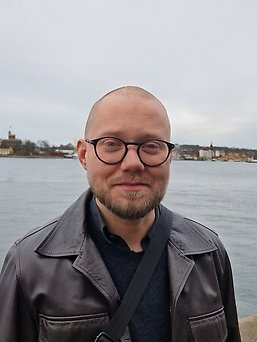
USER-GRAM: Uncovering how Speaker Efficiency Reshapes Grammar is funded by the Swedish Research Council (Vetenskapsrådet, VR) and runs from 1 January 2027 to 31 December 2030. The project is led by Matti Marttinen Larsson, Associate Professor of Romance Languages, specializing in Spanish, at the Department of Romance Studies and Classics, Stockholm University.
Efficiency is a major force behind the emergence of new linguistic forms, some of which may eventually become a fixed part of grammar. Using historical corpora and quantitative methods, the researchers will trace such developments over several centuries in five languages: English, French, Portuguese, Spanish and Swedish. The project examines how shortened and reinforced forms spread through grammar, how they acquire new meanings and stylistic values, and whether efficiency-driven change is especially prone to cyclicity, oscillating between reduction and enhancement.
Read more about USER-GRAM on Stockholm University's website.
Last updated: 2026-09-23
Source: Department of Romance Studies and Classics