
News

  • Close up of addicts using drugs.

    New Thesis Sheds Light on Who and What Really Shapes Swedish Drug Policy

    The drug policy in Sweden is not shaped by evidence alone. Rather, it is a complex policy arena driven by competing moral frameworks and values, in which participation in policymaking processes largely leaves people who use drugs and their families out of the discussion. This is shown in a new thesis in Public Health Sciences by PhD student Tuulia Lerkkanen at Stockholm University.

    Department of Public Health Sciences

  • City street view near the Karolinska University Hospital in Solna, Sweden.

    Swedish Government’s Proposal for Residence-Based Eligibility Rules for Social Security Benefits Risks Deepening Inequalities

    Sweden’s long-standing reputation as a global leader in universal social welfare is facing a critical turning point. A new reform proposed by the Swedish government would introduce stricter residence-based eligibility rules, requiring migrants to live in Sweden for at least five years within a fifteen-year period in order to qualify for social security benefits. According to researchers from the Department of Public Health Sciences at Stockholm University, the proposal risks undermining the foundational principle of equal access to welfare and may significantly widen existing health and social inequalities.

    Department of Public Health Sciences

  • Close
up of young father holding his newborn baby son in his arms.

    New Research Project Puts Sweden´s Parental Leave Under the Microscope: Impacts on Mental Health Across Life

    A new research project at Stockholm University is set to examine how one of Sweden’s most influential social reforms – the introduction of parental leave – has shaped mental health across generations. Led by Helena Honkaniemi-Hoppe, researcher at the Department of Public Health Sciences, the project has been awarded SEK 3.31 million in funding from Riksbankens Jubileumsfond over three years.

    Department of Public Health Sciences

  • Two young schoolgirls standing with their arms around each other inside a school library during the day 

    Childhood Friendships Could Have an Impact on Income, Mobility and Health

    The people you were sitting next to in school may matter more than you think. For children from a low-income background, having a friend from a more privileged background may be enough to succeed later in life and thus also have better health. This is shown in a new thesis by PhD student Klara Gurzo from the Department of Public Health Sciences at Stockholm University.

    Department of Public Health Sciences

  • Portrait of a depressed young woman.

    Loneliness at Age 18 May Contribute to Depression and Anxiety in Young Adults

    Loneliness during the transition from adolescence to adulthood may contribute to mental health problems, according to new research from the Department of Public Health Sciences at Stockholm University. A recently published study shows that young people who felt lonely at age 18 were more likely to develop depression and anxiety in the following years, both in the form of clinical diagnoses and self-reported symptoms.

    Department of Public Health Sciences

  • Profile picture of Alexandra Högberg

    From Political Science to Global Public Health – Meet Our Alumna Alexandra Högberg

    When Alexandra Högberg graduated from the Master’s Programme in Public Health Sciences at Stockholm University in 2022, she had already gained experience far beyond lecture halls and classrooms. From legal work at a law firm to field studies in Mozambique and project management across several African countries. Today, she works with international development aid and digitalization at SPIDER, a center at Stockholm University, and she clearly sees the connections between her studies and her current role.

    Department of Public Health Sciences

  • Students outside at Stockholm University

    Public Health Sciences is the Fourth Most Sought-After International Master’s Programme at Stockholm University

    The Master’s Programme in Public Health Sciences is one of the international master’s programmes at Stockholm University that attracts the highest number of applicants. With 1,064 applicants, the programme ranks as the fourth most popular at the university. This is shown by statistics from UHR (the Swedish Council for Higher Education) following the close of applications for international master’s programmes starting in the autumn semester of 2026 on January 15.

    Department of Public Health Sciences

  • Woman´s hand reaching for a pill beside a glass of
water on a table.

    Workplace bullying linked to use of antidepressants

    Being bullied at work doesn’t just make people miserable in the moment – it may also push them toward needing medical treatment for mental health problems. A new study in Public Health Sciences from Stockholm University suggests that employees who are being exposed to bullying in the workplace are more likely to start treatment with psychotropic medication, particularly antidepressants, within just two years.

    Department of Public Health Sciences
  • Newspaper advertisement from Stockholm Municipality in the newspaper Arbetet, 31 March 1947.

    World War II Turned the Condom into a Public Health Tool in Sweden

    During World War II, Sweden was officially neutral – but life at home was anything but untouched by the conflict. A new study from the Department of Public Health Sciences at Stockholm University shows that the war years fundamentally changed Swedish thoughts about sexual health, helping turn the condom from one protective option among many into the dominant safeguard against venereal disease. The effect was a long-term transformation of sexual health practices in Sweden.

    Department of Public Health Sciences
  • The
emergency clinic at Skåne University Hospital in Malmö, Sweden.

    Swedish-born adults with a foreign background were disproportionately affected by the pandemic

    Adults with an immigrant background – that is, both people born abroad and their Swedish-born children – had a significantly higher incidence of severe COVID-19 compared with Swedish-born individuals with two Swedish-born parents. This is shown by a new study conducted by public health researchers at Stockholm University. According to the research team, addressing social inequalities is a key strategy for improving preparedness for future pandemics.

    Department of Public Health Sciences
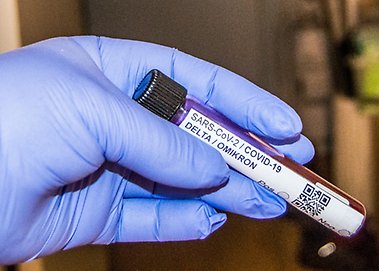
  • Those Hit Hardest by COVID-19 Were the Least Likely to Get Tested

    A new study in public health sciences from Stockholm University shows clear social differences in who got tested for COVID-19 during the first phase of the pandemic. The results suggest that the groups running the highest risk of becoming seriously ill were also the least likely to get tested – partly due to fear of the indirect consequences of a positive result. This may have concealed the true extent of the virus’s spread.

    Department of Public Health Sciences