


“I would love to combine all my skills in impactful projects that improve public health”
Studying public health sciences at Stockholm University offers a unique blend of theoretical knowledge and practical application. Lisa Pitozzi, a second-year student at the bachelor´s programme at Stockholm University, moved to Stockholm from Switzerland where she previously had studied medicine. For her the experience has been nothing short of transformative. She even learned Swedish to be able to study the bachelor´s programme.
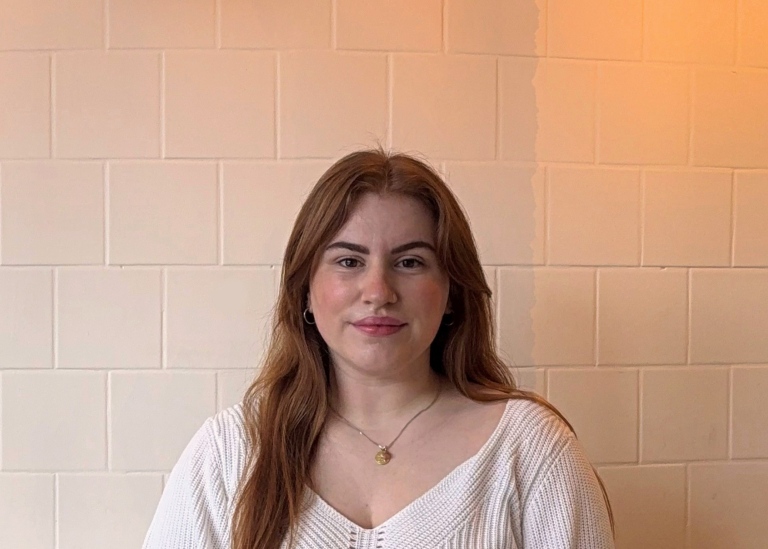
Photo: Private
“I really enjoy the programme, and I am happy that the courses provide a good mix of theoretical and practical knowledge,” Pitozzi says. “It has been great fun to explore health from a broader perspective rather than just taking an individual medical approach. I am looking forward to the more practical third year when we get to do an internship and write our thesis.”
Coming from a background in medicine, her interest in public health sciences was sparked by a growing curiosity about systemic health strategies. Originally from Switzerland, she studied medicine with a specialization in alternative medicine, but a desire to make a broader impact led her to seek new opportunities.
“I really enjoyed helping people. But at the same time, it was very frustrating because you could succeed in helping some people but not others,” she explains. “I started asking myself, ‘What can I do to help people not to get ill instead of treating them when they are already ill?’ The more I got into my studies, the more I questioned why certain health issues occur and what we can do to change that.
Finding Public Health Sciences in Stockholm
During the COVID-19 pandemic, she decided to get a change of air and explore new possibilities. Having always been interested in Nordic culture and Sweden’s reputation for inclusivity, she moved to Stockholm in autumn 2021 to work as an au pair for a Swedish family. Something that also helped her learn to speak the Swedish language.
It was at a dinner party that she first encountered public health sciences. She met a woman who was studying the master’s programme in public health sciences at Karolinska Institutet, and she told her about her studies.
“She was working on AIDS research, and that sounded really interesting. That night, I started googling and researching the public health programmes at Karolinska Institutet and Stockholm University, and that’s how I ended up here.”
Learning and Looking Ahead
Reflecting on her studies, one of the most valuable skills she has gained is the ability to work with and analyze data on a larger scale, she points out.
“I have learned how to analyze data, and how to apply the analyses for different purposes.”
As for her third year in the bachelor´s programme, she has already begun exploring internship possibilities, particularly those focused on women’s health.
“I that could be really interesting, and potentially it could also be a great direction for my thesis.”
Life As a Student in Sweden
Comparing studying in Switzerland and in Sweden, she notes certain key differences between Swiss and Swedish academic cultures.
“Swiss universities tend to be more structured and rigorous, with a focus on exams and memorization. In Sweden, it’s more discussion-based, with a lot of group work and encouragement of critical thinking,” “I’ve never been the biggest fan of group work, so I had to adjust my mindset, but now I enjoy it.”
Life as a student in Stockholm has been enriching, though different from her previous university experience.
“I love Stockholm as a city, it really feels like my second home. The university has a very open and inclusive environment. I appreciate the independence students are given, and while it comes with more responsibility, it also allows for flexibility in my daily life.”
In addition to her studies, she works at a cookie shop, which adds an interesting contrast to her academic life.
“It is a fun balance to have. I don’t have much time for the student party scene, but that doesn’t bother me. I stay engaged by being an active member of the student council and other student organizations.”
Future Aspirations
Looking ahead, she prefers to keep her options open.
“I have kind of stopped making concrete plans because I have realized that things change constantly”
However, she is passionate about planning, organizing, and working on health-related projects.
“Health project management is something I could see myself doing in the future. I would love to combine my skills in health, medicine, management, and organization to create impactful projects that improve public health.”
Håkan Soold
Lisa Pitozzi
Age: 27
Lives in: Älvsjö in Stockholm. Her family lives in Switzerland.
Hobbies: Cooking, climbing, Pub quizzes, learning new languages.
What drives her? “The idea of routine without innovation or purpose unsettles me, I am drawn to fields that require strategic thinking, problem solving and organization. I am basically just scared to be bored.”
Tips those who are thinking about studying public health as a subject, but also studying in Sweden and in Stockholm: “Public health is a very dynamic and interdisciplinary bachelor´s programme that combines various fields. Not only is it fun and the studies are broad, but also it gives you a lot of opportunities. As a tip for future students, I would recommend to be proactive by taking advantage of the freedom the Swedish education system gives you as a student, and to get involved and connect with other students. Compared to some other countries Swedish universities emphasizes group work and discussion, which might overwhelm some international students. But if you give it some time, everything will fall into place and you will get it."
Last updated: 2026-06-29
Source: Department of Public Health Sciences