


Lovisa Jansson: after graduation I will do a PhD in chemical physics
"At Fysikum there are many active research groups, which gives you a broad insight into different research areas. Through both my bachelor's and master's thesis at Fysikum, I have had the opportunity to participate in real research projects, which has given me valuable experience of what it is like to work as a physicist. After graduation, I will do a PhD in chemical physics and thus continue to work with the research I started during my master's thesis", says Lovisa Jansson.
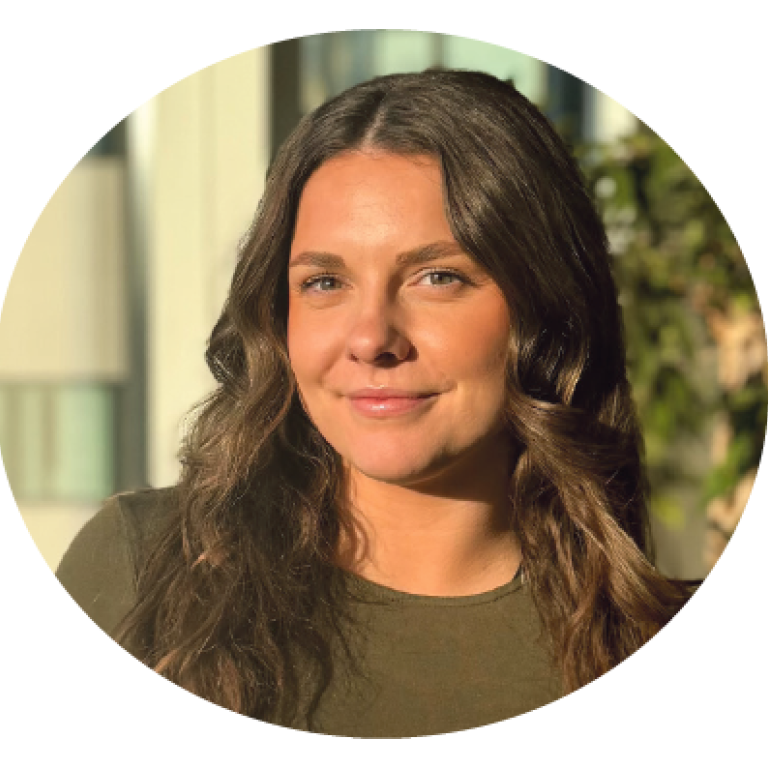
Lovisa Jansson, is studying at the Master Programme in Physics at Fysikum.
What programme are you taking? What are you learning?
"I am currently in the last semester of the Master's programme in Physics at Stockholm University. The programme provides an in-depth understanding of the theoretical and experimental foundations of physics, covering everything from quantum mechanics and statistical physics to advanced computational methods and data analysis. A large part of the programme is also about developing practical skills through experiments, programming and modelling. Within the Physics programme, there are many different specialisations you can choose during your studies. I have chosen to focus on research in the field of chemical physics. I will learn about chemical and biophysical processes and how to analyse them through experiments such as lasers and X-rays."
What is the best thing about the programme and the specialisation?
"One of the biggest advantages is the flexibility - there are great opportunities to choose courses based on interest and thus tailor your own education. The proximity to research is also a big advantage. At Fysikum there are many active research groups, which means that you get a broad insight into different research areas during your studies. Through both my bachelor's and master's thesis at Fysikum, I have had the opportunity to participate in real research projects, which has given me valuable experience of what it is like to work as a physicist. Through these projects, I have had the chance to travel to international research facilities in France and Japan, among others, to perform experiments. These trips have been both educational and exciting and have given me the opportunity to create international relationships with other students and researchers in the same field of interest, which has really been a highlight of my programme!
What are the job prospects after graduation? What roles can you take?
"After graduation, there are many possible career paths, both within and outside academia. For those who want to continue with research, a doctoral position is a natural path. I myself will start a PhD in chemical physics here at Stockholm University after graduation, and thus continue working on the research I started during my master's thesis. There are also many opportunities for jobs in industry and the tech sector. Many physicists work as data analysts or in AI and machine learning. Others work with product development, simulation and modelling in areas such as energy, materials science or space technology."
More information
Last updated: 2025-04-03
Source: Gunilla Häggström, Communications Officer, Fysikum