


Greenland’s ice shelf is melting in previously unknown ways
Ice shelves are massive floating extensions of glaciers, acting as natural barriers that slow ice flow into the ocean. However, they gradually shrink as warm ocean waters melt them from below. As climate change heats up our oceans, this melting is happening at an increasing pace. A new study published in Nature Communications by scientists from Stockholm University, the Norwegian Polar Institute, and Akvaplan-niva reveals alarming findings: Greenland’s second-largest ice shelf, the Petermann Ice Shelf, continues to melt at a rapid rate—even when heat supply from the ocean reaches its limit.
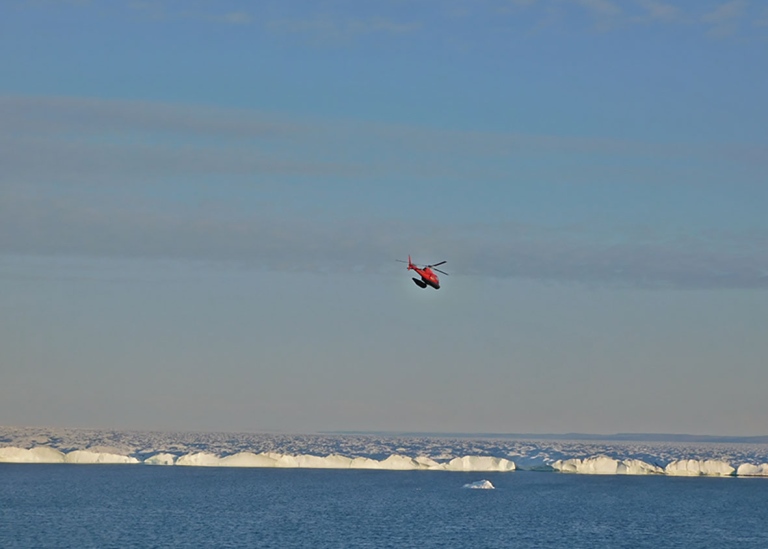
Figure 1. The Petermann Ice Shelf. Photo: Abhay Prakash
How glacier meltwater speeds up ice shelf melting
Scientists set out to study how freshwater from melting glaciers, specifically water flowing into the fjord from beneath the ice, affects ocean circulation and ice shelf melting (Fig. 2). They used an advanced computer model, enhanced by unique datasets from Stockholm University-led expeditions to North Greenland (Fig. 3).
The heat pump effect: When cold, fresh meltwater from the glacier flows into the fjord, it naturally rises because it is lighter than the surrounding salty Atlantic Water. As it rushes upward and exits the fjord, the warm Atlantic Water below is drawn in, much like a heat pump, pulling heat into the system and accelerating ice shelf melting from below.
A surprising discovery: Scientists found that as more meltwater enters the fjord, a critical threshold is reached. Beyond this point, pulling in more Atlantic Water via the heat pump no longer increases the temperature, the system becomes saturated with heat. However, ice shelf melting continues to accelerate due to intense turbulent mixing caused by the rising meltwater. This marks a fundamental shift in the system, from a heat-regulated melting regime to a fully turbulence-regulated one where ice loss accelerates even though the ocean’s temperature no longer increases.
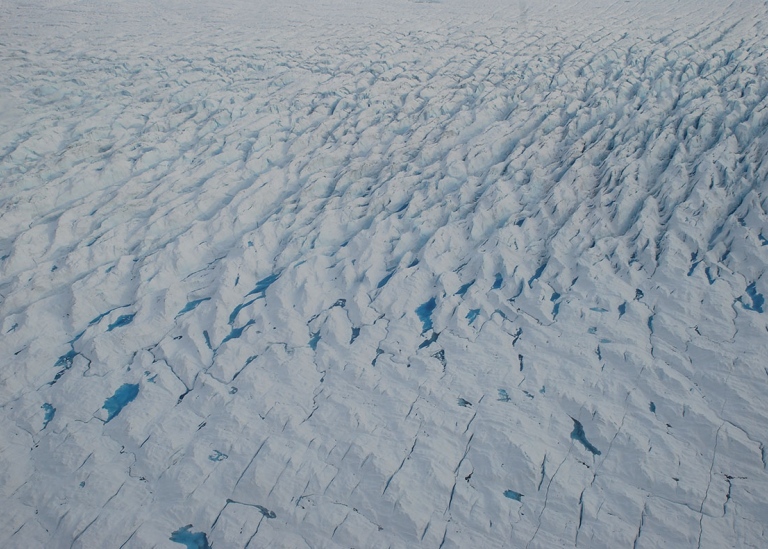
Figure 2. Lakes forming on the glacier surface due to higher air temperatures. This meltwater travels downward, reaching the glacier bed before eventually draining into the fjord. Photo: Martin Jakobsson
What does this means for the Petermann Ice Shelf?
Over the past 15 years, Petermann has lost 40% of its size, twice releasing icebergs comparable in size to the City of Stockholm, ultimately relinquishing its status as the largest ice shelf in the Northern Hemisphere. According to Abhay Prakash, who led the study at Stockholm University, meltwater flowing into the fjord during summer already frequently surpasses the critical threshold identified in the research.
This meltwater originates from atmospheric warming, which occurs more rapidly than ocean warming in response to climate change, Prakash explains. If global emissions continue unchecked and the targets set by the Paris Climate Agreement are not met, we may see the devastating consequences of this process unfold within this century.
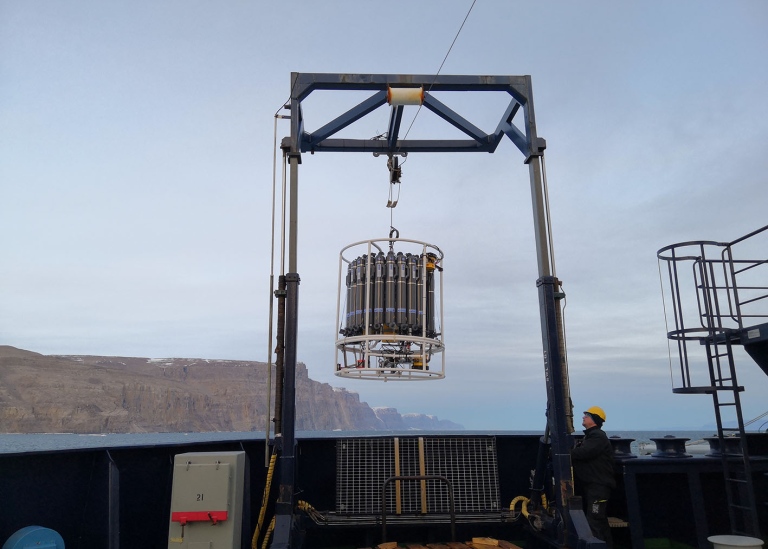
Figure 3. A CTD (Conductivity, Temperature and Depth)-rosette being lowered into the Petermann Fjord during the Stockholm University-led Ryder 2019 expedition. Photo: Abhay Prakash
Rethinking Conventional Understanding of Ice Shelf Melting
– Over the past 50 years, ocean temperatures in Petermann Fjord have risen by 0.3°C, and traditional studies have linked this directly to increased ice shelf melting. However, our findings challenge this paradigm, Prakash states. While ocean warming remains a crucial factor, he stresses the need to re-assess priorities. Exploring the impact of a potential 5°C rise in fjord temperature by the end of the century is an important exercise, but it is crucial to recognize that oceans do not warm that rapidly, he explains. Meanwhile, meltwater flowing into the fjord is far more likely to increase several-fold by the century’s end.
– The implications are striking: We kept ocean temperatures constant at present-day levels in our model, yet ice shelf melting continued to accelerate. Even if ocean warming were to halt completely, there would still be an abundance of available heat within the fjord, he notes. The intensified turbulent mixing, fueled by rising meltwater discharge, would continue driving ice loss at an alarming rate, without requiring additional ocean warming to sustain the process.
Future Outlook: What Comes Next?
– No two fjords are identical, but Petermann may not be an exception. Similar levels of meltwater discharge have been reported for other North Greenland glaciers with ice shelves resembling Petermann, says Prakash. This underscores the urgent need to investigate whether similar regime shifts are occurring elsewhere.
The implications extend beyond Greenland, Prakash says. At present, Antarctica does not exhibit meltwater discharge at levels comparable to Petermann. However, this may change in the future!
Greenland’s present-day situation could serve as a blueprint for understanding how Antarctica’s much larger ice shelves might respond to increasing meltwater input in the coming centuries, potentially helping scientists anticipate future changes in Antarctic ice flow.
Contact:
Abhay Prakash
Email: abhay.prakash@natgeo.su.se
Read more about Abhay´s research
Last updated: 2025-05-12
Source: Department of Physical Geography