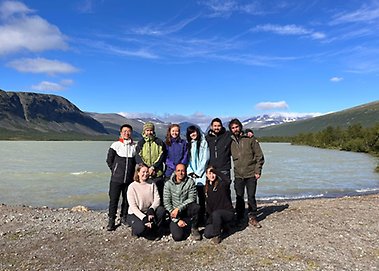
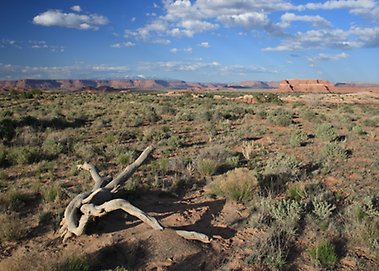
Between the 31st of July and the 5th of August 2023, the mandatory PhD course “Frontiers in Physical Geography” organized a field visit to Tarfala Research Station (TRS). The field visit took the participants through different biomes in the arctic, starting from arctic birch forests around the village of Nikkaluokta to the glaciers of the Tarfala valley at the foot of Kebnekaise, Sweden’s highest mountain.
The paper is written by Dominic Power and Patrick Collins. Dominic Power, Department of Human Geography, Stockholm University, and Patrick Collins, School of Geography, Archaeology and Irish Studies, National University of Ireland Galway, won the Industry and Innovation 2021 and DRUID23 Best Paper Award for ”Peripheral visions: the film and television industry in Galway, Ireland”, published in Industry and Innovation. Industry and Innovation DRUID Dominic Power
Stockholm University has obtained a grant from the Swedish Research Council for Environment, Agricultural Sciences and Spatial Planning (Formas) for the research project "Regional planning cultures – institutional changes and place-based practices for a sustainable future" Formas will finance the project 2023–2025. Project manager is Peter Schmitt, Department of Human Geography, Stockholm University, and the other researchers are Jennie Gustafsson och Lukas Smas, Department of Human Geography, Stockholm University. The regional scale is increasingly considered as a key arena for addressing contemporary challenges related to sustainable development. However, how regional planning can contribute to resolve land-use conflicts in urban-rural locations and reduce climate impacts, for instance, is often neglected both in practice and research, not the least in Sweden. Therefore, the objective of this project is to investigate the institutional conditions, current practices and future prospects for regional planning in Sweden’s three largest regions: Västra Götaland, Skåne and Stockholm. More specifically the project will 1) determine the culturised practices and trajectories of regional planning regarding its capacity to address different sustainable development goals; 2) reveal the geographical contexts and institutional conditions in which regional planning is embedded; and 3) provide empirical informed policy recommendations based on the identified requirements, coping mechanisms and capacities that need to be mobilised by regional planning institutions and actors. This will be achieved through an established qualitative case-based approach that includes fieldwork, interviews, and discourse analysis, but also through workshops and interactive events with planning professionals in order to facilitate the required transdisciplinary approach for addressing how regional planning can contribute to a sustainable future. Formas Peter Schmitt Jennie Gustafsson Lukas Smas
During the first half of 2023, three of the Department of Human Geography's senior lecturers have been promoted to (full) professors: Marianne Abramsson, Thomas Borén and Peter Schmitt.
In the summer of 2023, the entrances to the Geo-Science Building are locked. The entrance at Svante Arrhenius väg 12 (house U) opens again on August 18, the entrance at Svante Arrhenius väg 14 (house Y) on August 21 and the entrance at Svante Arrhenius väg 8 (house S) on August 28. If you would like to visit the Departmemt of Human Geography during the summer please make an appointment in advance. Contact persons Geo-Science Building Opening hours at Stockholm University
The Department of Human Geography's website and social platforms have been renewed. From 30 July 2023, the department's website has a new look and largely new content. The department's web is thus more integrated with Stockholm University's central web. The department has also changed social platforms. Follow us on LinkedIn and Twitter! LinkedIn Twitter
Climate models help scientists understand current environmental changes and make projections for Earth’s future, which can inform society's responses to climate change’s negative effects. Microbes will also influence climate change by driving biogeochemical cycles through the consumption and production of greenhouse gases. Now a new report underscores the importance of microbes in climate change modeling. Microbes transform organic matter produced by plants and phytoplankton into nutrients that sustain new vegetation (including crops), but also release greenhouse gases as a result of their metabolism—they are thus fundamental for our own survival, while also playing a role in climate change” says Stefano Manzoni, senior lecturer at the Department of Physical Geography, Stockholm University and co-author of the report. The American Academy of Microbiology, an honorific leadership group and scientific think tank within the American Society for Microbiology (ASM), has released a new colloquium report, Microbes in Models: Steps for Integrating Microbes into Earth System Models for Understanding Climate Change, examining the challenges of explicitly including microbial processes into Earth system models to improve model projections.
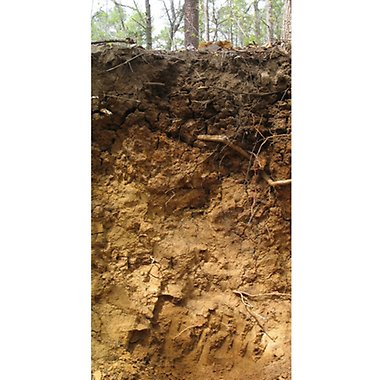
Microbes, bacteria and fungi, are by far the most important factor in determining how much carbon is stored in the soil, according to a new study in Nature with two co-authors from Stockholm University. This has implications for both mitigating climate change and improving soil health for agriculture and food production. The research is the first to leverage a global soil carbon database with state-of-the-art mathematical models to measure the relative importance of microbial processes in the soil carbon cycle at a global scale. The study’s authors found that the role microbes play in storing carbon in the soil is at least four times more important than any other process, including decomposition of organic matter. That’s important information: Earth’s soils hold three times more carbon than the atmosphere, creating a vital carbon sink in the fight against climate change.
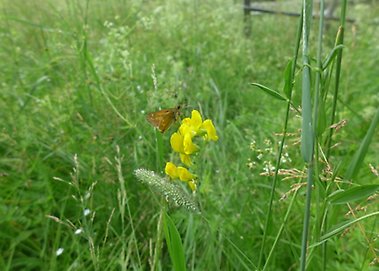
For the first time researchers at Stockholm University investigate the effects of soil amendments, i.e. compost, on floral resources in grasslands combined with the effects of drought. Their results indicate that nectar provision in grasslands, with a native plant community and natural soil conditions, remains relatively stable under drought. The researchers also found that soil amendments increase floral resources in managed grasslands. The results are species specific, thus other plant communities might respond differently. In recent decades, numerous studies have revealed a dramatic decrease in diversity and abundance of insect pollinators. One of the main reasons why insect pollinators are declining is a lack of floral resources due to land use change. The remaining semi-natural grasslands provide a vital supply of floral resources and nesting sites for pollinating insects. Are droughts decreasing the amount of nectar available for pollinators – and if so, can we compensate for it by applying compost? In order to answer these questions, a group of researchers at the Department of Physical Geography, Stockholm University, within the Bolin Centre for Climate Research, conducted both fieldwork and used an existing database on nectar values. Drought effects on floral resources have been of growing research interest in recent years. However, most of those studies have been conducted in arid to semiarid regions or in laboratories/greenhouses, and there have been only few natural experiments in temperate regions. Moreover, those studies often focus on crop species, and are imposing only a single drought event. Therefore, the researchers in this study measured the effects of repeated droughts on wild herbaceous plant species in southern Sweden.
Drylands cover 40% of the land surface and host more than two billion people. These complex ecosystems are adapted to water scarcity, but increasing aridity and anthropogenic pressures are undermining dryland ecological functioning and capacity to provide essential ecosystem services.
The Swedish Research Council has decided on the applications to be awarded grants within Natural and engineering sciences 2022. Over 18 million SEK for new research projects in Physical Geography. Five researchers will receive Research project grants and one will receive Network grant. Project contribution to: Stefan Wastegård : "Tephrochronology in Sweden - to tie the knot", SEK 2,640,000; Qiong Zhang : "An investigation of climate fluctuations over several centuries in climate models", SEK 4,240,000; Nina Kirchne r : "The interaction between glaciers and the sea in northern Greenland: new knowledge about northern Greenland's outlet glaciers in order to better limit future sea level rises", SEK 3,476,000; Georgia Destouni : "The connected freshwater system variations, trends and their driving forces around the world", SEK 3,600,000; Gustaf Hugelius : "Peatlands with permafrost under complex climate scenarios: collapse, resilience or stability? (PRICE)”, SEK 3,600,000 Network grant to: Maricela de la Torre Castro : "The blue economy in tropical oceans: income opportunities and transformation under climate change", SEK 800,000. Read more about the grants
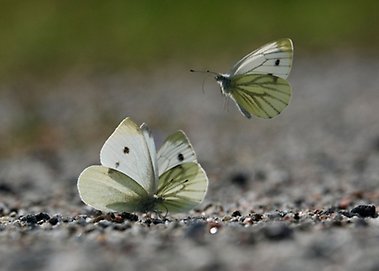
How do insects of one population manage to synchronize with each other, when their development is temperature-dependent and each population experiences a different temperature? A new study shows surprising effects of insects’ nonlinear response to temperature in a natural microclimate landscape. This nonlinear response to temperature makes it difficult to predict if an insect will develop on average rapidly or slowly when it is exposed to naturally fluctuating temperatures in a certain microclimate. Developing rapidly could allow it to fit another generation into the warm season. This is good if that generation makes it to the overwintering stage on time. But it could be catastrophic if they do not. Additionally, too fast development could set an individual out of sync with potential mates, if the others develop more slowly.