


Article in Palaeogeography, Palaeoclimatology, Palaeoecology
First author article by Mohammad J. Razmjooei et al.
Razmjooei, M.J., Spielhagen, R.F., Bauch, H.A., Vermassen, F., Jakobsson, M., and O'Regan, M., 2026. Evaluating the reliability of radiocarbon chronologies in Arctic Ocean sediments using calcareous nannofossil bioevents. Palaeogeography, Palaeoclimatology, Palaeoecology: 695, 113847. DOI: 10.1016/j.palaeo.2026.113847
Abstract
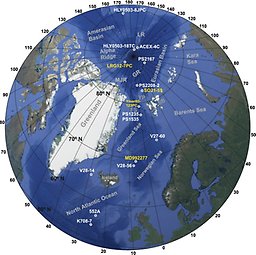
Radiocarbon chronologies for Arctic Ocean sediments are argued to be extremely uncertain due to low sedimentation rates, bioturbation and authigenic calcite growth on microfossils. Mixing of sediments may result in under- or overestimation of the true age of sediments and authigenic calcite growth can yield either anomalously old or, even younger radiocarbon ages. Ascertaining the extent of these processes is necessary to determine the fidelity of late Pleistocene and Holocene Arctic paleoceanographic time-series. A key question is the age of microfossil-bearing sediments overlying a widespread diamict in the central Arctic Ocean, particularly whether it was deposited during Marine Isotope Stage (MIS) 3 between 40 and 50 ka, or during an earlier stadial of the last glacial cycle. Here we use two key calcareous nannofossil bioevents: the abundance peak of Coccolithus pelagicus and the transition from a high abundance of Gephyrocapsa spp. to a dominance of Gephyrocapsa huxleyi to identify Holocene and MIS 3 sediments from the central Arctic Ocean. We show that the timing of these events can be correlated to lower latitude records, providing an important stratigraphic framework to assess Arctic radiocarbon chronologies. Bayesian age–depth models constructed for three carbonate-rich cores yield stratigraphically consistent, monotonic age–depth relationships with acceptable agreement indices and reduced uncertainties relative to unmodelled calibrations. The models reveal variable sedimentation rates and localized hiatuses, but confirm that radiocarbon chronologies remain internally coherent when statistically constrained. Similar to many ocean basins, radiocarbon ages in Arctic sediments are influenced by mixing and diagenesis. However the agreement between nannofossil bioevents and Bayesian-modelled radiocarbon-based age estimates in multiple cores suggests that the radiocarbon chronologies retain substantial utility when interpreted alongside biostratigraphic markers. This highlights the potential for combining independent dating methods to improve confidence in Arctic sediment chronologies.
Last updated: 2026-05-07
Source: Department of Geological Sciences