


Surprising discovery about the brown bear's distribution in Scandinavia
A single wandering male bear has provided crucial insights into the history of brown bears in Scandinavia after the last ice age. This is shown by DNA analysis of clay from a lake.
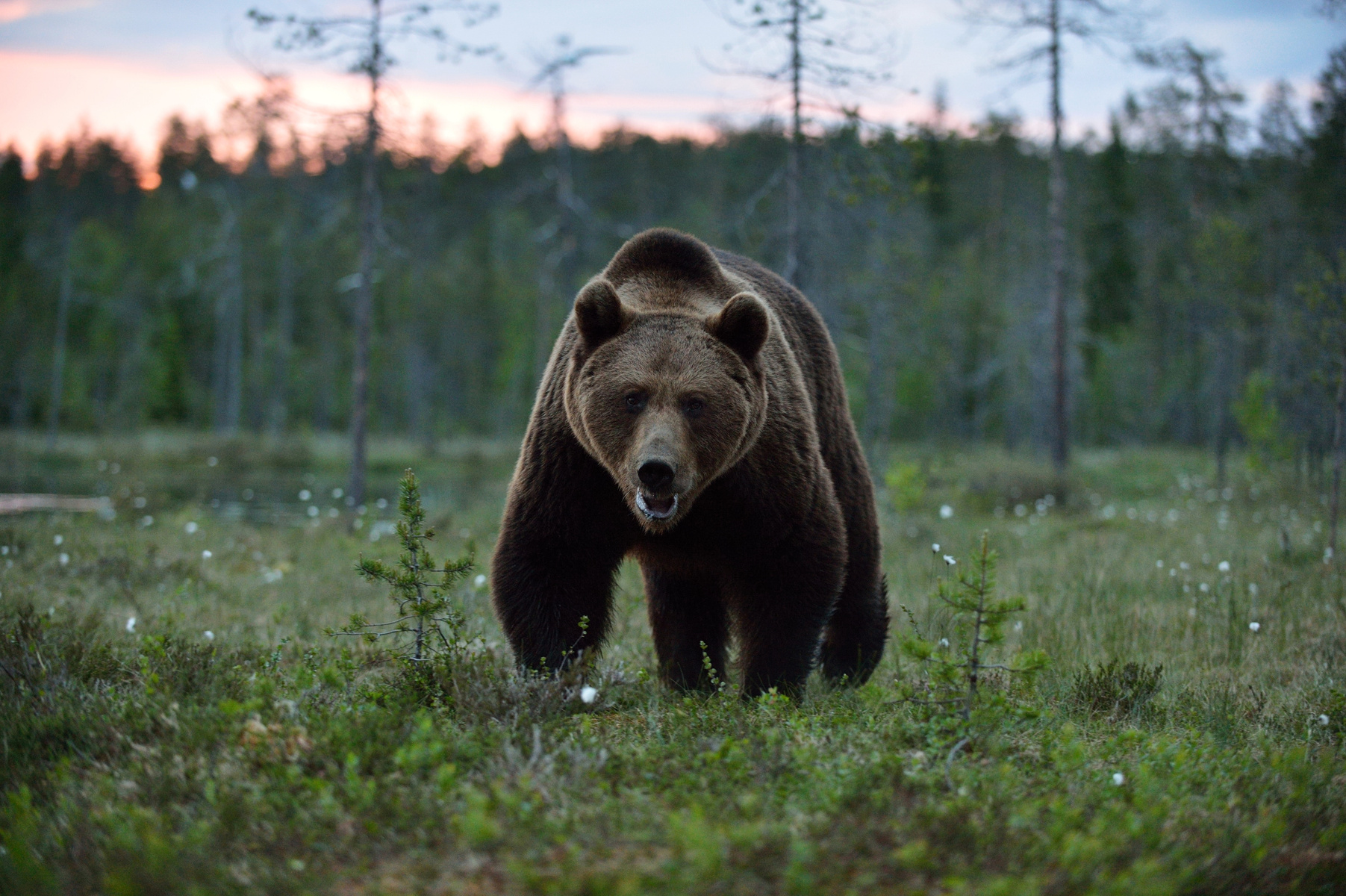
The results of the study are based on DNA from a brown bear found in lake sediment and dated to approximately 9,600 years ago. Photo: Mostphotos/Erik Mandre
After the last ice age, brown bears recolonized Scandinavia both from the north, via Finland, and from the south, via Denmark. Due to this recolonization in two directions, the mitochondrial genome* of northern and southern brown bears today differs distinctly, with a contact zone in Jämtland in the northern part of Sweden. It is assumed that the current separation between these two groups has persisted for the last 10,000 years or so. In a new Swedish study, published in the scientific journal PNAS, the researchers have found the genome of a brown bear in lake sediment in Tärnaby in northern Sweden, dated to about 9,600 years ago. To the researchers' surprise, they concluded that the brown bear's genetic makeup is closer to the southern than the northern Scandinavian brown bears and carries the "southern" mitochondrial DNA.
Sample from less than one gram of sediment
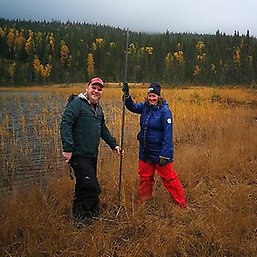
Carl Regnéll and Anna Linderholm collecting sediment. Photo: Sarah Greenwood
DNA studied was extracted from less than one gram of clay sediment deposited from a glacier that melted about 9,600 years ago. The researchers found no traces of bone, tissue or other remnants of brown bears in the sample, so it is impossible to say with certainty what type of source this DNA comes from. The researchers' best guess is that it could be feces, but it is not possible to say for sure yet.
This so-called environmental genome (a genome constructed from samples taken in the wild) probably originates from a single male bear that moved from southern to northern Scandinavia. Finding an environmental genome from a single individual is very rare. The quality and preservation of this DNA is remarkable, which according to the researchers underlines the possibilities of studying sedimentary ancient DNA.

Ernst Johnson Photo: Adina Landström
“An environmental genome is usually a mosaic of DNA from several individuals, and often of low quality. The incredibly high quality of this ancient genome, but also the fact that this DNA likely comes from a single individual, is remarkable and makes it unique in its kind," says Ernst Johnson, PhD student in marine geology at Stockholm University and the Centre for Palaeogenetics** and shared first author of the study.

Isabelle Feinauer. Photo: private
"Ancient DNA from Scandinavian brown bears is rare and this genome gives us more information about the history of Scandinavian brown bears since the last ice age. The discovery that this brown bear was genetically more similar to brown bears from southern Scandinavia than those from northern Scandinavia is unexpected and therefore extra exciting," says Isabelle Feinauer, who is shared first author to the study and a PhD student in zoology at Stockholm University and the Centre for Palaeogenetics.
Ernst Johnson and Isabelle Feinauer will both defend their dissertations in May and June, respectively, so their research on brown bears will be put on hold. However, the researchers at the Centre for Palaeogenetics have collected and analysed hundreds of sediment samples from all over Scandinavia, so there will be more studies on sedimentary ancient DNA in the future.
* Mitochondrial genome (or mitochondrial DNA) is DNA found in the mitochondria – the cell's power stations – that produces fuel that other parts of the cell can use.
** The Centre for Palaeogenetics is a joint research centre at Stockholm University and the Swedish Museum of Natural History that conducts research on ancient DNA.
Read more about the Centre for Palaeogenetics
Source: Communications Office
Last updated: 2026-05-04
Source: Department of Geological Sciences