


Car brakes release a hidden source of air pollution
Source: Wikimedia commons
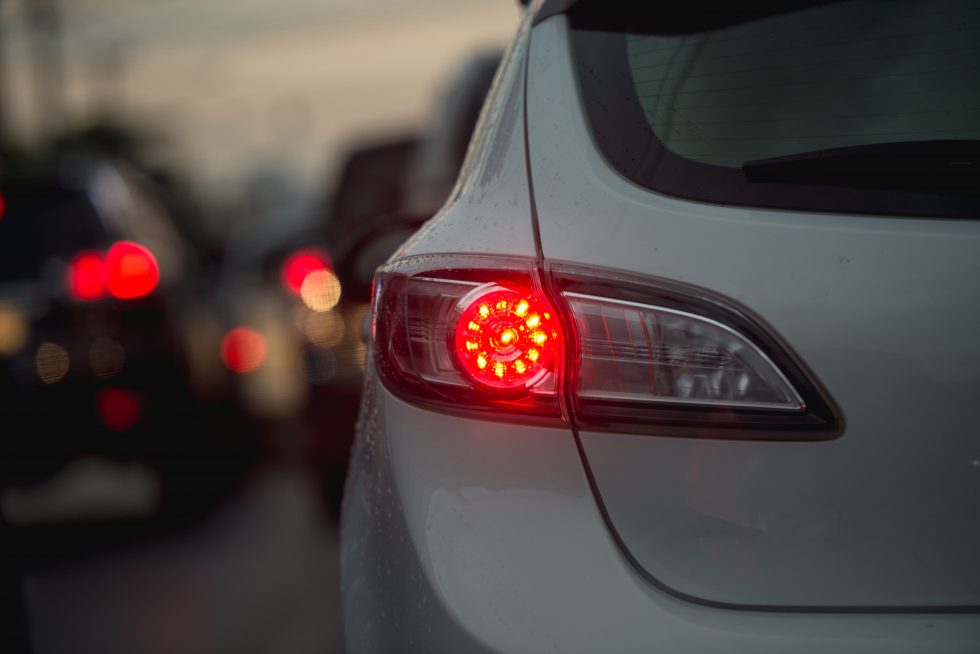
Every time a vehicle slows down, its brakes release a mixture of pollutants into the air. While much of the attention has focused on tiny particles produced by friction, new research from department researchers and collaborators reveals another, less visible source of pollution: gases released from brake pads.
Air pollution from road traffic is usually associated with exhaust fumes. But as vehicle engines have become cleaner, researchers have increasingly turned their attention to pollution that comes from elsewhere – tyres, road surfaces and brakes.
Brake wear is already recognised as an important source of airborne particles, particularly in busy urban environments. What is less understood is that braking also releases gases, including volatile organic compounds (VOCs), some of which are associated with harmful effects on human health.
Now, researchers from the Department of Environmental Science and KTH Royal Institute of Technology have investigated how much gas is released during braking, what these emissions contain and how they vary between different types of vehicles.
Their findings, published in the journal ACS ES&T Air, suggest that the composition of brake pads and the intensity of braking both play an important role in determining how much pollution is released.
"In cities like Stockholm, with high traffic density, emissions from vehicle braking could be relevant to urban air quality," says Wandera Kisimbiri, PhD student at the Department of Environmental Science and main author of the study.
"Some of the compounds emitted, such as benzene, xylene, ethylbenzene and toluene, are known to have harmful effects on human health."
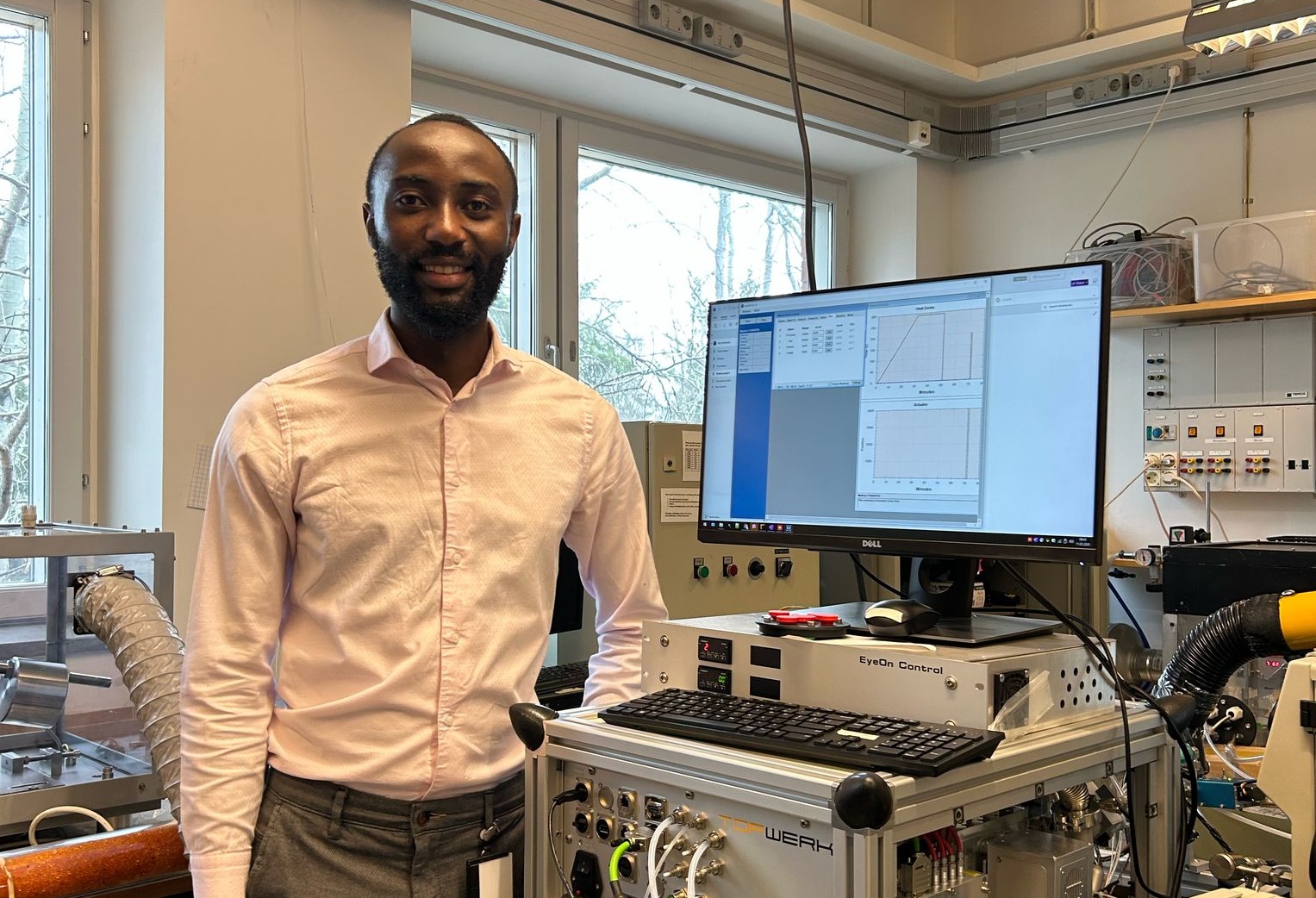
Wandera Kisimbiri next to a mass spectrometer deployed to KTH for this study. Photo: Athanasia Christou, KTH
What happens when brakes heat up?
When a driver applies the brakes, friction between the brake pads and the rotating disc slows the vehicle down. This process generates heat and gradually wears away the braking material, releasing tiny particles into the surrounding air.
But the heat can also cause some of the organic materials in brake pads to break down, releasing chemical compounds as gases.
To investigate these emissions, the researchers tested four commercially available brake pad materials, including those used in heavy-duty vehicles such as buses and trucks, and lighter passenger vehicles.
Using a laboratory instrument that reproduces the friction between a brake pad and a disc, they simulated different braking conditions. A highly sensitive mass spectrometer allowed them to identify and measure the gases released during the tests.
The results showed substantial differences between brake materials. Perhaps surprisingly, brake pads designed for lighter vehicles released more gaseous pollutants than those used in heavy-duty vehicles when tested under comparable conditions.
Braking intensity also mattered. More demanding braking conditions generally produced higher emissions, suggesting that driving patterns, as well as the materials used to manufacture brakes, could influence the amount of pollution released.
An overlooked source of urban air pollution
The researchers found that the emissions consisted largely of oxygen-containing volatile organic compounds, alongside a range of nitrogen-containing organic chemicals. These compounds are of interest because some VOCs can undergo chemical reactions in the atmosphere, potentially contributing to the formation of additional air pollutants.
Previous research from Stockholm University and KTH has shown that gases released during braking can react in the atmosphere to form secondary particulate matter – particles that are not emitted directly but develop through chemical reactions in the air.
The new study adds another piece to that puzzle by providing estimates of how much gaseous pollution different brake materials may produce.
Based on laboratory measurements and calculations extrapolated to vehicle scale, the researchers estimated emissions of approximately 1.6 to 15.3 milligrams of VOCs per vehicle kilometre.
These figures remain estimates rather than measurements from vehicles operating on actual roads. Nevertheless, they provide a starting point for understanding a source of pollution that has so far received relatively little attention.
"Our study tries to quantify how much gaseous emissions are produced during vehicle braking. This is an important step towards assessing the contribution of brake wear to urban air pollution and developing strategies to reduce these emissions," says Kisimbiri.
He explains that the findings could eventually be incorporated into emission inventories, allowing researchers to estimate the amount of gaseous pollution produced by road traffic in individual cities.
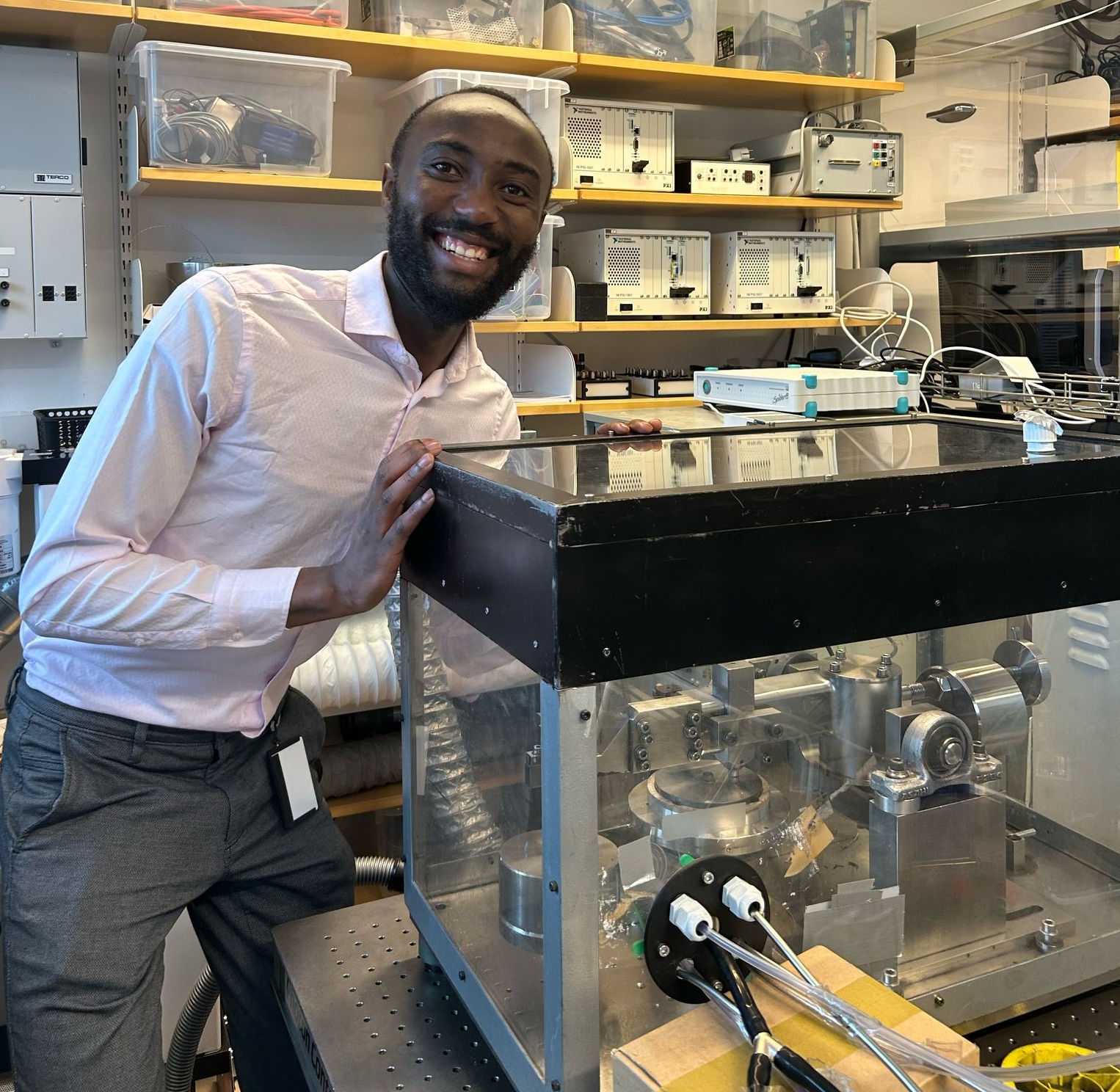
Wandera Kisimbiri with the pin-on-disc tribometer chamber that was used to simulate the braking process of cars at KTH. This is where the brake pads are pressed against a rotating brake disc. Gaseous emissions are then sampled at the outlet port of the chamber. Photo credit: Wandera Kisimbiri
Cleaner exhausts do not mean pollution-free roads
The findings come as European regulations begin to address pollution from vehicle components other than exhaust systems.
The Euro 7 standards introduce limits on brake particle emissions, reflecting growing recognition that cleaner engines alone will not eliminate traffic-related air pollution.
But gaseous emissions from brakes are not currently covered by those limits.
The researchers believe their findings could help inform future regulations, although considerably more measurements will be needed to establish appropriate emission limits.
"We have already seen the European Union adopt Euro 7 regulations to limit particle emissions from tyres and brake wear. Our results could help move in the same direction for gaseous emissions, but more measurements are needed before such regulations can be introduced," says Kisimbiri.
The findings could also be useful to brake manufacturers seeking to develop materials that release fewer harmful chemicals.
For now, the researchers emphasise the need for further studies, particularly measurements under real-world driving conditions, to understand how laboratory findings translate to everyday traffic.
As cities work to improve air quality, understanding what comes out of a vehicle's exhaust pipe is no longer enough. What happens when it slows down may matter too.
Last updated: 2026-11-17
Source: Department of Environmental Science