


Forever chemicals found deep in Antarctic snow reveal global pollution pathways
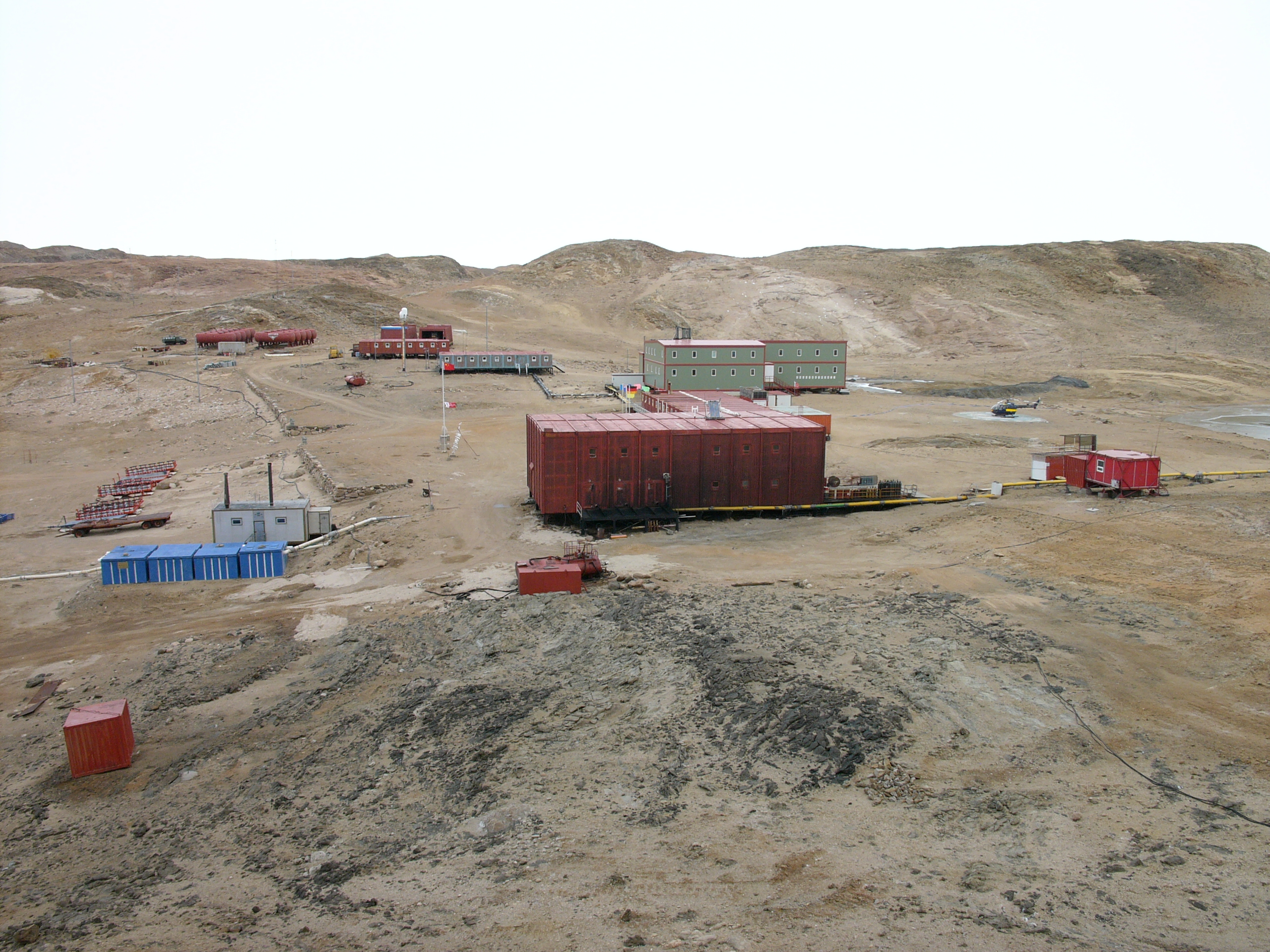
Chinese station Zhongshan, Prydz Bay/Larsemann Hills, East Antarctica. Photo: Hannes Grobe/ Alfred Wegener Institute
Researchers from Stockholm University and international collaborators have traced industrial “forever chemicals” in snow across Antarctica, revealing how pollution travels across the globe before settling in one of Earth’s most remote environments.
Antarctica is often imagined as the last pristine place on Earth — a vast frozen continent seemingly untouched by modern pollution. But new research published in Science Advances shows that even the interior of the Antarctic ice sheet carries traces of human-made chemicals.
Scientists studying snow across East Antarctica have detected PFAS — a large group of industrial compounds often called “forever chemicals” because they are extremely persistent in the environment.
By analysing snow samples collected along a 1,200-kilometre route stretching from the coastal Zhongshan Station to Dome A — the highest point of the Antarctic ice sheet — researchers tracked how these chemicals move before settling in the Antarctic interior.
Their findings reveal a stark reality: pollutants can circulate through the atmosphere and oceans before becoming trapped in Antarctic snow.
“We set out to study PFAS in Antarctic snow because the continent offers a rare opportunity to observe how pollutants behave once they leave their source regions. Antarctica is far from major population centres, so any chemicals found there must have arrived either through long-range atmospheric transport or after travelling long distances through the ocean before being returned to the air by sea spray,” says Ian Cousins, professor at the Department of Environmental Science and co-author of the study.
“This makes it an ideal place to trace how persistent pollutants move through the atmosphere and the ocean and to understand how global emissions shape contamination in even the most remote environments.”
Following chemicals across the ice sheet
To understand how PFAS reach the Antarctic interior, the research team analysed snow samples along a transect across East Antarctica and compared them with deeper snow layers preserving decades of atmospheric deposition.
The work combined field sampling by Antarctic research teams with chemical analysis and environmental interpretation by scientists specialising in environmental chemistry and pollutant transport at Stockholm University. Snow acts as a natural archive: each snowfall captures chemicals present in the atmosphere at that moment, gradually building a layered record of contamination.
By examining these layers at Dome A, researchers reconstructed a deposition history stretching back roughly half a century. The results point to two main pathways.
One involves precursor compounds — chemicals released into the atmosphere that later transform into PFAS as they travel long distances through the air.
The other involves sea spray aerosols. When waves break, tiny droplets of seawater are launched into the atmosphere. If PFAS are present in the ocean, these droplets can carry them into the air, where winds transport them inland across the Antarctic ice sheet.
“We expected to see contributions from both long-range atmospheric transport and short-range sea spray transport, and that is exactly what the data show. The influence of sea spray is mainly visible in the near coastal areas,” says Cousins.
A global pollution cycle
PFAS have been used for decades in products ranging from waterproof clothing and stain-resistant textiles to firefighting foams and industrial processes. Their chemical structure — particularly the extremely strong carbon–fluorine bond — makes them highly resistant to degradation.
Chemicals released many years ago can still circulate today. The Antarctic record suggests emissions far from the polar regions can influence chemical deposition at the southernmost edge of the planet.
In effect, the Earth’s atmosphere and oceans act as a global transport system, redistributing pollutants long after their initial release.
The oceans may also serve as long-term reservoirs. Once PFAS accumulate in seawater, they can be reintroduced into the atmosphere through sea spray, continuing their circulation.
“The presence of PFAS in Antarctic snow shows just how far these chemicals can travel once they enter the environment. It tells us that pollution moves through connected atmospheric and ocean systems, and that even very remote regions record the legacy of emissions from many decades ago, ” says Cousins.
Antarctica as an environmental sentinel
The study provides one of the clearest pictures yet of how PFAS reach the interior of the Antarctic ice sheet, combining continent-wide measurements with a multidecadal snow record from Dome A.
Because Antarctica is far from major population centres, the chemicals found there reflect long-range transport rather than local contamination. The continent effectively acts as a monitoring station.
“PFAS are extremely persistent, so once they enter the environment they remain for a very long time. Our findings suggest that these chemicals can continue to circulate through the atmosphere and the oceans for many decades, which means that past emissions will influence the global environment far into the future,” says Cousins.
Pollution without borders
The findings underline a simple but unsettling truth: pollution does not respect geographical boundaries. Even as regulations reduce emissions of some PFAS, chemicals already stored in the environment — particularly in the oceans — may continue circulating for decades.
PFAS released far from Antarctica can still accumulate there.
“Although the ecological consequences in Antarctica remain uncertain, the results highlight how persistent chemicals continue to move through the global environment and underline the importance of reducing emissions at their sources to limit further accumulation in this region,” concludes Cousins.
Read the article in Science Advances

Professor Ian Cousins, Department of Environmental Science. Photo: Stockholm University
Last updated: 2026-03-21
Source: Department of Environmental Science