


The hidden toxins in 'green' energy: Can we build a PFAS-free battery?
The future is electric. As the world pivots away from fossil fuels, lithium-ion batteries have become the backbone of the so-called green energy transition, powering everything from smartphones to electric vehicles.
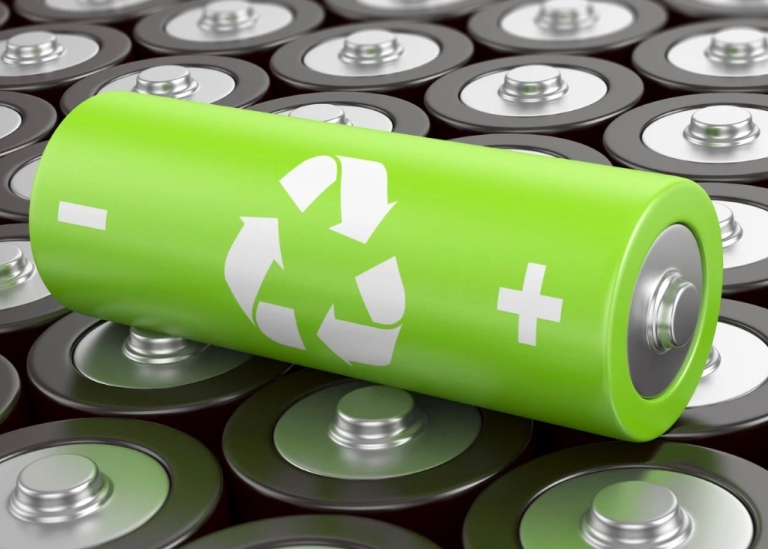
Photo: Canva
But within this revolution lies an inconvenient truth—one that PhD students at the Department of Environmental Science like Eleni Savvidou are racing to address. In a recent Perspective published in Environmental Science & Technology, Savvidou and her colleagues explore a fundamental question: can we make a battery without PFAS?
PFAS (per- and polyfluoroalkyl substances) are used in lithium-ion batteries, primarily in cathode binders and electrolytes, where they enhance performance and longevity. However, these chemicals—known as “forever chemicals” due to their extreme persistence—are facing increasing regulatory scrutiny due to their links to environmental contamination and potential health risks.
“There’s a growing push to phase out PFAS across industries,” says Savvidou. “For batteries, the question isn’t whether alternatives exist—it’s about whether they’re commercially viable and perform as well as PFAS-based materials.”
According to her team’s research, “it is possible to have a battery that is completely PFAS-free,” but a fully scalable commercial solution is still in development. Several promising alternatives exist, including water-based binders, nanocarbon-based electrodes, and lithium bis(oxalate)borate (LiBOB) electrolytes, but each comes with challenges in performance, cost, and scalability.
Industry hesitation: technical or political?
While some manufacturers argue that there are “no viable alternatives” to PFAS in batteries, Savvidou’s research suggests that this claim is not entirely accurate. The cathode remains the most challenging component to replace, but alternatives are emerging. Meanwhile, PFAS-free electrolytes are already being developed, with some companies testing new formulations.
Still, transitioning to PFAS-free materials isn’t just a technological hurdle—it’s also an economic and political challenge. Many large European manufacturers are reluctant to overhaul well-established production methods, particularly given China’s dominance in the global battery supply chain.
“In Asia, they’re always ahead with the technology, right?” Savvidou points out. “And in Europe, they’re more conservative. They like to stick to the old way… So we think the PFAS restriction is a nice opportunity to push forward innovation here.”

PhD student Eleni Savvidou, Department of Environmental Science. Photo: Private
Next-generation batteries
One potential breakthrough could come in the form of solid-state batteries, which eliminate liquid electrolytes and promise higher energy density and safety. However, Savvidou’s research highlights a key concern: “We looked into solid-state batteries, and some of the polymers proposed are also fluorinated… so PFAS could still be an issue there.” Without proactive innovation, the PFAS issue could persist even in next-generation battery technology.
“If the research shifts more into fluorine-free polymers, then solid-state could be a solution,” she adds, emphasizing the need for further development.
The recycling dilemma
Even if PFAS-free batteries become the norm, another challenge looms: recycling. While batteries do not leak PFAS during use, their manufacturing and disposal pose contamination risks.
“During the use of the battery, you don’t have much exposure because it’s a closed system,” Savvidou explains. “But in manufacturing and disposal, PFAS emissions can be a problem.”
Some recycling methods can emit PFAS, especially hydrometallurgical processes. “High-temperature recycling can break them down, but it’s energy-intensive,” she notes.
“The industry needs to fund more research into the emissions associated with battery recycling,” says Savvidou. “We need solutions that are not just greener on the surface but sustainable throughout their full lifecycle.”
A stepwise transition
Despite the challenges, Savvidou remains optimistic. “A complete transition away from PFAS in batteries won’t happen overnight, but we can start with applications where performance demands are lower,” she says. Smartphones and stationary power banks, for example, don’t require the same durability as electric vehicle batteries, making them an ideal starting point for PFAS-free innovation.
Ultimately, shifting to truly sustainable energy storage requires a broader change in mindset. “At the end of the day, it’s a “green” transition,” Savvidou asserts. “Then don’t call it green if you want to keep your PFAS and other problematic chemicals.”
As policymakers, scientists, and consumers push for greener solutions, the industry faces a choice: cling to the status quo or embrace innovation. If the goal is clean energy, then the path forward is clear—it’s time to make batteries that are truly green.
Read the Perspective article in ES&T
Last updated: 2025-02-20
Source: Department of Environmental Science