


Kenneth Ekvall retires from BIG, but not from nature
This autumn, BIG’s highly regarded colleague Kenneth Ekvall will retire. After decades in zoology, research, teaching and the world of zoos, he is stepping away from BIG, though certainly not from animals or nature. On the contrary, he is looking forward to spending even more time with his lakes, bird boxes and travels.
Kenneth’s interest in nature began early. As a child, he spent many summers at his grandmother’s countryside home, where his fascination with birds and plants first took root.
— She was very keen on both birds and plants, so I learned a great deal from her, he explains.
At secondary school, biology quickly became his favourite subject, something not always appreciated by his teachers.
—I probably asked rather awkward questions, he says with a laugh.
After leaving school, Kenneth first worked as a caretaker and later took charge of a lower secondary school class for several years, an experience he still describes as one of the most meaningful of his life. He then trained as a teacher in chemistry and biology, but together with several of his fellow students he became increasingly drawn to research. Instead, he continued with biological studies and eventually embarked on doctoral work.
Research on Fallow Deer
Kenneth’s research came to focus on fallow deer, a species he still feels a strong connection to.
— You develop a deep affection for the species when you’ve spent thousands of hours studying them, he explains.
In his research, Kenneth and his colleagues discovered, among other things, that female fallow deer invest more in male offspring. Both male and female fawns suckle for the same length of time, but males feed more intensively and therefore receive more milk. For the mothers, producing more and stronger males can increase the spread of their genes, since successful males may sire more offspring.
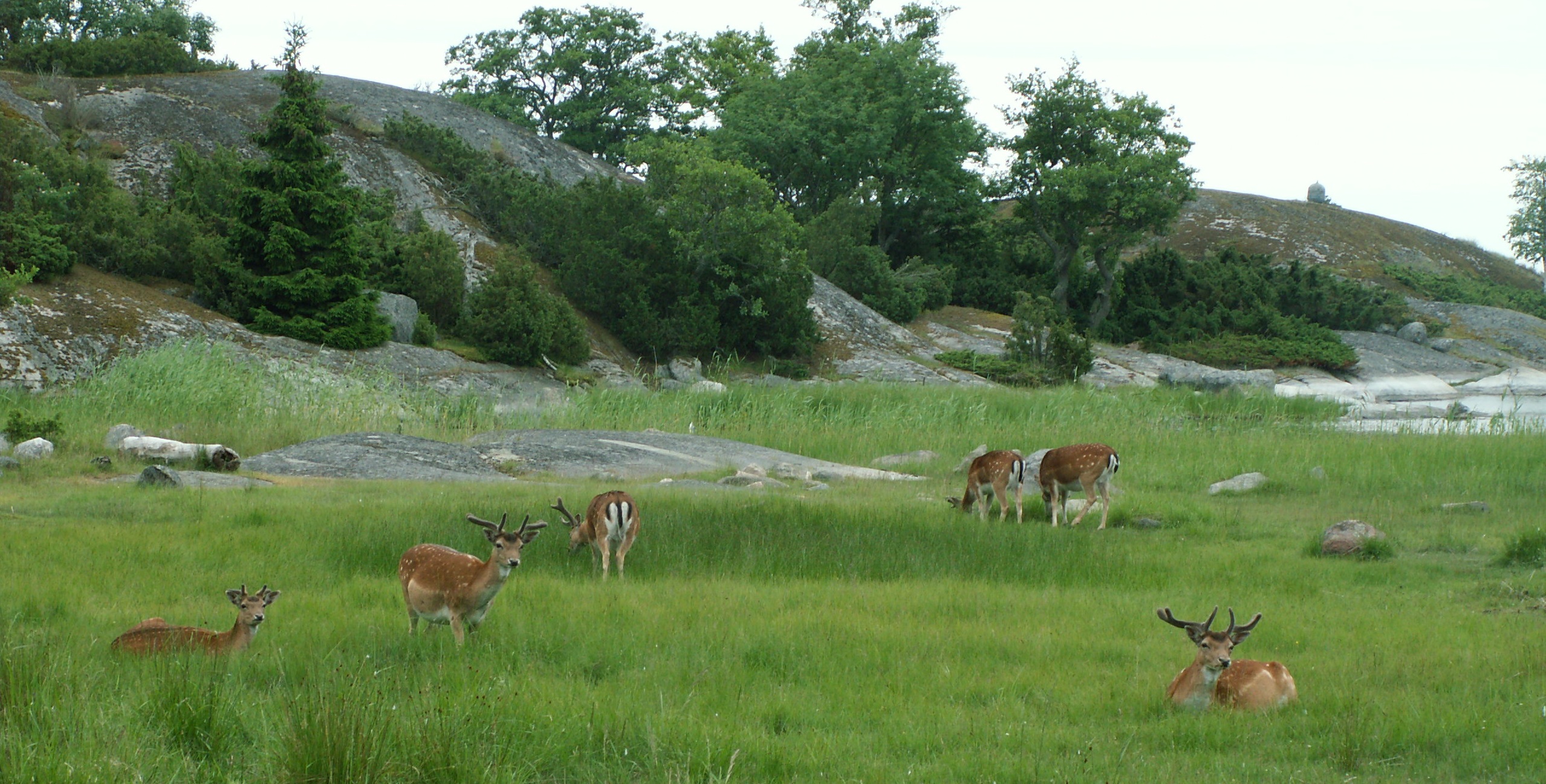
Male fallow deer often form their own social groups, separate from the females.
His studies also showed that females often nurse fawns that are not their own, a behaviour relatively unusual among mammals. This typically occurs within family groups and can likewise be explained by the benefits of increasing the spread of shared genes.
A Life in Zoos
After completing his doctorate, Kenneth was recruited to Orsa Bear Park, where he worked for ten years and helped build the park from the ground up. During his time there, the facility developed from a small bear park into a large carnivore park featuring species such as leopards, tigers and polar bears.
—It was fantastic. I had the opportunity to help design the world’s largest polar bear enclosure based on my own plans, he recalls.
He later continued his work at Skansen, while also spending periods at BIG. He began teaching on the Natural Science Foundation Year programme in the early 2000s and returned again when the programme was reintroduced a few years ago.
Alongside his teaching, Kenneth has remained deeply engaged in the zoo community and has been active in the Swedish Association of Zoos and Aquaria. This has taken him to zoos and conferences across Europe. One particularly meaningful project was his work with Kyiv Zoo in Ukraine, where he and his colleagues contributed to developing more modern, animal-friendly bear enclosures.
— That’s when I really felt I was making a difference, he says.
Guiding students into research
For many students, Kenneth has been an important mentor, not least through the research placement courses, which have grown significantly in popularity over the years.
— Many students discover what they want to do in the future through research placements. It’s incredibly rewarding to read their reflections and see how much they develop, he says.
Even after retirement, Kenneth is likely to continue teaching some evening courses, including topics such as deserts and evolution, and perhaps continue leading trips to the Galápagos and Darwin-related sites in England.
More time for lakes, crayfish and bird boxes
Retirement is unlikely to mean idleness. In his spare time, Kenneth manages crayfish populations in several lakes, works on wetlands and maintains more than 200 bird boxes.
— If I didn’t have all that, I might wonder what to do as a retiree. But that certainly won’t be a problem, he says.
As Kenneth now leaves BIG after many years, he hopes the organisation will continue to develop with students’ needs at its core.
— Students today need more support and clearer information than before. That’s an area where we can still improve.
And his favourite animal?
After a brief pause, the answer comes quickly:
It would have to be the fallow deer.
Last updated: 2026-06-02
Source: Department of Biology Education