


Future Biologists continues exploring pathways to doctoral studies
On 21 April, the Future Biologists network gathered for another meeting, this time focusing on doctoral studies and the path towards a PhD position. For BIG’s master’s students, the event provided an opportunity to meet three alumni with experience from the world of research: "Karro" Karoline Westlund, Karolina Bucaro Stenman and Veronika Johansson.
Throughout the evening, the alumni generously shared their experiences, advice and reflections on both doctoral studies and life after completing a PhD.
How do you find a PhD position?
One of the central questions during the meeting was how to actually take the step into doctoral studies. The alumni explained that PhD positions must always be openly advertised, while also emphasising the importance of being proactive and starting early. Following the work of research groups, keeping an eye on vacancies and contacting researchers directly can create opportunities, particularly if you already have a strong interest in a specific research field.
They also highlighted internships, degree projects and work as a research assistant as valuable pathways into academia. Such experiences not only provide practical skills, but also give students time to reflect on whether doctoral studies are truly the right path for them.
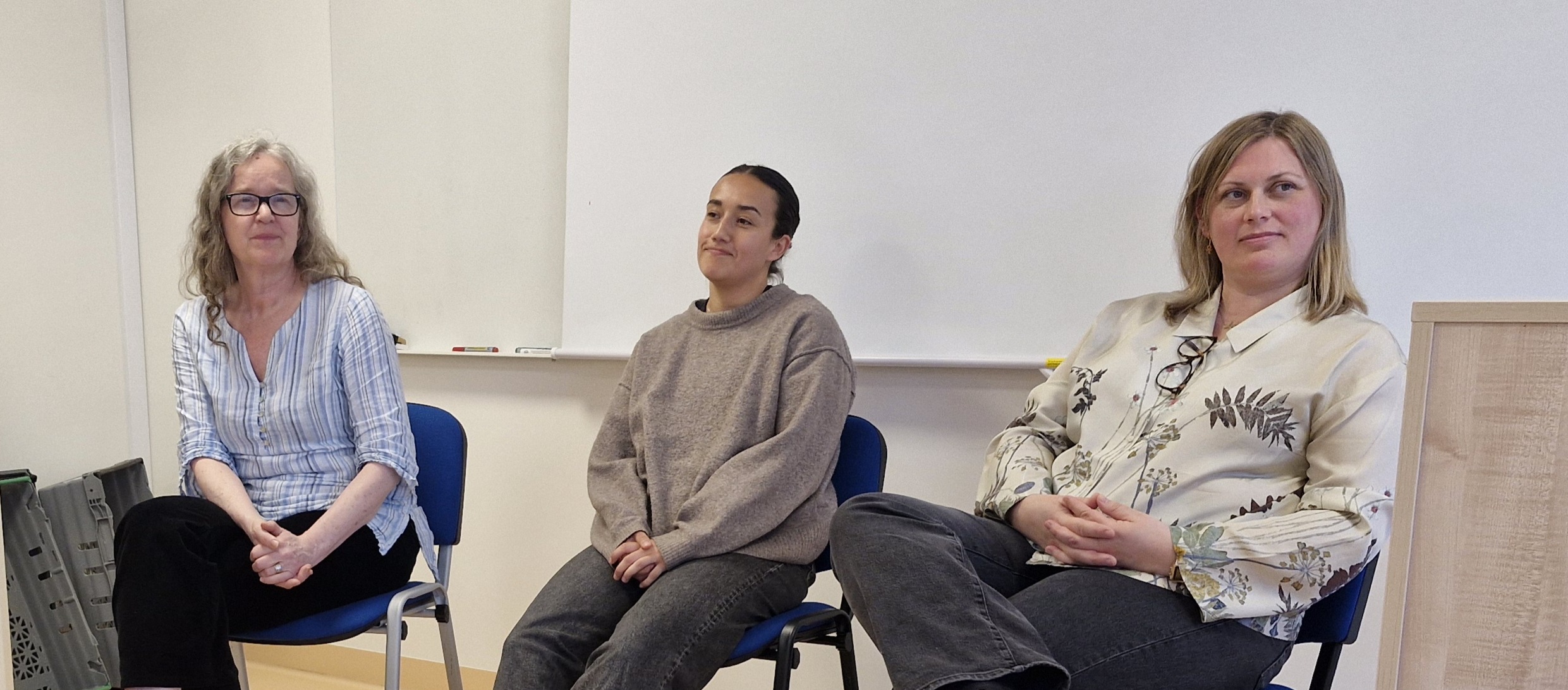
"Karro" Karolina Westlund is a PhD-qualified ethologist and entrepreneur who works with helping people understand animal behaviour, Karolina Bucaro Stenman is a molecular biologist and PhD student at MBW currently in the second year of her doctoral studies, and Veronika Johansson is a PhD-qualified plant ecologist and project manager (node manager) at the Swedish Museum of Natural History.
Supervisors and research groups matter
The discussion repeatedly returned to the importance of choosing the right supervisor and research group. A good supervisor was described as essential for thriving and developing during a PhD. The alumni encouraged students to gather as much information as possible before applying for a position, for example by speaking to current PhD students in the group and asking about the working environment, supervision and group dynamics.
A supportive research group can provide both scientific guidance and a sense of community, something that can be particularly important during periods when research feels challenging or experiments do not go as planned.
Curiosity, independence and resilience
What qualities are needed to succeed as a doctoral student? The alumni stressed the importance of scientific reasoning, problem-solving skills and the ability to work independently. However, personal qualities were considered just as important: curiosity, perseverance and the ability to cope with frustration when experiments fail or results take time.
They also spoke openly about the pressure many doctoral students experience and the importance of not comparing oneself too much with others. Asking for help in time, taking breaks and maintaining a balance between work and personal life were highlighted as important strategies for well-being during doctoral studies.
What happens after a PhD?
The meeting was not only about entering academia, but also about the opportunities available after completing a doctorate. The alumni explained that a PhD can open doors both within universities and in other sectors, such as government agencies, companies and industry.
Many of the skills developed during doctoral studies are also highly valued outside academia: project management, data handling, critical thinking and advanced problem-solving are all examples of competencies sought after by employers. A doctorate therefore often acts as a mark of quality, demonstrating the ability to manage complex questions and work independently.
The role of science in society
Finally, the discussion turned to the importance of science in a society increasingly shaped by AI, rapid information flows and misinformation. The alumni emphasised that scientific training is not only about conducting research, but also about being able to critically evaluate information and distinguish evidence-based knowledge from misleading claims.
They also highlighted the researcher’s so-called “third mission”: sharing knowledge with society and helping to make research more accessible and understandable to a wider audience.
The meeting became yet another appreciated example of how Future Biologists creates connections between students, alumni and working life, while giving participants both practical advice and new perspectives on the opportunities and challenges of doctoral studies.
Last updated: 2026-05-21
Source: Department of Biology Education