


How did the spring semester start?
The spring semester of 2025 started on January 20, a spring-green Monday in this record-warm month. For BIG, the number of registered students remained largely unchanged compared to previous years.
The number of students enrolled in introductory courses was slightly lower than last year, with 104 this year compared to 109 in 2024. On the other hand, enrollment in advanced courses increased, from 32 to 41 students. Master's courses saw similar numbers as before, with 203 students compared to 207.
Evening orientation courses experienced a significant increase, entirely due to the course Biology of the Garden (7.5 ECTS). This year, 121 students registered for the course, compared to 42 last spring. The reason is simple: this year, it is offered as a distance course, whereas last year, it was campus-based. All scheduled teaching is delivered as online lectures, which has been well received by applicants.
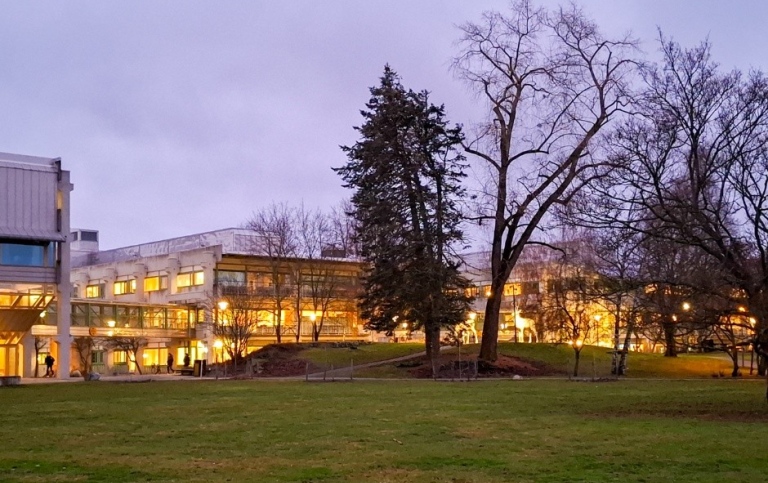
Foto: Margareta Ohné
Mats Björk, course coordinator for Biology of the Garden, states that while he generally prefers in-person teaching with direct student interaction, the online lectures still work well and encourage a lot of discussions. He also finds it rewarding to reach a much larger audience, especially since the course focuses strongly on environmental and climate issues.
International students
Regarding international exchange students, we have 28 incoming students this semester, compared to 36 last spring. They come to BIG through various agreements: 8 through BIG’s own bilateral agreements, 7 through faculty agreements (all from the University of Illinois), 8 through central non-European agreements (Canada, Mexico, South Korea, Australia, and Florida in the USA), 3 through CIVIS, and 2 through bilateral agreements from other departments within the faculty.
As usual, the number of outgoing students is lower, but still higher than last year. This semester, 7 students are going abroad (compared to 4 last spring), traveling to the Arctic University of Norway, Barcelona in Spain, Nanyang Technological University in Singapore, and the University of Illinois in the USA. Additionally, several students are undertaking Erasmus+ internships.
Please note that the above figures do not include Biologists in Society, internship courses, or degree projects.
Last updated: 2025-12-09
Source: Institutionen för biologisk grundutbildning