


Vaccines - how do they really work?
This was the topic of BIG's latest seminar for biology teachers, held on 9 October. Anna-Lena Spetz and Ylva Engström, both professors at the Department of Molecular Biosciences, Wenner-Gren Institute, spoke and answered questions.
A lesson on vaccines
Anna-Lena, an immunologist, started the seminar with a thorough review of how the immune system works and the biological background of vaccines. The historical development has been breathtaking, from Jenner's first attempt to vaccinate against smallpox in the late 18th century to the current situation, where the smallpox virus has been eradicated and other diseases have become so rare thanks to vaccination that we hardly think about them.
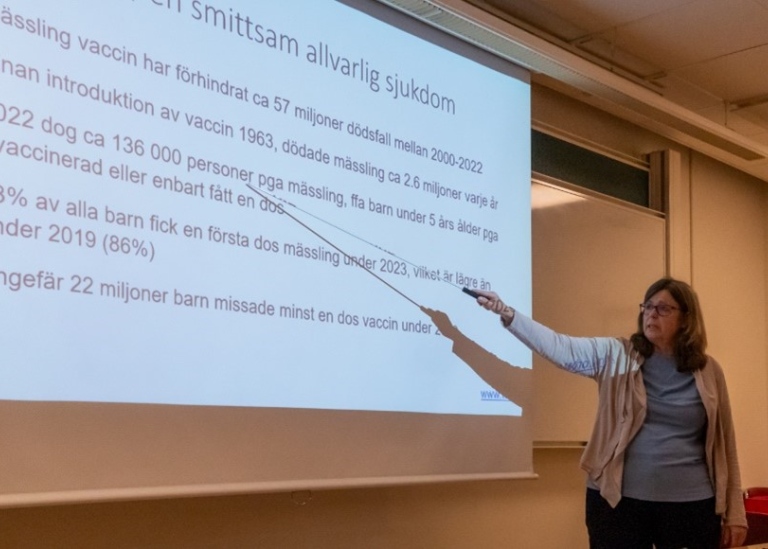
Anna-Lena Spetz talks about the importance of measles vaccination. Photo: Margareta Ohné.
Anna-Lena has done her own research on HIV and Covid vaccines and knows how complicated it is. The development of the mRNA vaccines against Covid seemingly happened at record speed but was based on more than 20 years of basic research. Now the big challenges are to develop working vaccines against infectious diseases such as malaria, tuberculosis and HIV. Vaccines could also be used to alleviate immune disorders such as allergies and autoimmune diseases, which is what Anna-Lena is currently researching.
In the discussion that followed, Anna-Lena and Ylva touched on additional aspects such as the need for rest after vaccination (there is a lot to happen in the body after a vaccination), the risk of rare side effects of vaccines, and the ability of young children to infect their grandparents with huge doses of viruses.
Course tips and Nobel prizes
Someone who knows a lot about infectious diseases is Ylva. She is a molecular biologist who researches the regulation of gene expression, but is also the course leader for BIG's orientation course on the biology of infectious diseases. It is 7.5 credits and is given remotely at quarter speed (in Swedish), this spring for the last time. Read more about the courses Swedish page here.
The seminar ended with Ylva explaining the background to this year's Nobel Prize in Physiology/Medicine (micro-RNA) and Chemistry (protein structures).
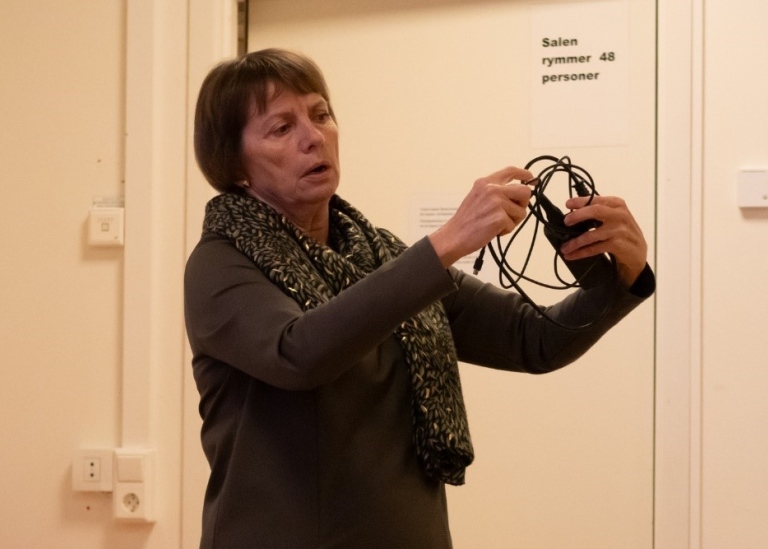
Ylva ENgström explains the Nobel Prize in chemistry. Photo: Margareta Ohné.
Next seminar??
How BIG's collaboration with biology teachers will be organised in the future is an open question. In recent years, BIG has organised two or three seminars per academic year, but unfortunately not many biology teachers have attended. So what should we do in the future? Comments, suggestions and requests are warmly welcome - write to Birgitta Åkerman!
Last updated: 2024-10-26
Source: Margareta Ohné