


Bolin Days 2025
The Bolin Centre for Climate Research successfully hosted the 17th edition of its annual internal conference, Bolin Days 2025, on 26–27 November at Stockholm University.
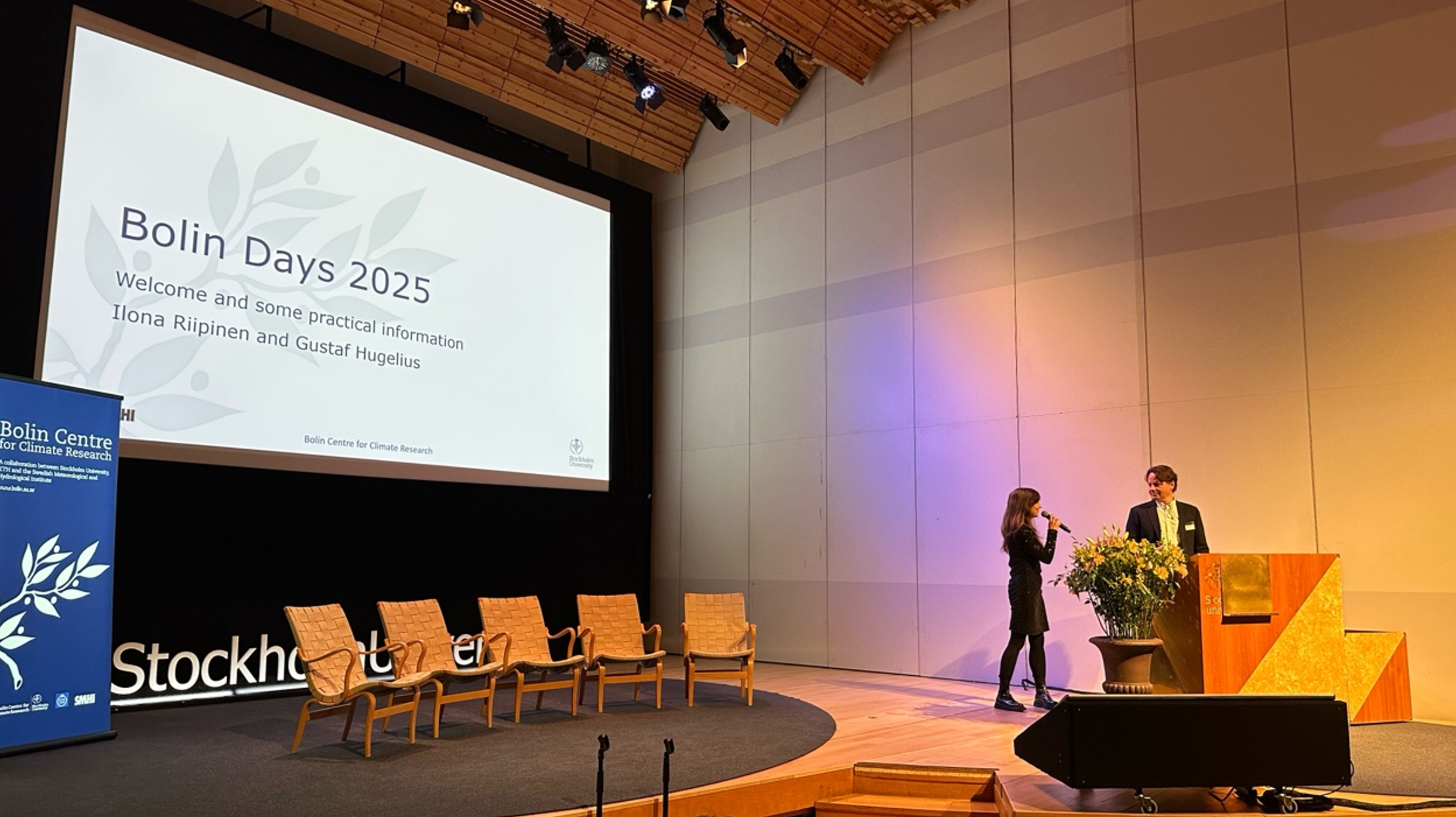
Director Ilona Riipinen and Deputy Director Gustaf Hugelius welcoming the participants to the 17th edition of the Bolin Days. Photo: Laila Islamovic
Two Days of Climate Science, Collaboration and Community
The event brought together researchers from across the Centre to share the latest developments in climate science, exchange ideas, and strengthen interdisciplinary collaboration.
The conference opened with a welcome chaired by Director Ilona Riipinen and Deputy Director Gustaf Hugelius, setting the tone for two days filled with scientific presentations, discussions and networking. The first session focused on fifteen years of climate modelling at the Bolin Centre, highlighting progress in methodology and improved reliability in climate projections thanks to tools such as machine learning and emergent constraints.
A lively poster session followed, giving PhD-students and early-career researchers an important platform to showcase their ongoing work and receive feedback from colleagues across disciplines. Later in the morning, the programme turned toward polar science, with talks exploring the central Arctic seabed, Antarctic sea-level rise projections and shared database initiatives supporting Arctic carbon cycle research.
In the afternoon, participants explored how climate science informs society and decision-making. The session included contributions on environmental policy, governance and community engagement, and even a creative performance titled Glacial Traces, illustrating how artistic expression can help communicate climate change impacts. The first day concluded with a dinner at Koppartälten in Hagaparken, with live entertainment from Stämbröderna and, of course, a Céilidh.Two Days of Climate Science, Collaboration and CommunityTwo Days of Climate Science, Collaboration and Community
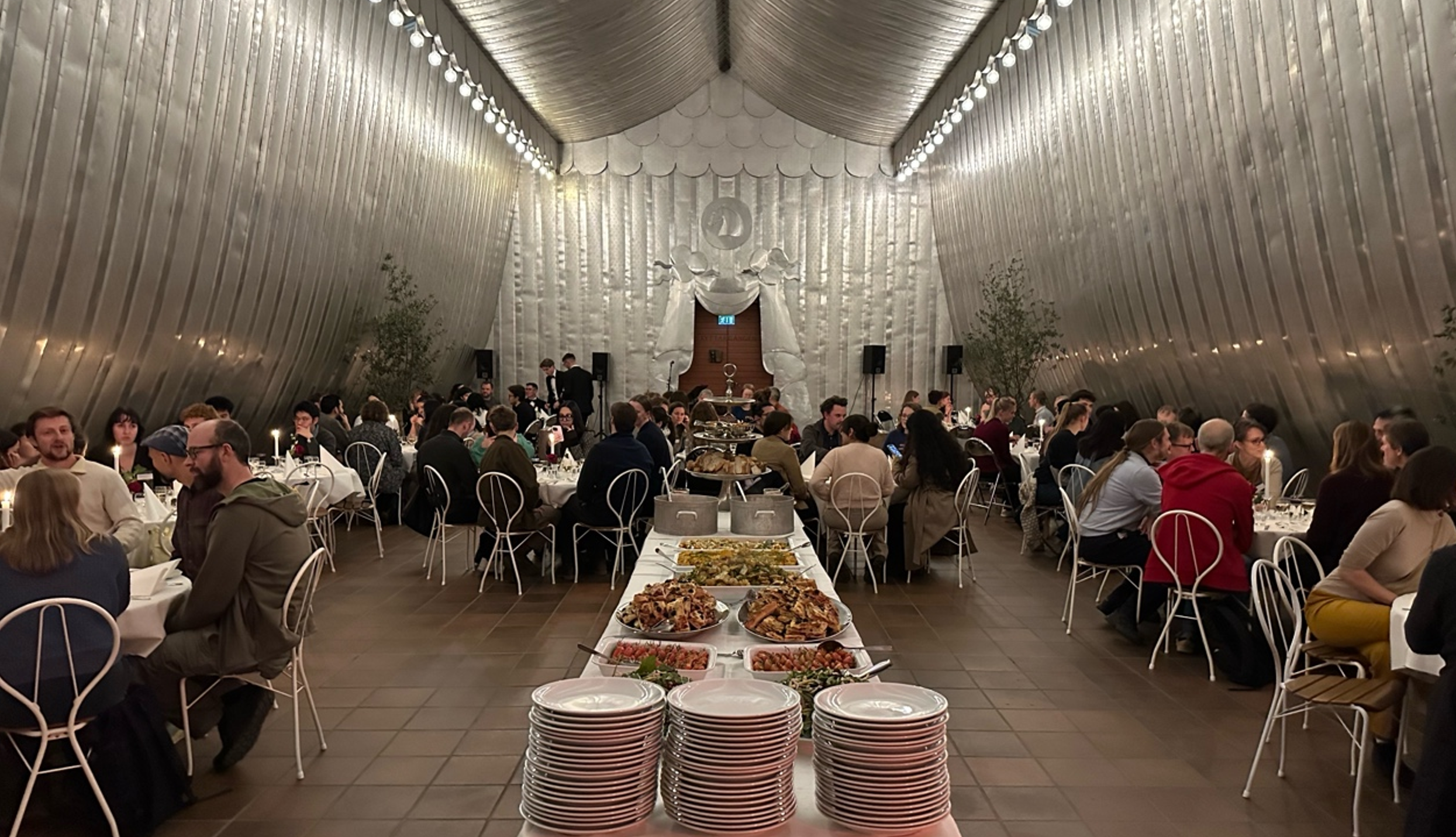
Day one of the Bolin Days wrapped up with a conference dinner at Koppartälten in Hagaparken. Photo: Laila Islamovic
Day Two: A Broader Look at Climate Research
Day two began with a series of talks integrating biological and climate research, from marine ecology to palaeogenetics, demonstrating the growing role of cross-disciplinary approaches in understanding how ecosystems respond to climate change. A second poster session offered more opportunities for scientific exchange, followed by a session focused on land-surface processes and interactions among soils, water and vegetation.
The final scientific session of the conference centred on past, present and future changes in the Atlantic Meridional Overturning Circulation (AMOC). Alongside research updates, a panel discussion with journalists explored the communication challenges associated with “high-impact, low-likelihood” climate events – a timely reminder of the responsibility researchers share in informing public understanding and policy.
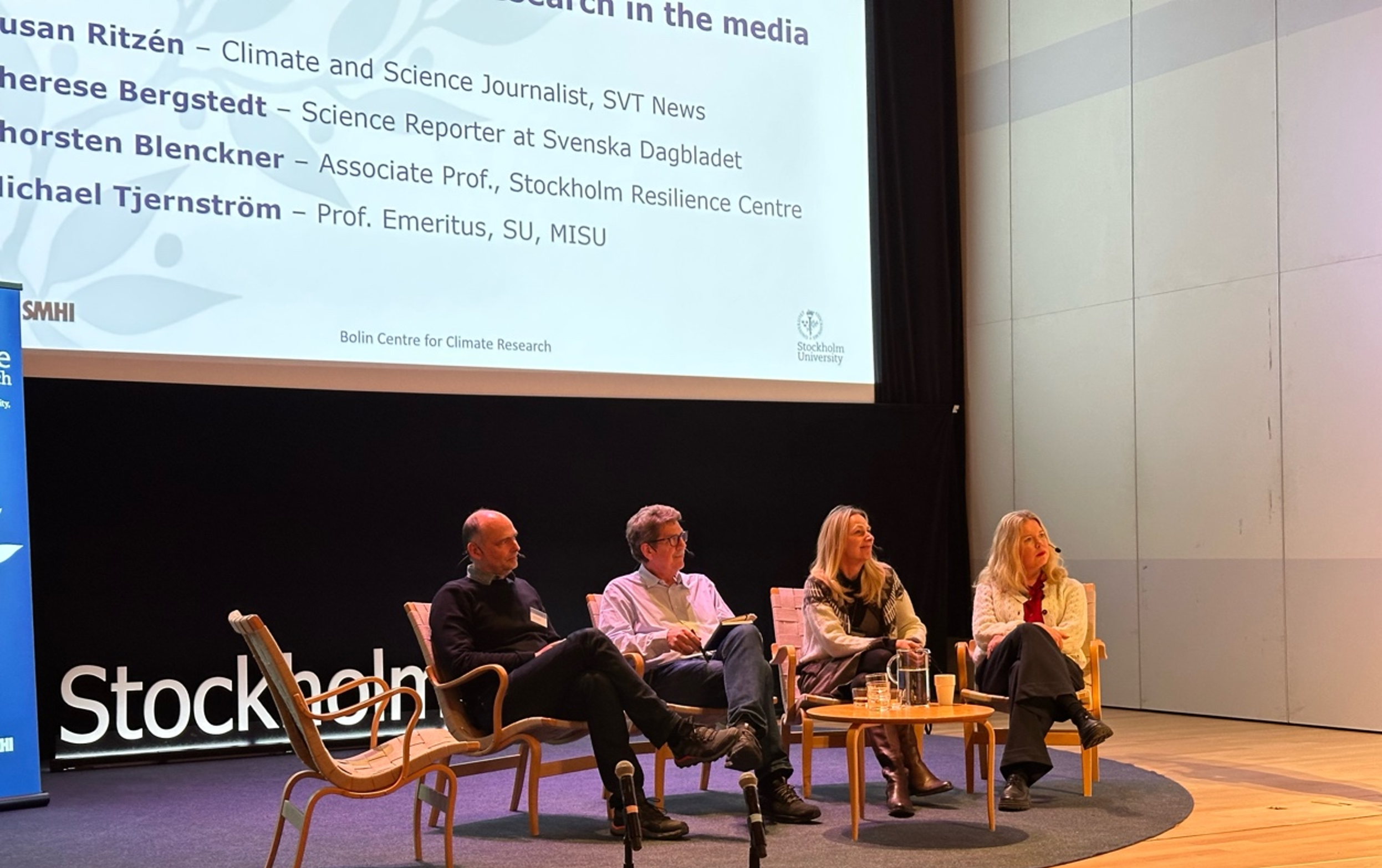
The session on the AMOC and communicating high-impact, low-likelihood events was organized as a panel discussion. The invited panelists were: Thorsten Blenckner from Stockholm Resilience Centre (left), Michael Tjernström from MISU, Susan Ritzén from SVT and Therese Bergstedt from Svenska Dagbladet. Photo: Laila Islamovic
Bolin Days 2025 concluded with closing remarks from the organisers and the announcement of the poster competition winners. Big congratulations to:
- 1st place: Lea Haberstock, Department of Environmental Science – How difficult is it to measure cloud droplets?
- 2nd place: Blanda Matzenbacher, Department of Geological Sciences – A Collapse Without Return: The Demise of C.H. Ostenfeld Glacier’s Marine Margins
- 3rd place: Jonathon Clifford Winnel, Department of Ecology, Environment and Plant Sciences – Finding refugia from climate-driven ‘invasion’
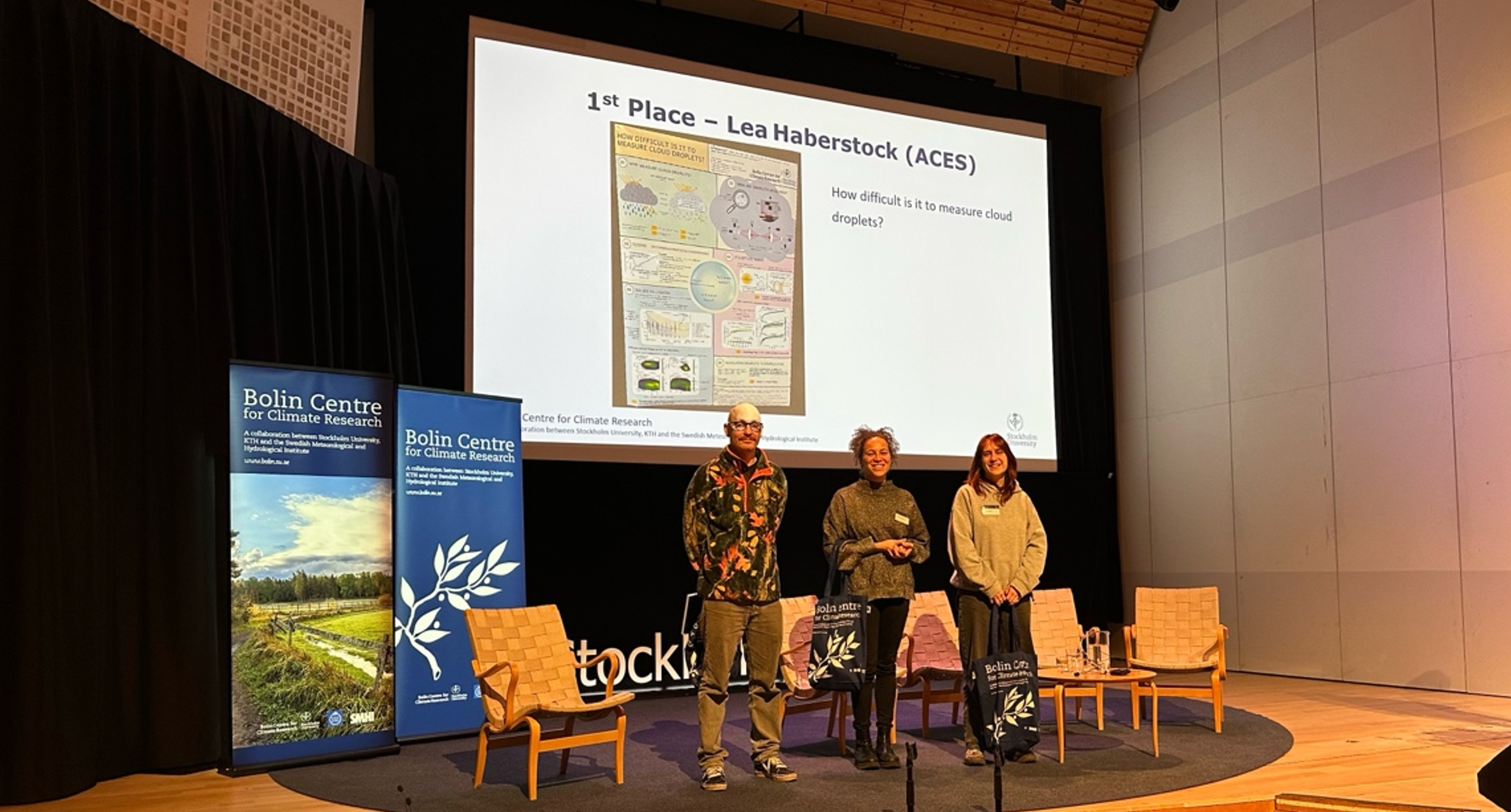
Bolin Days 2025 poster competition winners. From the left: Jonathon Clifford Winnel, Blanda Matzenbacher, Lea Haberstock. Photo: Laila Islamovic
Looking ahead
Once again, Bolin Days demonstrated its importance as a cornerstone of the Centre’s internal community building. The event fostered new collaborations, strengthened networks between established and early-career researchers, and celebrated the diversity of expertise that drives world-class climate research at the Bolin Centre.
We look forward to seeing the ideas and connections from these two days continue to grow, and to welcoming everyone back for Bolin Days 2026, which will take place on 17–18 November!
Last updated: 2025-12-10
Source: Ines Jakobsson