


Halvtidsseminarium, med Jón Ingi Hlynsson
Doktorand Jón Ingi Hlynsson talar om och diskuterar sitt avhandlingsarbete under titeln "Something Intrusive This Way Comes: Innovating OCD Treatment with Augmented Reality" i ett så kallat halvtidsseminarium.
Handledare: Professor Per Carlbring, Psykologiska institutionen, Stockholms universitet, och universitetslektor Jan Bergström, Psykologiska institutionen, Stockholms universitet.
Granskare: Professor David Mataix-Cols, Karolinska Institutet, och docent Matilda Frick, Psykologiska institutionen, Stockholms universitet.
Avdelningen för klinisk psykologi ansvarar för dagens halvtidsseminarium. Kontaktperson är Jón Ingi Hlynsson.
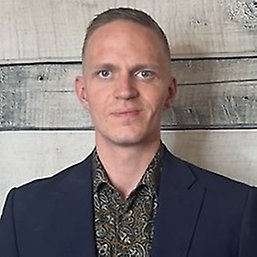
Doktorand Jón Ingi Hlynsson
Sammanfattning (på engelska)
Obsessive-compulsive disorder (OCD) affects a substantial proportion of society and is associated with high economic burden. Despite the availability of effective treatments, many individuals do not receive evidence-based treatments due to barriers to accessibility, affordability, and scalability.
This project comprises three studies that aim to further current understanding of OCD from the perspective of a) definition and conceptualization, b) treatment, and c) measurement.
Specifically, study 1 is a literature review that examines the rationale for separating OCD from the anxiety disorders by contrasting cognitive models of anxiety disorders and OCD, and reviewing phenomenological and psychobiological evidence for OCD's distinctiveness.
Study 2 examines Augmented Reality Exposure Therapy (ARET) as a promising alternative to conventional face-to-face therapy for OCD. In particular, study 2 evaluates ZeroOCD, an AR-based cognitive-behavioral self-help intervention for contamination-related fear, in a three-armed randomized control trial comparing: (1) ZeroOCD with minimal therapist guidance, (2) CBT delivered via videoconferencing, and (3) a waitlist control condition.
Finally, study 3 examines the psychometric properties of the 4-Item Obsessive-Compulsive Inventory (OCI-4) in a Swedish sample in an effort to obtain validity evidence for its usage to monitor treatment outcomes during OCD therapy. In particular, study 3 aims to evaluate the factorial validity of the OCI-4 and its measurement invariance, while also examining divergent and convergent validity.
Collectively, this project aims to approach OCD from different angles to help foster a holistic understanding of the following three questions: 1) How can OCD be defined, 2) how can OCD be treated, and 3) how can OCD be measured.
Senast uppdaterad: 2026-05-05
Sidansvarig: Psykologiska institutionen