


Italian Historical Linguistics
Research subjectItalian historical linguistics is concerned with the evolution of linguistic structures from Latin to Italian and their development from the Middle Ages to the Nineteenth century.

Discover the research at Stockholm University through our pages for research subjects, projects and research groups!
They also lead you to our researchers profile pages, our departments and courses and programmes.
Showing 1301-1320 of 2793 results
Italian historical linguistics is concerned with the evolution of linguistic structures from Latin to Italian and their development from the Middle Ages to the Nineteenth century.
Italian linguistics is concerned with the linguistic structures of contemporary Italian. Moreover, it studies the use of contemporary Italian in literary and non-literary texts.

The research area Italian literature is a very broad field that examines literary texts in different genres, from different epochs and from a variety of theoretical perspectives.

Italian philology is the study of literary and non-literary texts written in Italian or in one of the Italian dialects from the Middle Ages to the present.

At Stockholm University research is conducted within in the field of second language acquisition, where the learning of the Romance languages in particular is in focus.

This PhD thesis project studies how formal and informal structures influence IT alignment in public organisations. The project also explores how IT alignment improves organisational agility – one of the determinants of a successful digital transformation.

The aim of this PhD thesis project is to study the IT governance mechanisms that influence digital transformation in different organizations. We also study their influence on organizations’ performances.

This thesis project has artistic leadership in Swedish institutional theatre as its area of interest. With an aim to challenge a dominant notion of artistic leadership being the subjective concern of a charismatic, individual leader, Carolina Frände will investigate an alternative understanding of leadership in Swedish theatre.
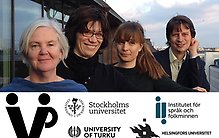
Interaction and Variation in Pluricentric Languages – Communicative Patterns in Sweden Swedish and Finland Swedish is a research programme by partners Stockholm University, University of Helsinki , University of Turku and the Institute for Language and Folklore in Gothenburg.
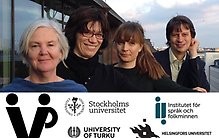
Interaction and Variation in Pluricentric Languages – Communicative Patterns in Sweden Swedish and Finland Swedish is a research programme by partners Stockholm University, University of Helsinki , University of Turku and the Institute for Language and Folklore in Gothenburg.
An important part of the research is focused on the use of heterogeneous catalysts where the catalytic units (metal and / or enzyme) are immobilized on different types of support materials such as mesoporous silica materials or microcrystalline cellulose.
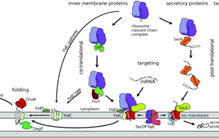
Our most important goal is to identify the bottlenecks hampering protein production and utilise this information to further engineer bacterial strains with improved production characteristics.
Research in this subject is conducted in Japanese linguistics and language education on the one hand, and Japanese culture on the other.

The project 'Jewish Fashion in Sweden' is led by professor Klas Nyberg, Dept. of Media Studies.
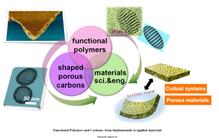
Our mission is to design, create and investigate broadly defined functional polymers and carbons, particularly in a well-structured (e.g., colloidal or porous) form, via simple chemistry and processing.
The team’s main focus is to valorize biobased residues and design of circular products.
Journalism is an interdisciplinary field of research with a long history at Stockholm University. The subject was established in 1990 when the former Journalism School merged with the Centre for Mass Communication Research.

Digital platforms have brought about comprehensive changes in both the production and consumption of journalism. Social media platforms have become influential spaces for news consumption, especially among young citizens.
This doctoral project by Rasmus Kyllönen focuses on issues related to children's participation in the public sphere and their creation of childhood publics.
How do positive emotions help scientists create knowledge?