


Research project Emergent “world-class” transport infrastructures
Large-scale transport infrastructure projects such as the construction of ring roads, highways and bridges are re-making many cities in Africa at considerable speed. Seen as key for promoting economic development and modernizing African cities, such projects draw on globally circulating models, expertise and finance. Despite their centrality in reshaping urban spaces and opportunities and in engendering new forms of governing, research on transport infrastructure projects in urban Africa is scarce. This project addresses this research gap through an empirically grounded study of the socio-spatial effects of new large-scale transport infrastructure projects in urban Africa. More specifically it examines how these infrastructures reconfigure patterns of urban inclusion/exclusion for instance by restructuring access to valuable infrastructural spaces (i.e. public spaces located on or adjacent to transport infrastructure, such as road sides, bridges, junctions and bus stations) for income activities and other purposes. Qualitative and ethnographic methods have been used, including participant observation and interviews with state actors, civil society leaders, and selected groups of urban dwellers. The project has been funded by the Swedish Research Council for Sustainable Development (FORMAS), grant number 2019-01908, under the national research program for “Sustainable Spatial Planning”.
Lindell, I (2021). ”Storskaliga och informella infrastrukturer i städer i det globala Syd: makt, motstånd och temporalitet i Maputo, Mocambique”, in Ullberg, S & Körling, G (eds), Megaprojekt: kritiska perspektiv på storskalig infrastruktur. Ymer, vol 141, Stockholm: Liver AB.
Pollio, A. and Odeo, J. (2025) “An accelerated state”, Dialogues on Digital Society, 1:1.
Odeo, J. O. & Lindell, I. (2026) “On the fast lane: infrastructural acceleration in times of emergency”, International Development Planning Review, 48:1&2.
Fält, L & Lindell, I, ”Imorgon river vi ditt stånd”, Utvecklingsmagasinet, gästanalys. FuF, 3 juli 2026. https://fuf.se/magasin/imorgon-river-vi-ditt-stand/
Jongh, L. and Lindell, I. (forthcoming) “Flyovers and the reconfiguring of urban space and livelihoods”, African Transport Studies.
Research presentations
Lindell, I., Odeo, J. and & Fält, L., “Impact of Large-scale infrastructure projects in Africa: Everyday lives, labour conditions and citizen influence”. International seminar ForumCiv, 20 August 2026, Stockholm.
Lindell, I., Odeo, J. and & Fält, L., “The rise of large-scale transport infrastructures in Africa”, seminar at SIDA, 26 August 2026.
Odeo, Jack “Infrastructured bodies: infrastructuring the worker in Africa’s infrastructure scramble”. Presented at Nordic Geographers Meeting (NGM), University of Reykjavik, 22-25 June 2026. https://ngm2026.hi.is/
Odeo, Jack “Objects, practices and methods: following the politics, the people, and the everyday life”. Presented at the Italian Association of Africa and China Studies (AISAC) Biennial Workshop, Polytechnic of Turin, 7-8 May 2026.
Lindell, Ilda; Fält, Lena & Msoka, Colman, Covened a panel on “Large-scale infrastructure projects and everyday life in urban Africa” (two sessions) at the European Conference on African Studies (ECAS), 25-28 June 2025, Prague. https://www.ecasconference.org/2025/
Odeo, Jack, “Expressway to the future? Acceleration as a temporality of infrastructure statecraft during times of emergency”. Presented at the European Conference of African Studies (ECAS), 25-28 June 2025, Prague. https://www.ecasconference.org/2025/
Lindell, Ilda, “The contested spaces of large-scale infrastructure projects in Maputo, Mozambique”. Invited presentation to the “Making Africa urban”, 29-31 July 2024, London.
Lindell, Ilda, “Speculative infrastructure and informality in Maputo, Mozambique”. Presented at the European Conference of African Studies, 31 May – 3 June 2023, Cologne. https://ecasconference.org/2023/
Fält, Lena “Working on the road: insights and experiences from road workers and street vendors in Accra” presented at the European Conference on African Studies, Cologne, 31 May – 3 June 2023. https://ecasconference.org/2023/
Lindell, Ilda, “Speculative infrastructure and the re-spatialization of urban informality.” the Nordic Development Research Conference (NorDev), Uppsala, 21-23 August 2023. https://www.nordev2023.se/
Lindell, Ilda, “Speculative infrastructure and informality in Maputo, Mozambique”, presented at the seminar series at the Centre for Asian Studies, Stockholm University, 23 May 2023
Lindell, Ilda, “Large-Scale Transport Infrastructure Projects and Informality in Maputo”. Presented at the Southern Africa City Studies Conference, 31 August-4 September 2020, online.
Figures:
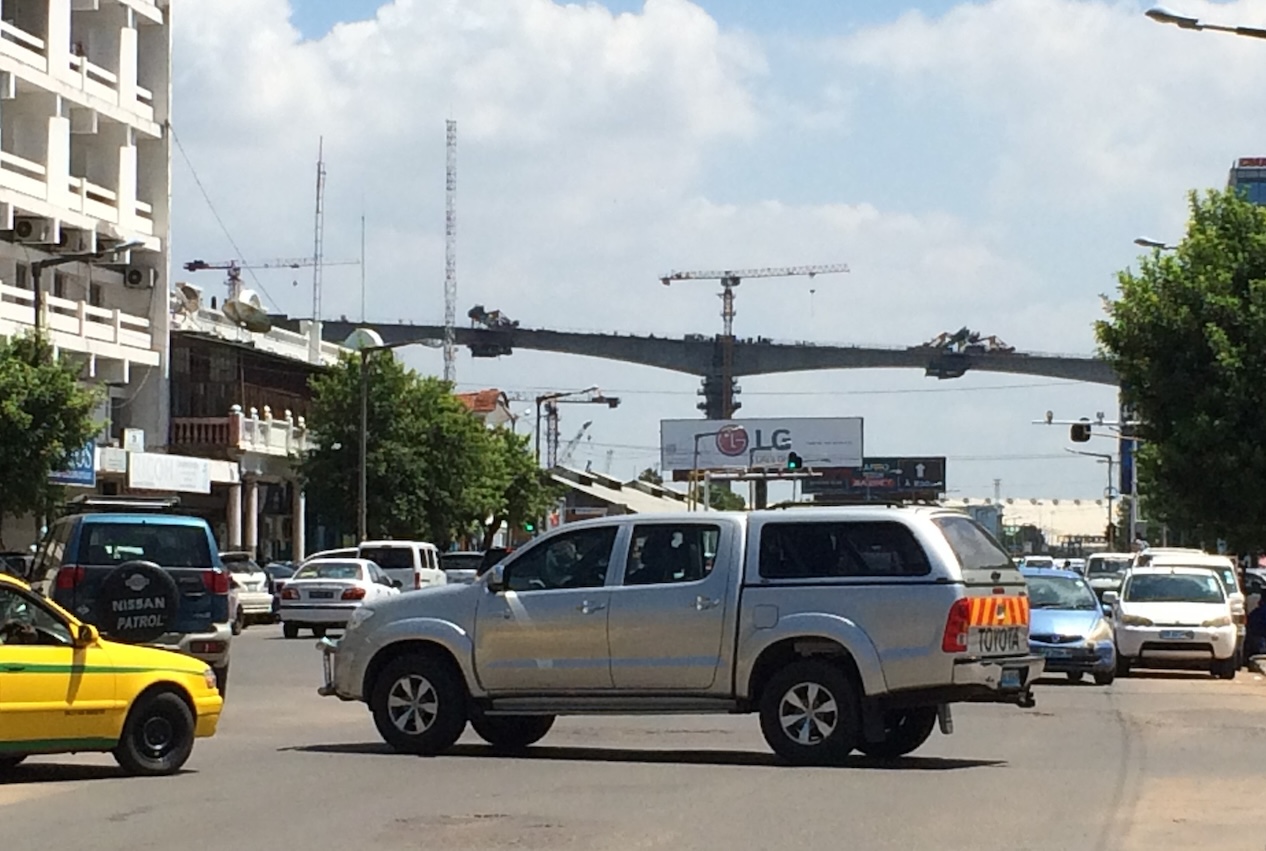
Africa’s largest suspension bridge, finalized in 2018, dominates Maputo’s skyline. Photo: Ilda Lindell.
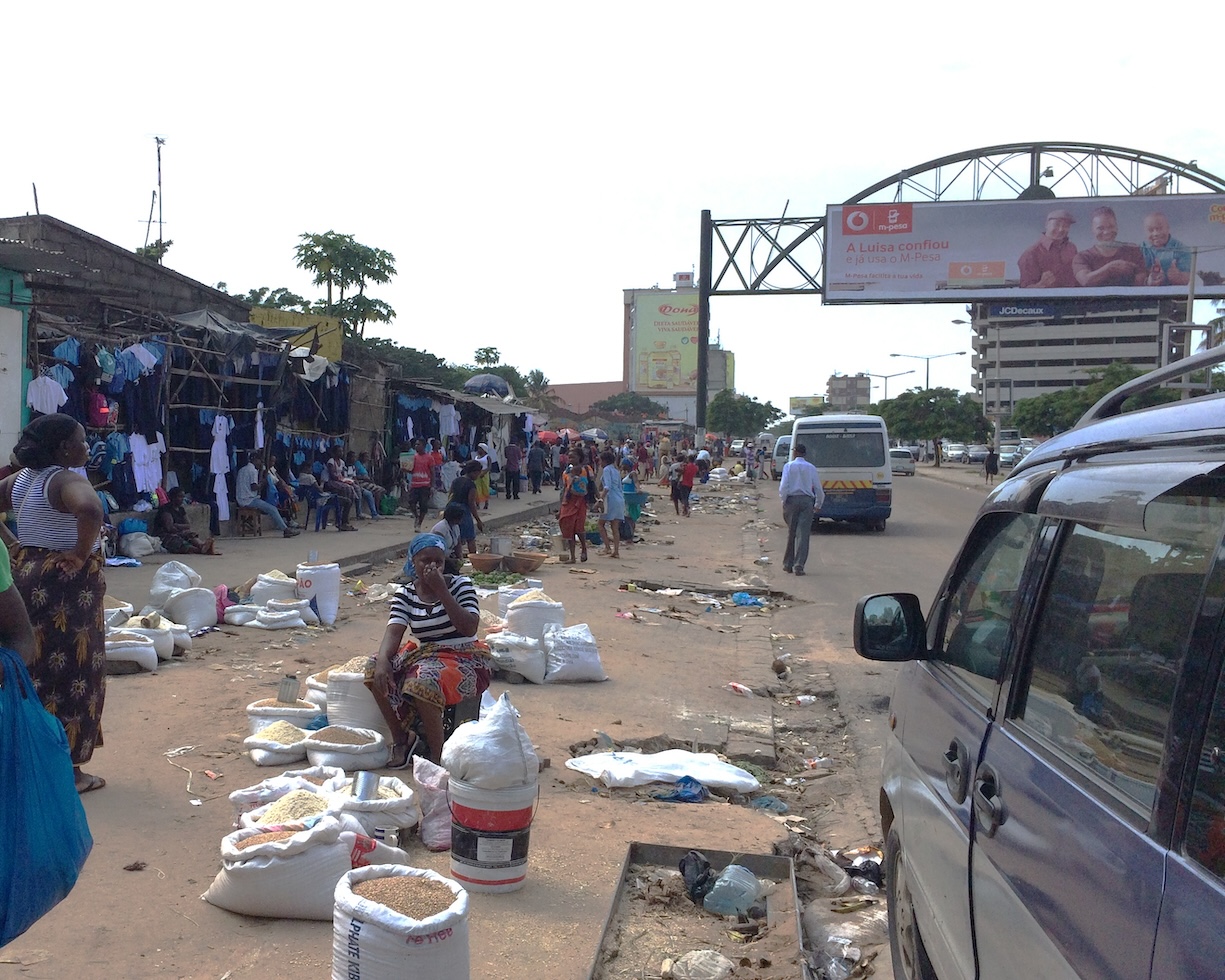
A profitable informal market nearby the bridge construction area was to be demolished. Maputo. Photo: Ilda Lindell.
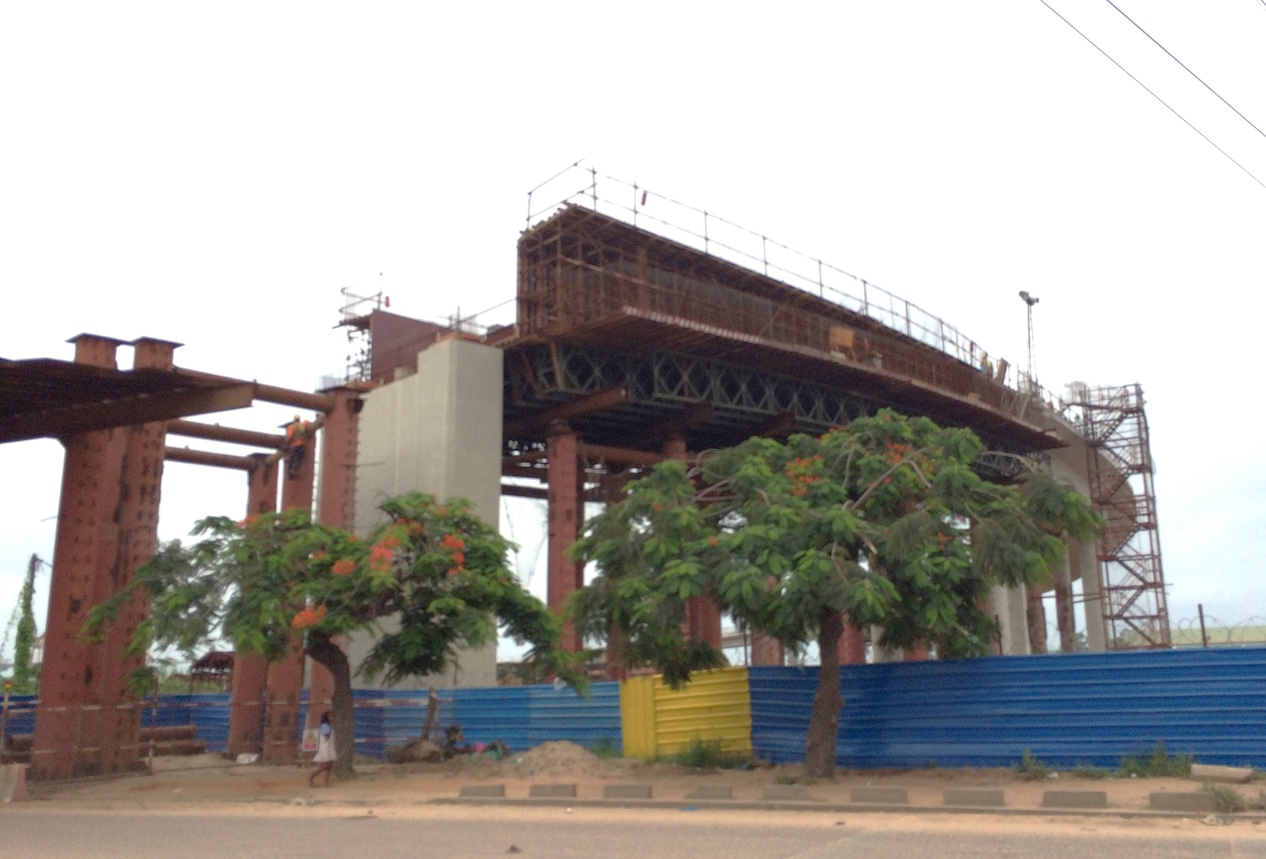
The vendors refused to vacate the land and stalled the bridge construction for one year. Maputo. Photo: Ilda Lindell.
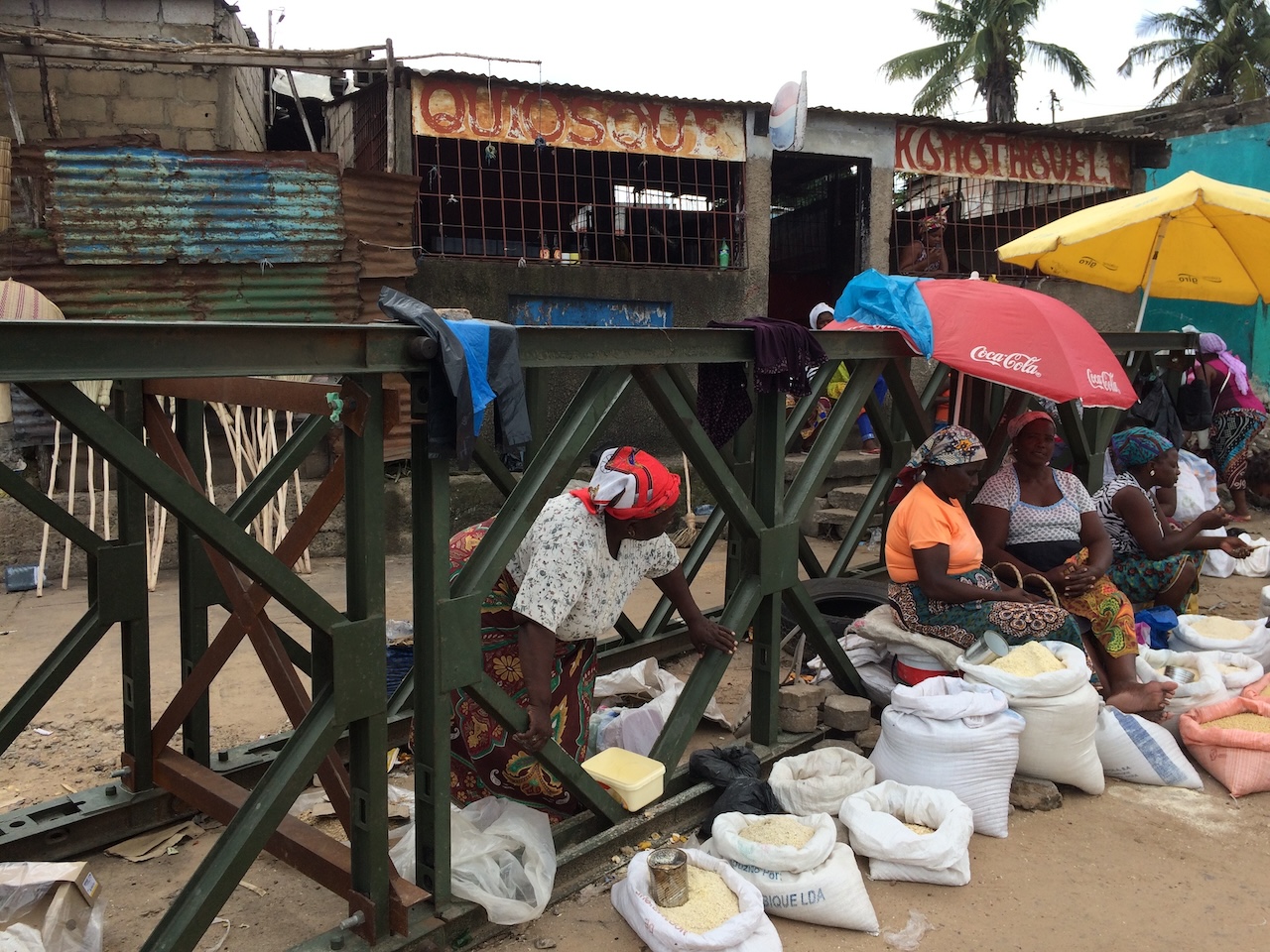
During the impass, vendors make use of the future pillars of the bridge. Maputo. Photo: Ilda Lindell.
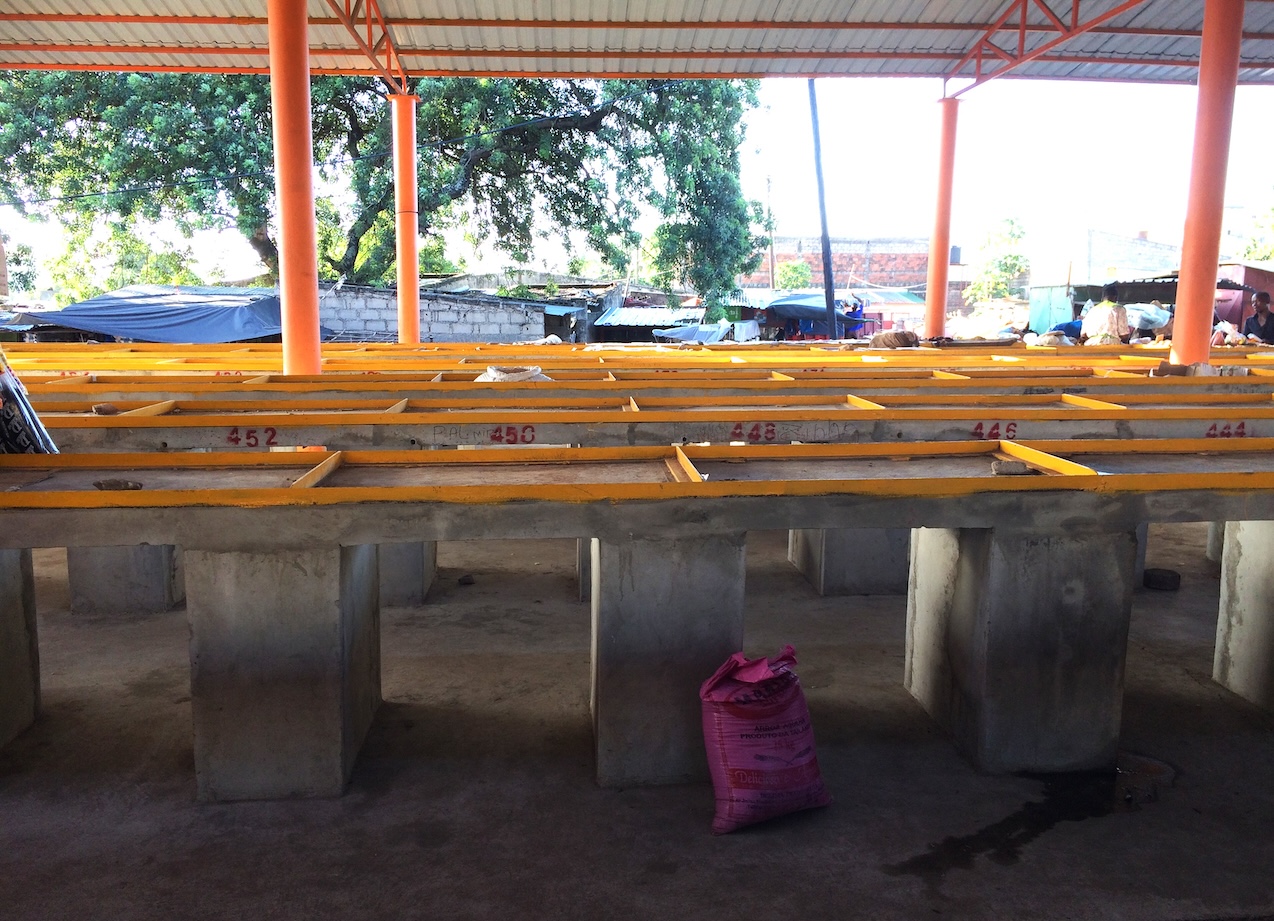
A new market space was build to relocate the vendors from the bridge area, but most vendors refused to move in. Maputo. Photo: Ilda Lindell.
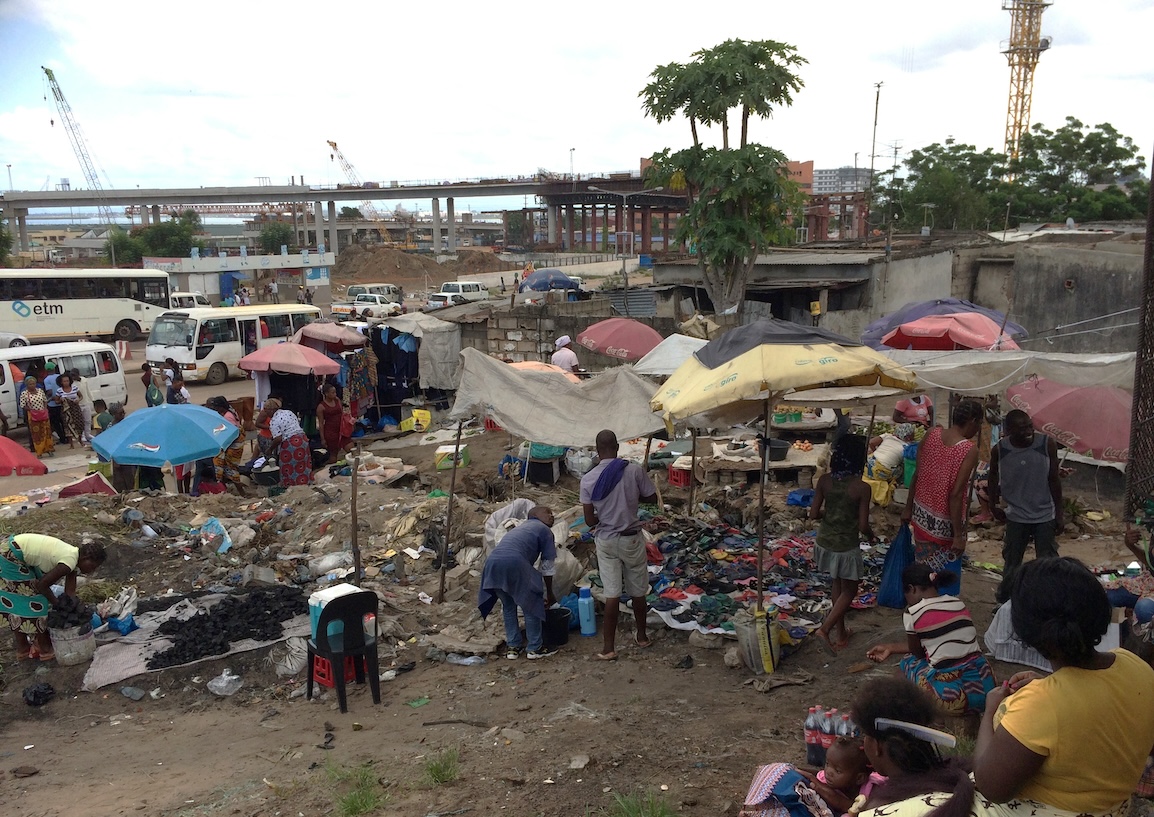
The informal market was eventually demolished. Vendors selling their products on the rubbled of their market. Maputo. Photo: Ilda Lindell.
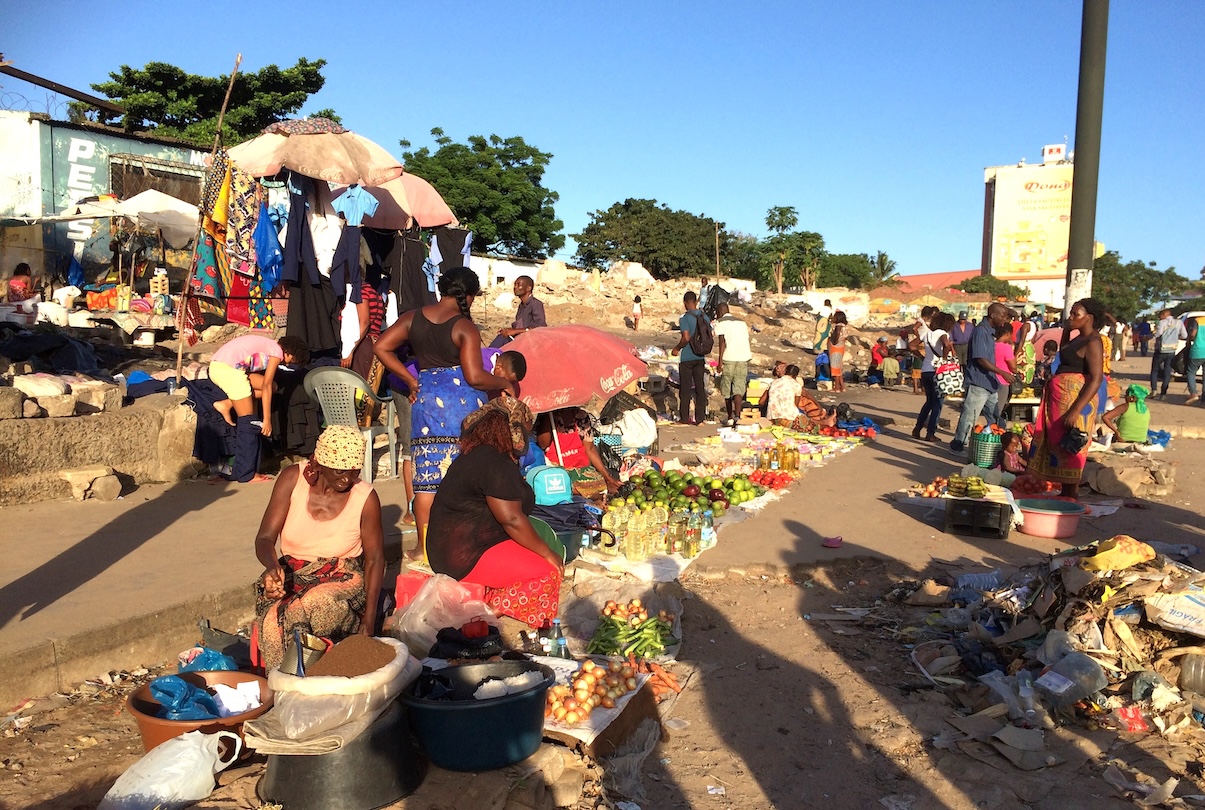
Displaced vendors momentarily re-occupy the valued market site, selling their goods on the pavement. Maputo. Photo: Ilda Lindell.
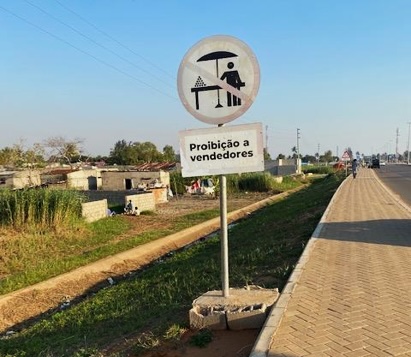
Along Maputo’s ring road, signs have been posted prohibiting vending on the roadside. Photo: Ilda Lindell.
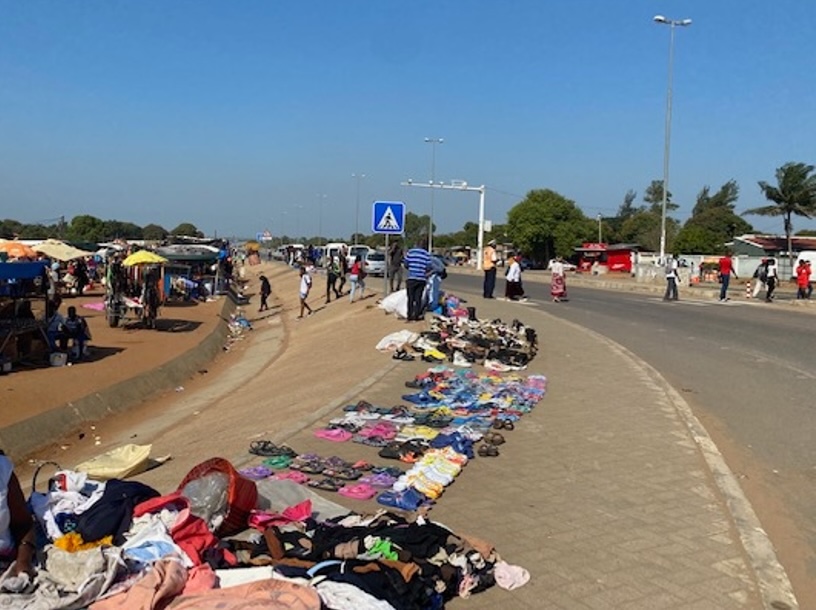
Vendors appropriate segments of the roadsides of the ring road, despite prohibitions. Maputo. Photo: Ilda Lindell.
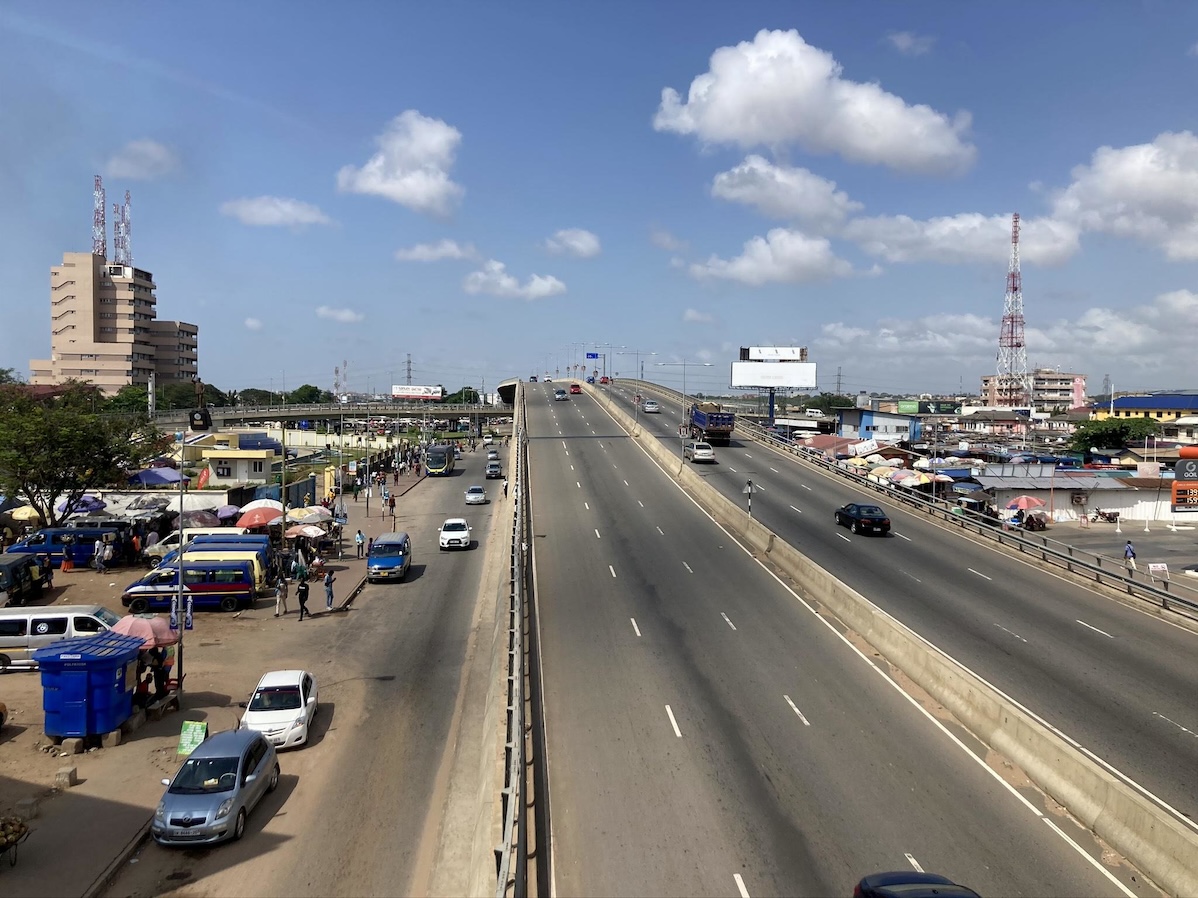
Flyover at Nkrumah Circle, a three-tier interchange in central Accra, built to replace a smaller, older roundabout. Photo: Lena Fält
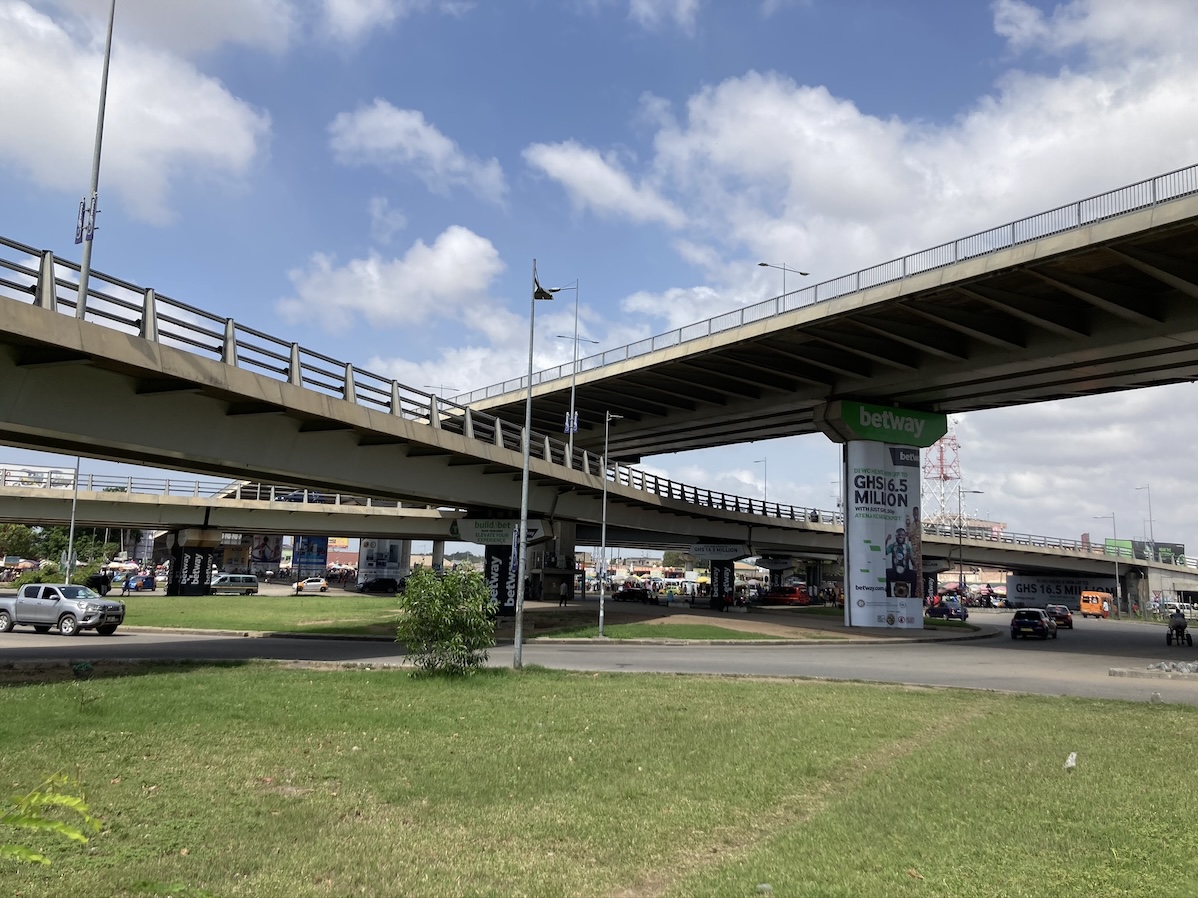
Nkrumah Circle is often referred to as “Dubai” because of its modern, large-scale infrastructure design. Photo: Lena Fält
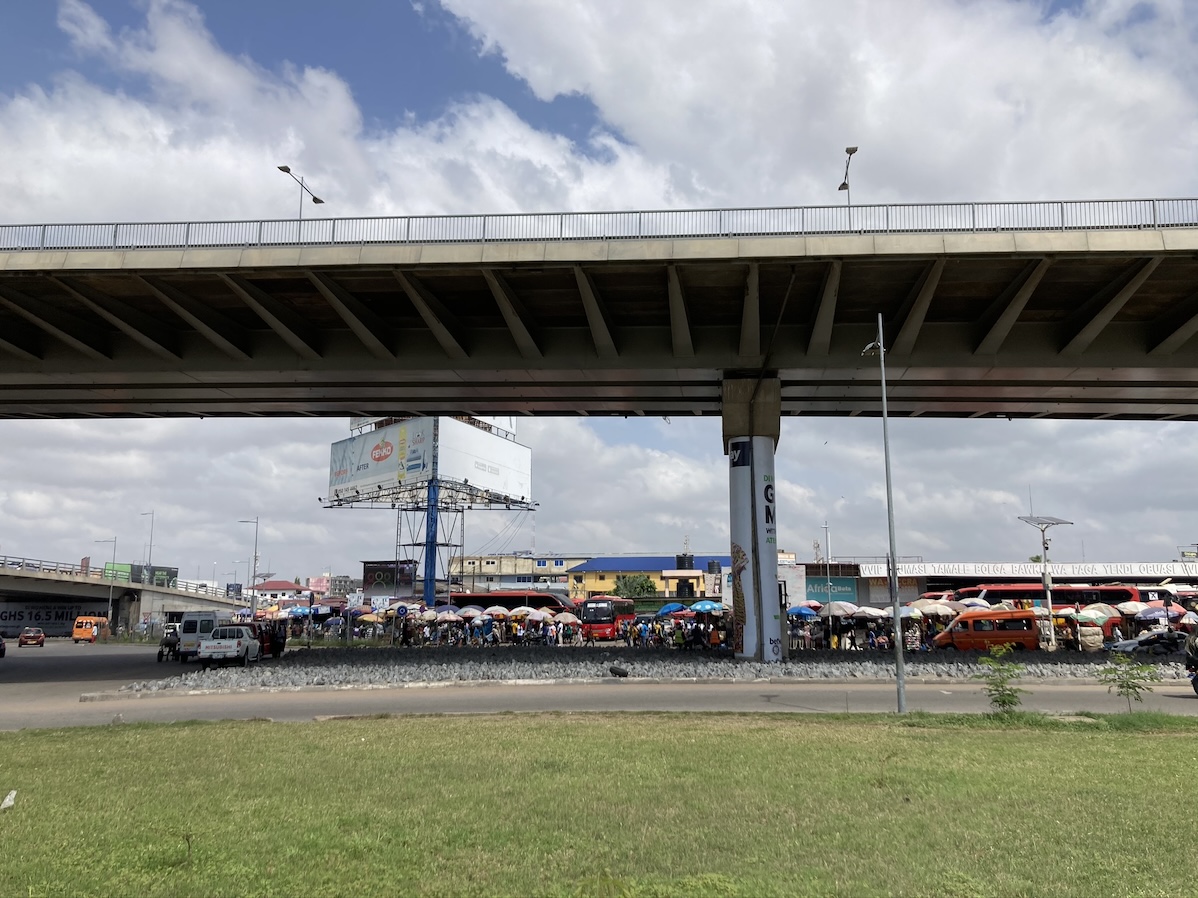
Part of the flyover, with traders in the background. Photo: Lena Fält
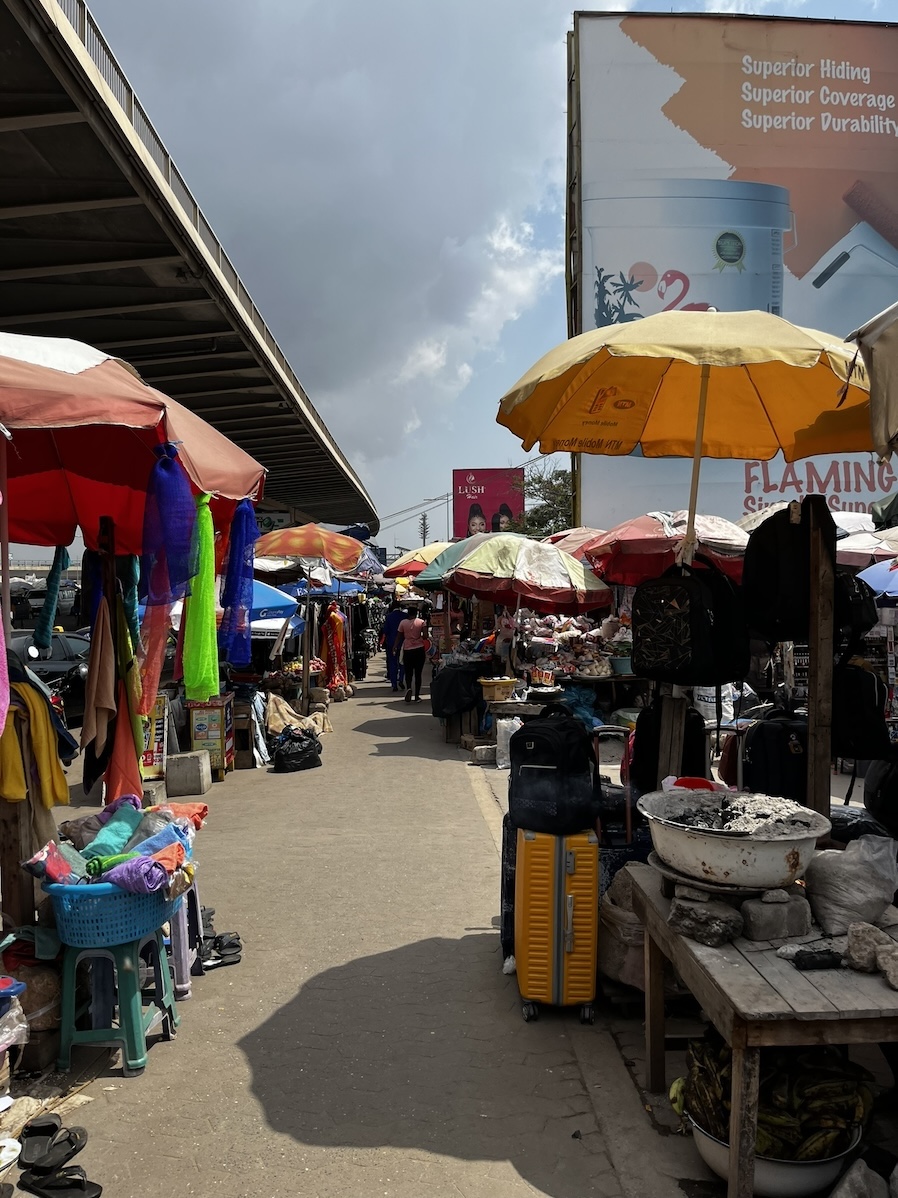
Many traders operate in the area, both at the market and on surrounding pavements. Photo: Lena Fält
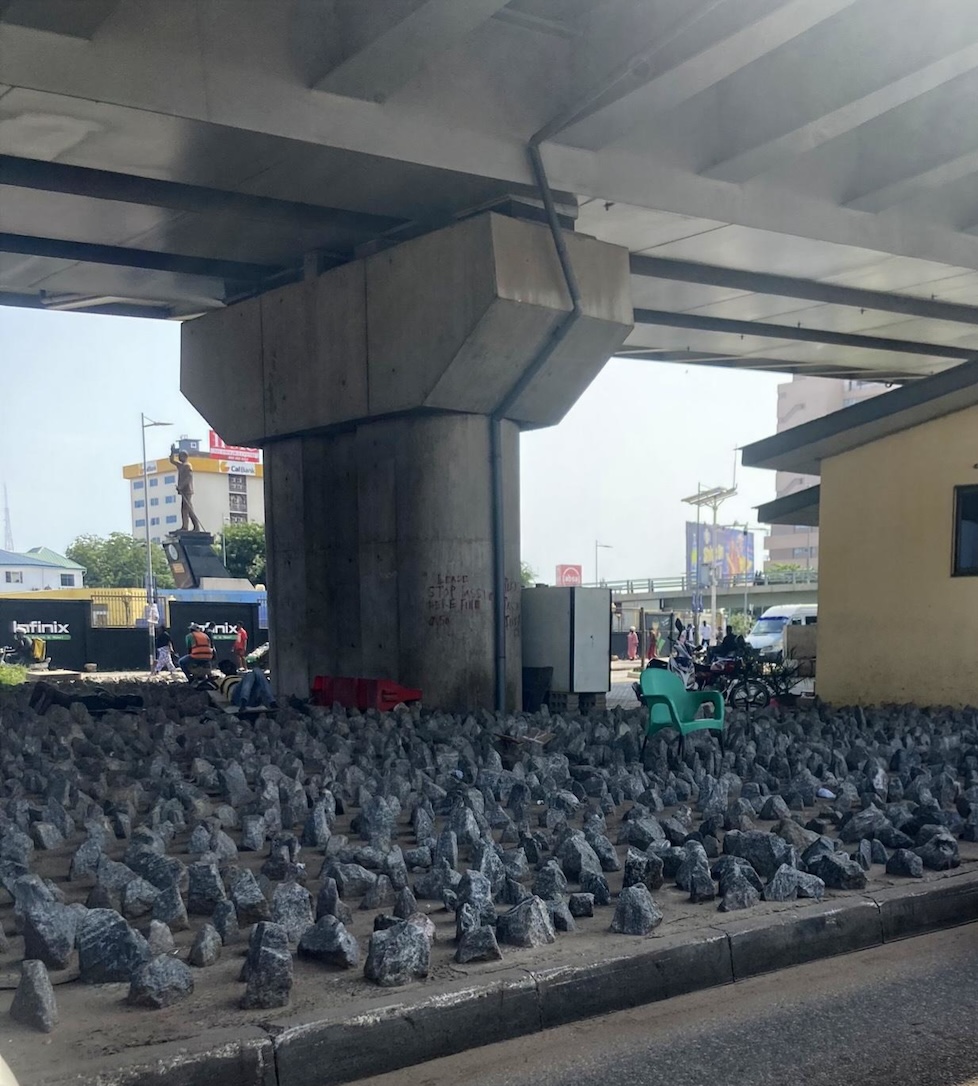
Local authorities have attempted, in different ways, to remove traders from the area. In this photo, stones have been placed under the flyover to prevent street trading. Photo: Lena Fält
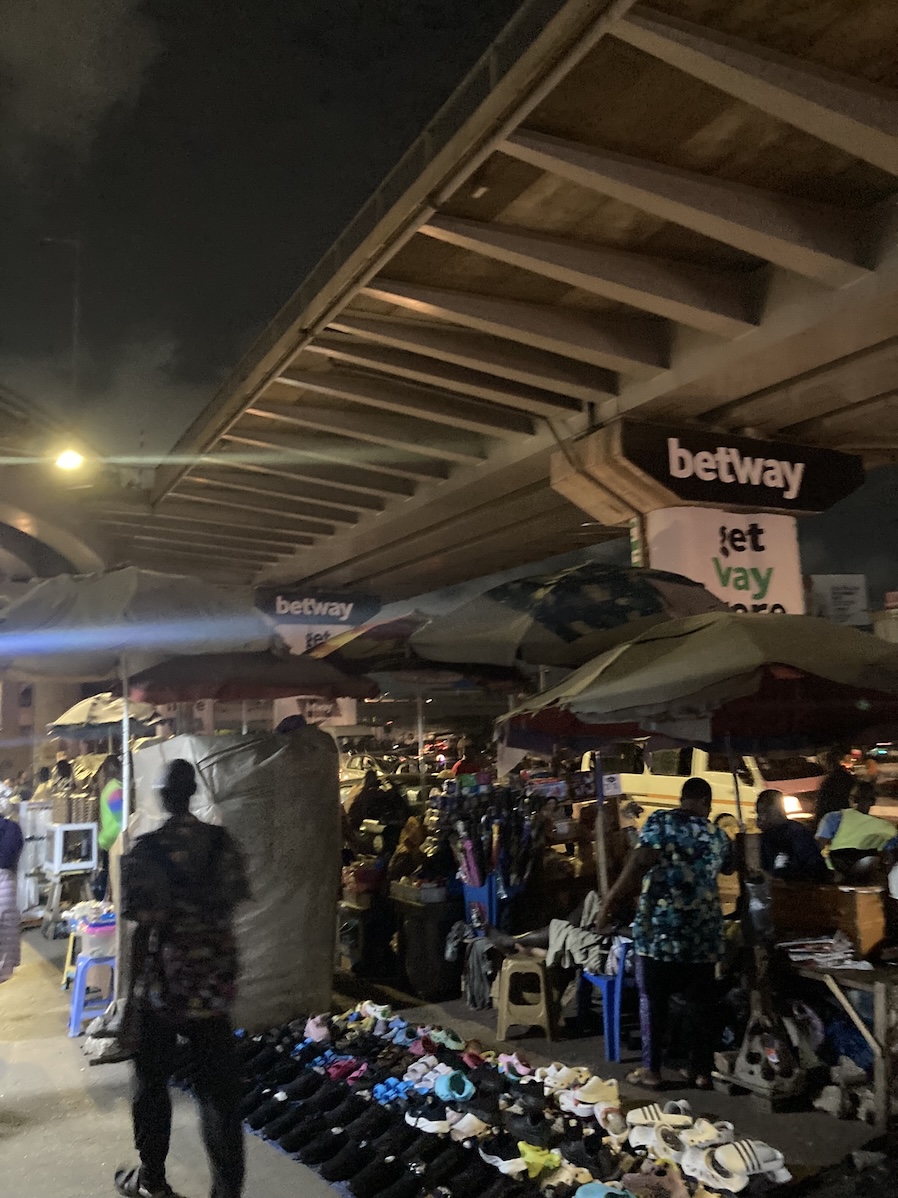
The new infrastructure has also opened new opportunities for trade. Street lighting introduced as part of the project enables traders to work in the evening and at night. Photo: Lena Fält
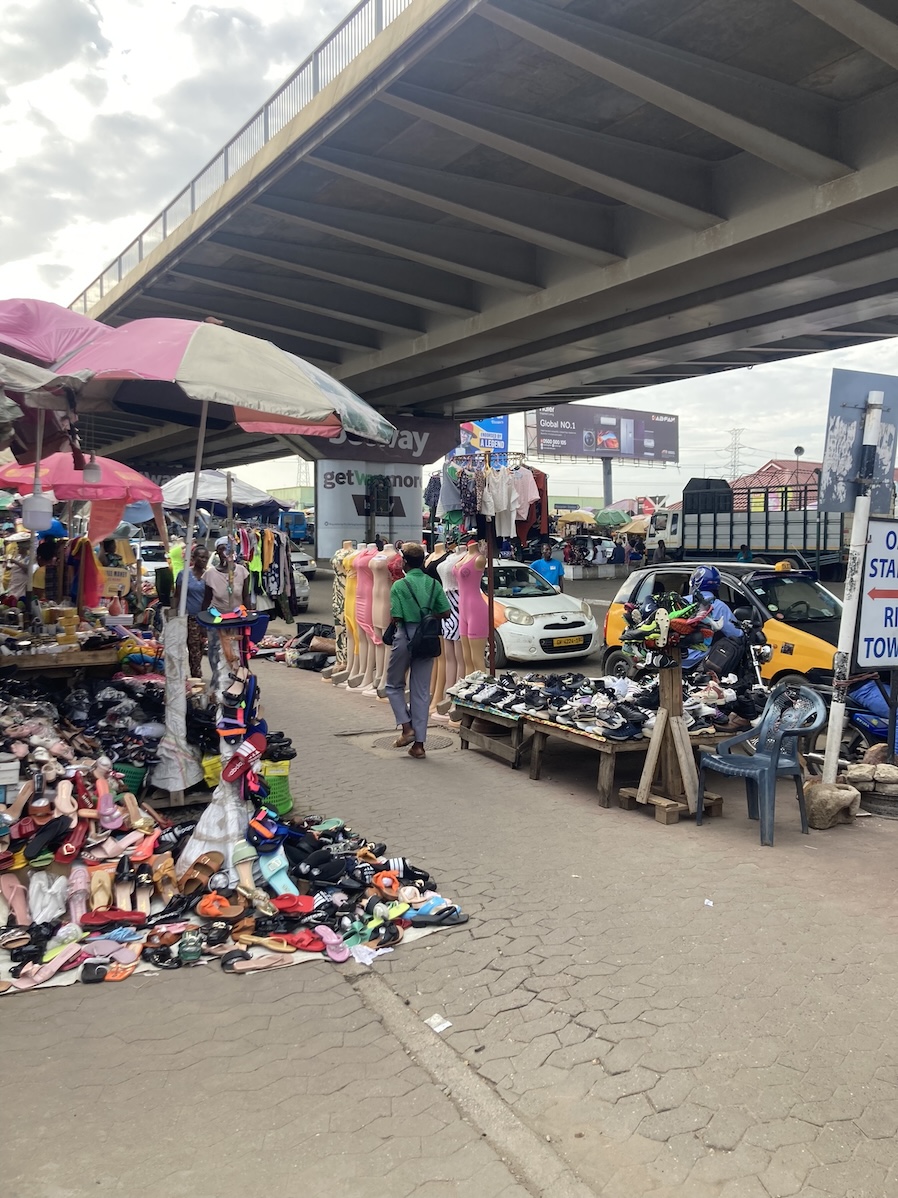
The flyover also provides traders with protection from the sun and rain. Photo: Lena Fält