


Research project Does nutrient limitation promote carbon storage in forest soils
Soils can help mitigating climatic changes by storing carbon, but how much they can store depends on nutrient availability. Here we ask how soil organisms that facilitate carbon storage handle a diet poor in nutrients – releasing more or less carbon?
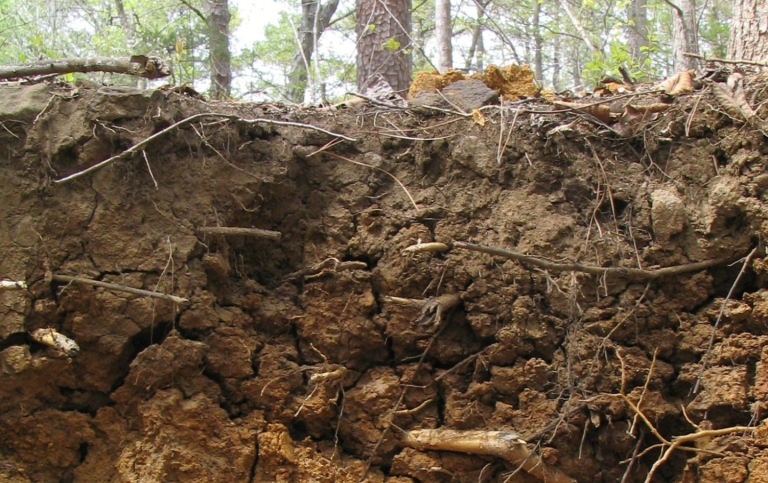
Soil MIcrobial responses to land use and climatic changes.
Soil organic carbon (SOC) is a major component of the global carbon (C) cycle, but its response to altered nutrient availability is not well known. Nitrogen (N) in particular is fundamental for the microbes that mediate the degradation of SOC, so that changes in N availability can alter the SOC balance. Three microbial responses to N shortage are hypothesized: HP1) enzyme synthesis is slowed down, thus reducing C emissions; HP2) the efficiency of conversion of C into biomass is reduced, which would maintain or increase C emissions; HP3) microbial internal recycling of N is increased. Here we ask: Which of these mechanisms is dominant, and what is their combined net effect on SOC? We will then scale up to the ecosystem level, including plant-symbiont interactions, to ask: How does N limitation interplay with plant-microbe-soil interactions?