


Research project Islamic Relics as Contested Sites of Authority: Religio-Political Appropriations of Relics
Relics have played an important but contested role throughout Islamic history. This project explores how objects and places associated with the Prophet Muhammad and other sacred figures have been used to establish, challenge and legitimise religious and political authority.
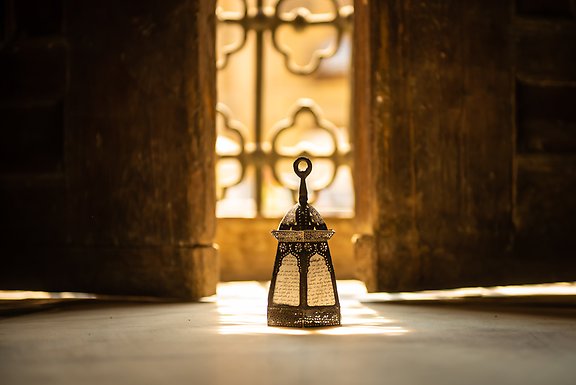
Photo: Ahmed Sabry / Pixabay
Islam is sometimes portrayed as a religion that rejects the veneration of sacred objects and places. Historical and contemporary sources, however, reveal a much more complex picture. Objects associated with the Prophet Muhammad, graves, sacred places and other material traces have long held religious significance in different Muslim traditions.
This project examines how relics have been interpreted, used and contested from early Islam to the present. It focuses particularly on how religious authorities have sought to determine which objects and practices are legitimate and which should be rejected. Relics are therefore studied not simply as objects of devotion, but as sites of conflict over who has the authority to define Islam.
By comparing historical sources with contemporary religious debates, including material from Saudi Arabia and Egypt, the project explores how material objects become part of wider struggles over religious and political authority.
The project combines the historical study of texts with perspectives from material religion. It follows debates about relics across a long historical period in order to identify both continuity and change.
The historical case studies range from early Islamic sources and Abbasid Baghdad to later Hanbali reformist thought. The contemporary studies focus on religious authorities and debates in Saudi Arabia and Egypt.
A final part of the project broadens the perspective by examining objects that are not necessarily defined as relics but may perform similar functions. It also considers how new technologies, including virtual encounters with sacred places and objects, may transform the relationship between religion and material objects.