


Research group Energy Systems
Climate change has spurred the decarbonisation of energy sectors. Yet, a viable pathway to reducing CO₂ emissions requires balancing conflicting economic and environmental aims. Our research group leverages state-of-the-art methodology to develop models for decision and policy support.
.jpg)
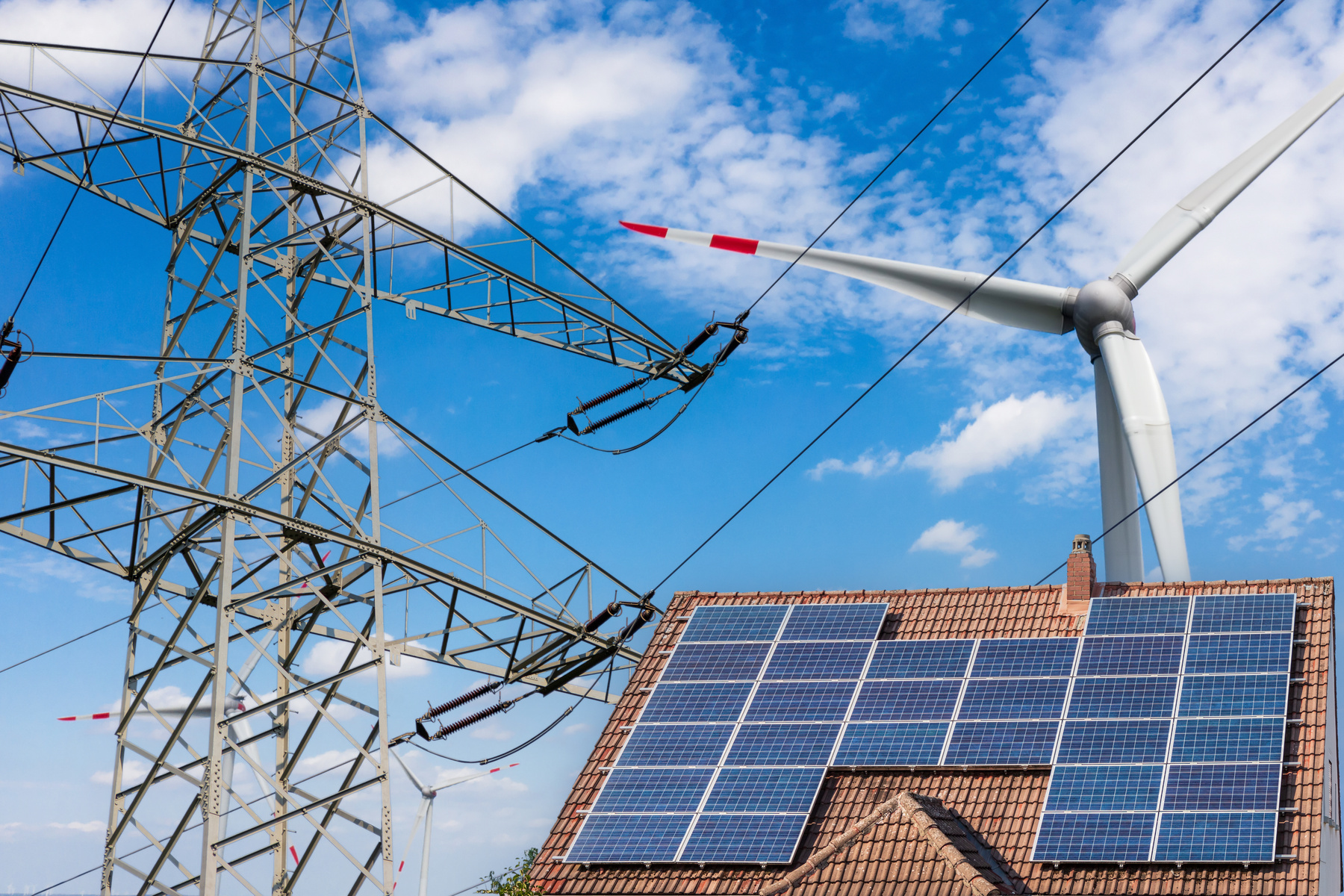
Photo: Tatiana Bartel/Mostphotos.
Energy sectors, such as those for power and heat, are crucial for industrialised economies. However, they are also among the largest polluters. According to the International Energy Agency (IEA), electricity generation alone accounts for nearly 40% of the world’s annual energy-related CO₂ emissions.
Over the past two decades, support for variable renewable energy (VRE), such as wind and solar power, has facilitated the decarbonisation of electricity generation in the EU and other OECD countries. At the same time, the electrification of adjacent sectors, such as heating, industrial processes, and transport, necessitates timely investment in new capacity as well as revision to regulations concerning CO₂ emissions and energy efficiency.
This challenge of integrating VRE while incentivising changes to the demand side is exacerbated by the decentralised nature of the power sector in most OECD countries. In particular, power plants’ investment and operational decisions are typically undertaken by profit-maximising firms, while state-regulated transmission system operators invest in new transmission capacity. Moreover, the future power sector will incorporate a complex array of decision makers and further integration with other energy sectors – industrial demand and heating, for example.
While increased VRE capacity to support electrification could be balanced by both flexible plants, such as cogeneration and hydro, and new types of agents with flexible demand, such as industrial consumers and prosumers, flexible plants or firms with assets across sectors may have greater incentive to behave strategically to affect prices. Thus, analysis of such a coupled energy system necessitates sophisticated models that are capable of not only reflecting agents’ behaviour but also representing technical sector-specific attributes. Such models require specialised expertise to calibrate and to solve in a computationally efficient manner.
Towards this end, we develop models based on game theory and mathematical programming that capture both the economic incentives of market participants and the spatio-temporal texture of energy systems. Our aim is to support policymakers in crafting a welfare-enhancing decarbonisation pathway.
Download IEA’s report “The role of CCUS in low-carbon power systems”
There are no research project connections.