Research group Group Engström
We study transcriptional and non-transcriptional functions of insect and human POU/Oct transcription factors in development, cell division and cancer. One project focuses on non-transcriptional roles of POU2F factors during mitosis. Another project focuses on alternative protein translation of a POU3F member and the mechanisms of tissue-specific regulation of Stop Codon Readthrough (SCR). We use the fruit fly Drosophila as a powerful genetic model organism taking advantage of its extensive genetic toolbox, in combination with high-throughput expression analyses, high resolution microscopy and live-cell imaging.
Our research aims to achieve a comprehensive understanding of the evolutionarily conserved POU/Oct family of transcription factors and their roles in development, physiology, cell division, cancer, and immunity. With the unique possibilities for genetic manipulation, Drosophila is an important model to study the mechanisms regulating proliferation, differentiation, regenerative growth and cancer.
A central focus is to understand how distinct POU/Oct protein isoforms are generated through the use of alternative promoters, alternative splicing, and alternative translation, and how these protein isoforms regulate specific downstream target genes in a tissue- and developmental stage-specific manner.
Our work spans less studied processes at multiple levels of the central dogma of molecular biology, from chromosome segregation during cell division to translational regulation through stop codon readthrough (SCR). These studies have provided important insights that challenge established textbook concepts, while opening new avenues for therapeutic strategies to treat genetic disorders and cancer.
Taking advantage of Drosophila as a genetic model organism as well as cultured cells from human and fly, we use a broad palette of genetic and molecular tools including CRISPR/Cas9-mediated gene editing, RNA-interference, transgene- and reporter gene expression. In addition to this broad use of molecular biology methodology, our research includes RNAomic and proteomic approaches, as well as high-resolution microscopy and live-cell imaging.
There are no research project connections.
New publication: Kansara et al., 2026
KEY POINTS
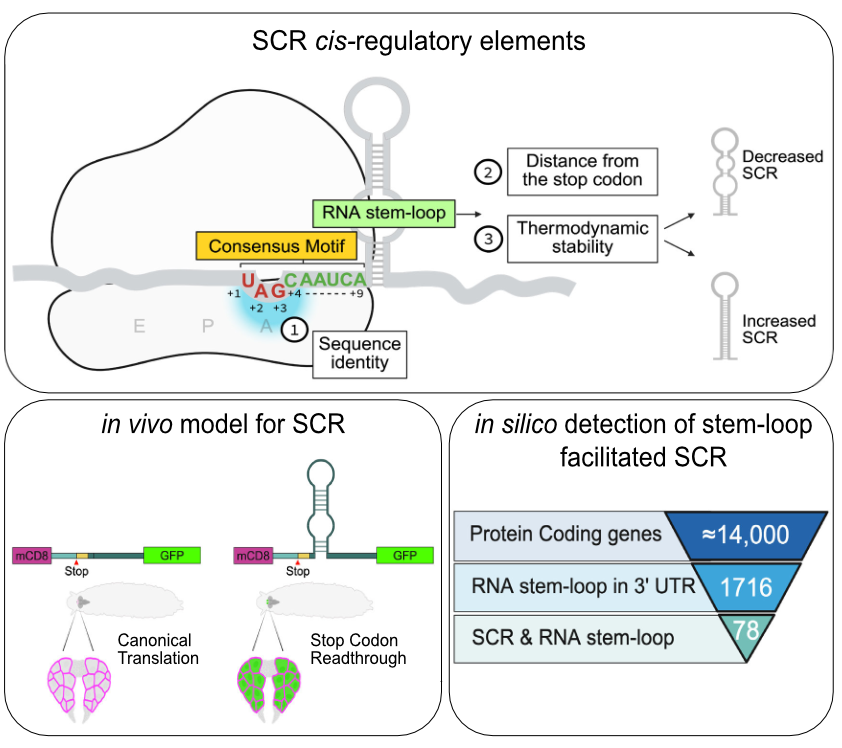
- Stop codon readthrough is regulated both by mRNA sequence identity and mRNA structure elements.
- A 3’ mRNA stem-loop and its thermodynamic stability determine stop codon readthrough efficiency.
- Computational analyses identified 3´UTR mRNA stem-loops in previously predicted SCR genes.
New publication: Gohel et al., 2026
- Nub/Pdm1 is vital for accurate mitotic progression in a non-transcriptional manner
- Nub/Pdm1 ensures spindle integrity during rapid syncytial nuclear divisions
- Nub/Pdm1 spindle enrichment depends on mitotic factors and intact microtubules
- Nub and human Oct1 ensure proper chromosome segregation
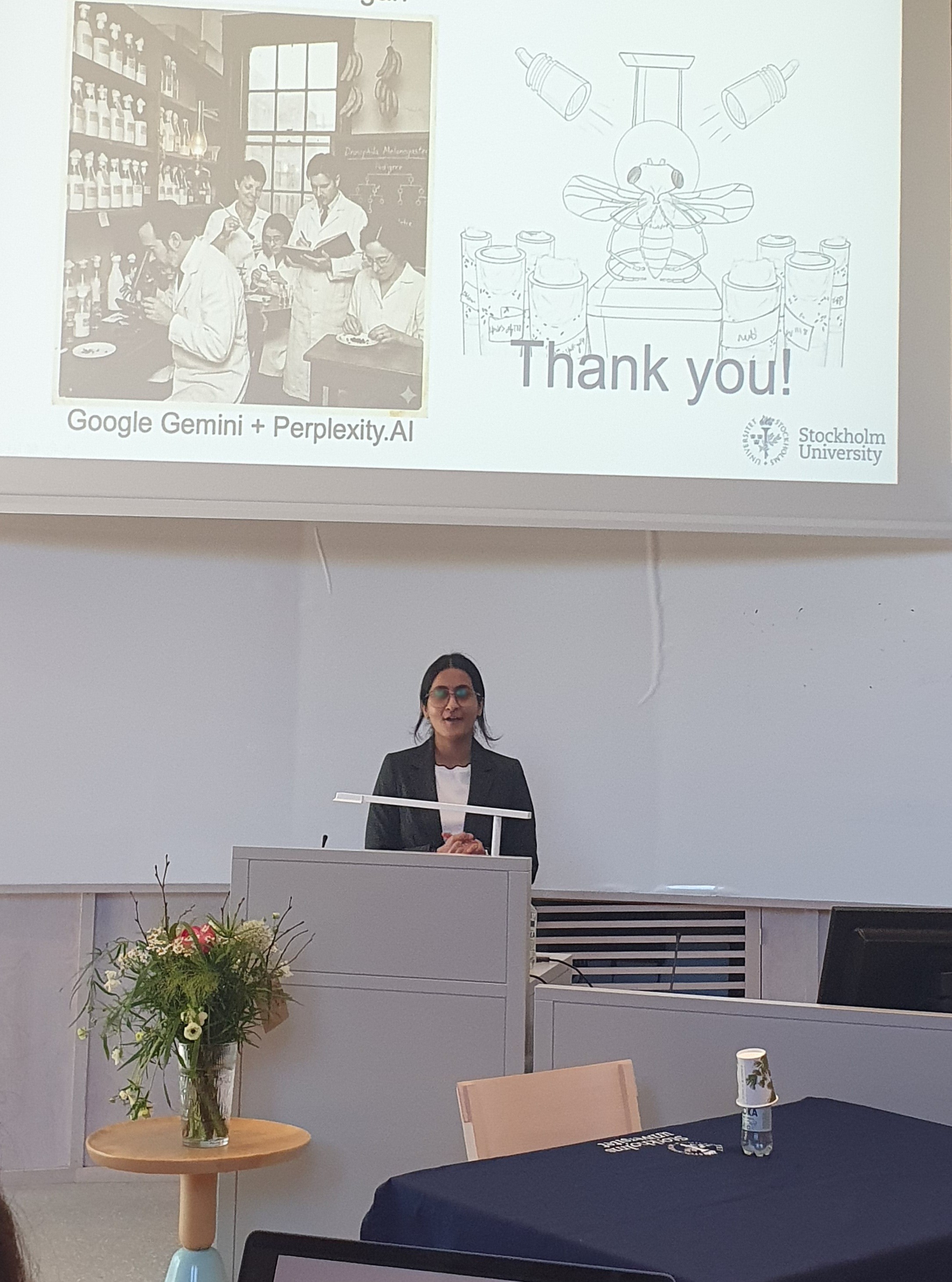
Congratulations to Dr Laveena Kansara on the successful defence of her PhD thesis on May 7th, 2026. Her thesis work made important contributions to our understanding of programmed stop codon readthrough and translational regulation in Drosophila.
- Motivated students interested in joining the group for a Master’s project or internship are welcome to contact us at: ylva.engstrom@su.se.