Maria Wendt Professor
Contact
Name and title: Maria WendtProfessor
Mail: maria.wendt@su.se
ORCID0000-0003-0497-063X Länk till annan webbplats.
Workplace: Department of Economic History and International Relations Länk till annan webbplats.
Visiting address Room A 920Universitetsvägen 10 A, plan 9
Postal address Institutionen för ekonomisk historia och internationella relationer106 91 Stockholm
About me
Maria Wendt is professor in International Relations at the Department of Economic History and International Relations. Her research focuses on war, militarism, security, cultural heritage, nationalism, and gender.
Maria Wendt currently teaches courses on international security, gender and IR, advanced qualitative methods and gendering global political economy. She supervises students' independent essays at the graduate and the master's level in IR, and is also involved in transdisciplinary courses, such as Cultural Perspectives on War, Threat and Security.
Maria Wendt's research interests are feminist international relations (IR); gendered security, cultural heritage, war memory, nationalism and gender, teaching/learning political science/IR.
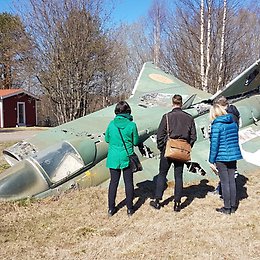
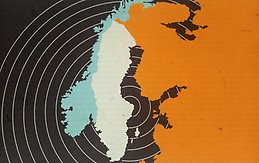
She is currently leading the VR-funded research project "Cultural heritage transformations in times of insecurity and war preparedness" (see more below). The project unites researchers from international relations, ethnology, gender studies and art-and architechtural history. The aim is to examine how cultural heritage becomes a means to prepare citizens for war and strengthen national resilience. Specifically, it examines the uses of Sweden's military heritage in times of increasing insecurity. What new meanings are accorded military history and heritage? How is military history mobilised as a national security resource?
Previously she was working with the multidisciplinary research project "Making a Military Heritage: Gender and Nation in Sweden’s Cold War History". The project investigated how the Cold War was preserved as a national military heritage in Sweden, and problematised the relation between security and societal memory. The research team visited military museums and "experience centers" (focusing on children and families) all around Sweden, and visited a residential area in Gotland where Cold War bunkers have been turned into exclusive summer homes.
She has done research on military death and gendered heroism in relation to the ISAF-mission in Afghanistan. The project "The politics of military loss in contemporary Europe", compared societal justifications and meaningmaking in relation to soldiers' deaths in six European countries. In this project, political and media discourses, symbolic and ritual dimensions as well as monuments and artistic interventions were analyzed.
Wendt has also conducted research on media and nationalism, men's violence against women, and has been involved with several pedagogical research projects. For example, she has investigated students' difficulties in writing independent essays, and the challenges pertaining to the teaching of emotionally and politically charged subjects.