Paul Christoph Zieger Professor
Contact
Name and title: Paul Christoph ZiegerProfessor
Mail: paul.zieger@aces.su.se
Phone: +4686747634
ORCID0000-0001-7000-6879 Länk till annan webbplats.
Workplace: Department of Environmental Science Länk till annan webbplats.
Visiting address Room V 218Svante Arrheniusväg 8 C, Geohuset
Postal address Institutionen för miljövetenskap106 91 Stockholm
About me
Welcome to my personal page at Stockholm University!
I am a professor in experimental atmospheric sciences at the Department of Environmental Science (ACES). I use novel tools to improve our understanding of key processes relevant for aerosols, clouds and climate. One of my favorite current platforms is our new mobile aerosol-cloud laboratory, which we already deployed on three major field campaigns (FAIRARI 2021/2022 in Italy, ARTofMELT 2023 on board I/B Oden and from October 2023 until April 2024 at Maido Observatory, La Reunion). Recently, we have participated at the CHOPIN campaign 2024-2025 on Mt Helmos, Greece, which is part of the H2020 project CleanCloud. Here, we study the influence of biological particles on cloud forming particles and their impact on cloud phase.
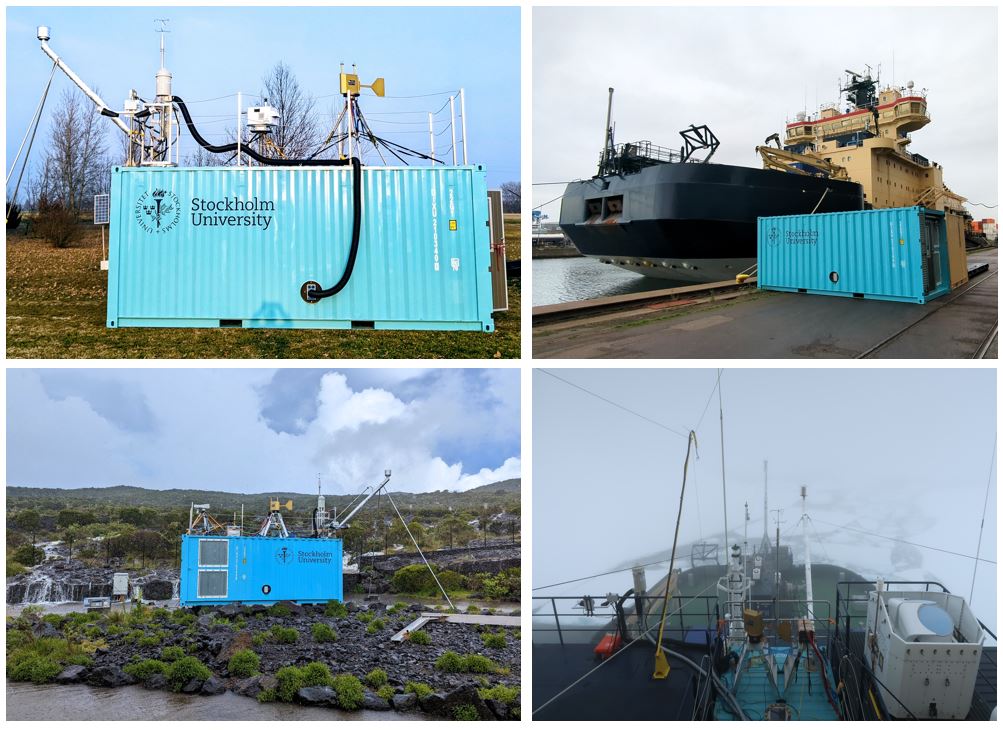
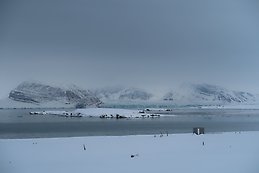
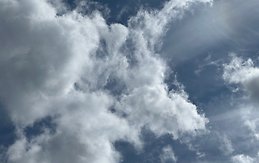
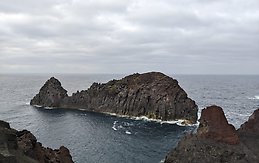
This is our mobile aerosol-cloud laboratroy deployed in Italy, on the I/B Oden and at Maido Observatory. Below are some key areas where we perform aerosol-cloud research, like during the Arctic Ocean 2018 expedition, at Zeppelin Observatory (Svalbard) or at Mt. Helmos (Greece).
We will continue our course series e-science tools in atmospheric science also in 2028! Stay tuned. More info can be found here.
I will also teach at the Aerosol Chemistry and Physics course in spring 2027.
The next PhD course on Open and Reproduciple Science will start spring 2027.
Study of microphysical and chemical properties of aerosols and clouds using a broad range of measurement techniques (i.e., in-situ and remote-sensing techniques on ground-based and airborne platforms within dedicated field campaigns and laboratory studies), modeling of aerosol optical properties, aerosol hygroscopicity, aerosol-cloud interactions, and the study of ambient aerosols and clouds in the Arctic.
One of our main research instruments in the last year has been the Mulitparameter Bioaerosol Spectrometer. You can find our output (incl. links to code and data) here.
Some updates:
I was the co-chief scientist of the ARTofMELT expedition 2023, where we studied the arrival of summer in the Arctic. More information and impressions can be found on SU's and SPRS's project websites. We also offer interesting topics for master or bachelor theses related to atmospheric aerosols and clouds. Please feel free to contact me if you are interested in pursuing a project in this area.
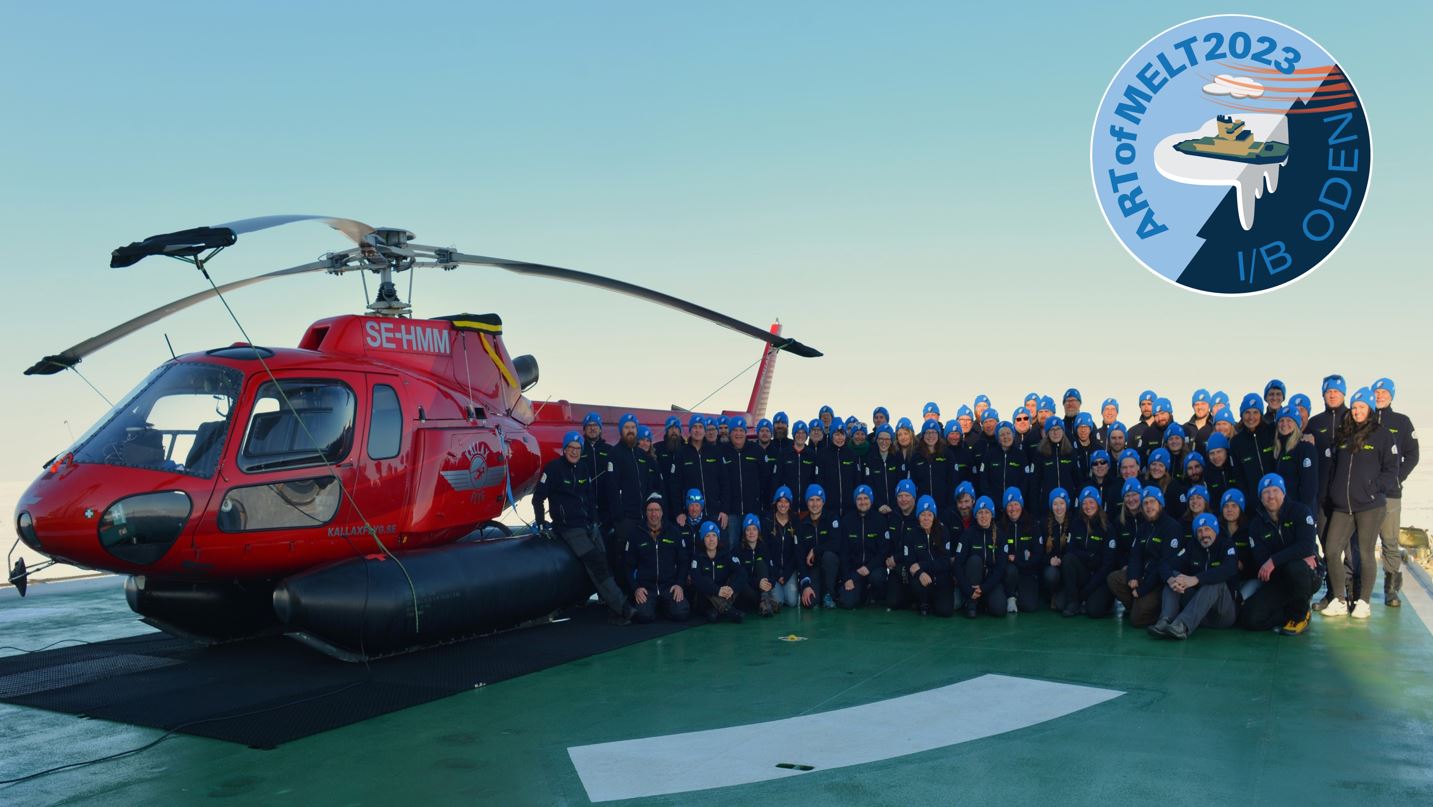
Participants of the ARTofMELT2023 expedition on board the I/B Oden.
Supervision
PhD Students:
- Linn Karlsson – Thesis:Aerosol–cloud interactions in a warming Arctic (Main advisor, defended June 2022)
- Gabriel Freitas – Thesis: Bioaerosols and their importance for low-level Arctic clouds (Main advisor, defended December 2023)
- Almuth Neuberger – Aerosol-fog interactions in the Italian Po Valley. (Main advisor, defended September 2025)
- Julia Kojoj – Focusing on climate-relevant aerosol-cloud processes in the Arctic. (Main advisor, Ongoing)
- Lea Haberstock – Investigating aerosol-cloud precipitation interactions in low-level boundary layer clouds. (Main advisor, ongoing)
- Emelie Graham – Thesis: Insights into key processes governing atmospheric aerosol loadings and their interactions with clouds (Co-advisor, defended April 2022)
- Julika Zinke – Thesis: Factors influencing emission fluxes and bacterial enrichment in sea spray aerosols: Insights from laboratory and field studies (Co-advisor, defended October 2023)
- Yvette Gramlich – Thesis: Chemical composition of Arctic aerosols and their link to clouds (Co-advisor, defended September 2023)
- Hari Nair – Research on absorption enhancement in dust and black carbon aerosols over South and East Asia. (Co-advisor, defended June 2024)
- Fredrik Mattsson – Exploring the influence of anthropogenic emissions on aerosol-cloud interactions. (Co-advisor, defended December 2025)
- Sneha Aggarwal – Molecular insights into the evolution of sea spray aerosol chemistry: From laboratory to the Eastern North Atlantic. (Co-advisor, defended October 2025)
- Rawan Fayad – Studying environmental drivers of sea spray aerosol production and acidity in the coastal Baltic Sea. (Co-advisor, ongoing)
Postdocs:
- Dr. Maria Burgos (2017-2021)
- Dr. Sigurd Christiansen (2021-2023)
- Dr. Aiden Jönnsson (2024 - now)