


Monir Bounadi Graduate Student
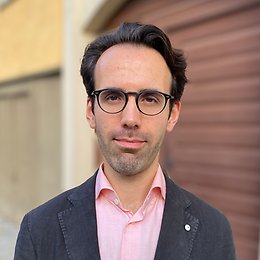
Contact
Name and title: Monir BounadiGraduate Student
Workplace: Institute for International Economic Studies Länk till annan webbplats.
Visiting address Room A871Universitetsvägen 10 A, plan 8
Office hours 8–16
Postal address Institutet för internationell ekonomi106 91 Stockholm
About me
I am a PhD Candidate in Economics at IIES, Stockholm University. My research lies at the intersection of economic history, economic development, and political economy.
I am on the 2026/27 academic job market.
My job market paper studies how coffeehouses, venues for conversation where strangers met across social ranks, shaped science in seventeenth-century London. More broadly, I study how social interactions and institutions shape access to knowledge, political voice, and social status in the long run. To do so, I build new datasets by digitizing archival and library collections at scale, and analyze them with applied microeconometric methods.
Education
- PhD in Economics, IIES, Stockholm University (2027 - expected)
- Recognised Student, University of Oxford (2024/25)
- MSc in Econometrics, Stockholm University (2019)
- BA in Philosophy, Stockholm University (2016)
- BSc & MSc in Mathematics, Stockholm University (2015)
Fields of Research
Economic History, Economic Development, Political Economy
References
Torsten Persson (main advisor): torsten.persson@iies.su.se
David Schönholzer (advisor): dschonho@usc.edu
David Strömberg: david.stromberg@su.se
Job Market Paper
Coffeehouses and the Rise of Science (with Jens Oehlen)
Historians have long credited coffeehouses, venues for conversation where strangers met across social ranks, with fostering scientific contacts and activity during the Scientific Revolution. We test this claim in seventeenth-century London. Relying on newly geocoded records and a staggered event study across parishes, we find that the opening of the first coffeehouse in a parish is followed by a persistent increase in applied scientists and scientific instrument shops. Effects are concentrated among applied scientists with weak family ties to Oxford and Cambridge. Social connections that link craft skill to theory increase, and new shops turn toward experimental instruments. Across European cities in the seventeenth century, we similarly find that the numbers of applied mathematics titles and scientific instrument makers rise after a city’s first coffeehouse, relative to cities of similar size and growth. In a quantitative urban model calibrated to our parish- and city-level estimates, coffeehouses account for 31 percent of London’s applied scientists in the half century after the first one opened in 1652. These findings show that social institutions can raise the production and use of knowledge by broadening access to intellectual exchange beyond formal academic networks.
Working Papers
Learning to Participate: The Effects of the First Female Teachers (with Mattias Folkestad)
How does opening a profession to a previously excluded group shape the next generation? From 1859, Sweden allowed women to teach in elementary schools. We digitize teacher registers and 350,000 signatures from the 1913–14 suffrage petition, linking them to full-count censuses. Exploiting the staggered timing of districts’ first female hire, we show that women exposed to female teachers as schoolgirls were 23 percent more likely to sign the petition and 9 percent more likely to work outside other people’s homes. IV estimates using nearby women’s teacher seminaries suggest early female-hiring districts also had stronger suffrage organizations and more women voting in person.
Wealth Confiscation and Elite Persistence: Evidence from the Great Reduction (with Jonatan Riberth)
This paper studies how far a wealth shock persists across generations and whether it erodes status by examining the largest confiscation in Swedish history: the Great Reduction of 1680, which took half the nobility’s landed wealth. Linking noble genealogies to manor ownership across the Swedish realm, we compare descendants of nobles who lost manors with those of observably similar nobles who did not. Manor ownership falls sharply and stays lower four generations later, by more than mobility correlations predict. Yet careers, marriages, human capital, and demographic outcomes barely move, though they respond strongly to descent from the political elite.
Work in Progress
“Return from Mecca: Pilgrimage and Political Islam in Indonesia, 1874–2014”
“Co-Ethnic Mentors: Historical Evidence from New York City Neighborhoods” (with Artschil Okropiridse)