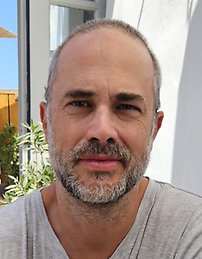
Fernando Jaramillo Associate Professor, Docent
Contact
Name and title: Fernando JaramilloAssociate Professor, Docent
Phone: +468164771
ORCID0000-0002-6769-0136 Länk till annan webbplats.
Workplace: Department of Physical Geography Länk till annan webbplats.
Visiting address Room T312Svante Arrhenius väg 8
Postal address Inst för naturgeografi 106 91 Stockholm

About me
I am a civil engineer with a Ph.D. in Physical Geography and professional experience in water management and environmental impact assessment. My research focuses on hydrology, water resources, and remote sensing. I am currently the coordinator of the Master’s program in Water Resources in the Department of Physical Geography.
SUPERVISION
Postdoctoral fellow Gabriel Narváez Campo, Lukas Winklerprins
Main Ph.D. Supervisor Clara Hübinger, Martin Marañón; Abigail Robinson; David Lindao; Dan Jansson
Former members Francisco Peña, Saeed Aminjafari, Luigi Piemontese
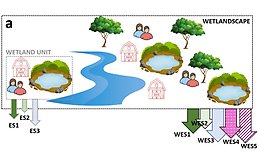
Director Of The Project DOWES- Disclosing The Overlooked Ecosystem Services Of Wetlandscapes, FUNDED BY Water4all (2025)
FELLOWSHIPS AND AWARDS
2019-2023 Baltic Sea Fellow/ Stockholm University
2016-2017 Visiting Postdoctoral Fellow / Florida International University/ United States
COMMISSIONS OF TRUST (Selected)
2026 Co-chair, Working group on Water Scarcity, EASAC – European Academies Science Advisory Council
2026-To date Editor, Earth’s Future (AGU Journal)
2021-To date Associate Editor, Water Resources Research (AGU Journal)
2025/2026 Review Panel for PRIMA program, EU
2026 Review panel, NASA Roses calls
BIBLIOMETRIC SUMMARY
87 peer-reviewed publications, h-index: 40; i10-index: 69; citations >7,700 (google citations)
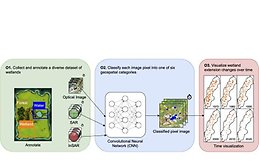
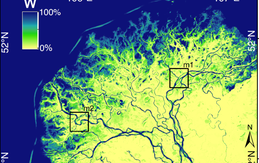
My research aims to quantify global changes in surface water resources and to identify their underlying drivers. It consistently addresses two core questions: how are surface water resources changing, and to what extent are these changes driven by human activities? To answer these questions, my work focuses primarily on lakes, reservoirs, and wetlands.
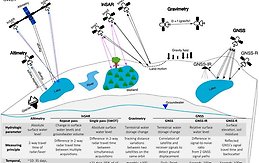
I have developed an independent research agenda that originated in hydroclimatology and has since expanded to encompass remote sensing, hydrology, and sustainability science. This agenda is structured around two main research lines: (1) human water consumption and its implications for sustainability, and (2) monitoring and understanding changes in water resources from space. A particular emphasis is placed on the use of remote sensing and on advancing hydrogeodesy—the science of measuring the Earth’s solid and aquatic surfaces, gravity field, and their changes over time.