


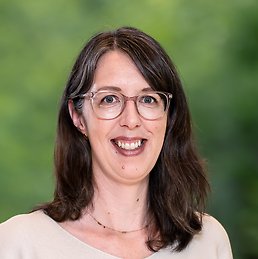
Christine Fawcett Professor
Contact
Name and title: Christine FawcettProfessor
Phone: +468163856
ORCID0000-0002-0898-9920 Länk till annan webbplats.
Workplace: Department of Psychology Länk till annan webbplats.
Visiting address Albanovägen 12
Postal address Psykologiska institutionen106 91 Stockholm

About me
My research focuses on social and cognitive development, addressing topics such as how children reason about interpersonal similarities, how infants and children begin to coordinate with others through physiological or behavioral synchrony, and how the development of social categorization and identity relates to attitudes regarding gender and social groups, particularly in preschool-aged children. Another area of my research is on early digitalization, including how children develop computational thinking and the role of digital tools in young children's lives.
I teach classes in developmental psychology. Currently I am course leader for Developmental Psychology 1 and 2 within the psychologist program as well as co-course leader for Community Psychology.
Ongoing research projects:
- Evidence-based methods to work with diversity and equality in preschools. PI. Funded by Skandia Ideas for Life.
- Children’s intuitive theory of AI – an active training study. Co-applicant. Funded by WASP-HS, Marianne and Marcus Wallenberg Foundation.