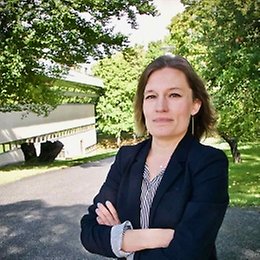
Cassandra Engeman Research fellow
Contact
Name and title: Cassandra EngemanResearch fellow
Phone: +468162075
Workplace: Swedish Institute for Social Research Länk till annan webbplats.
Visiting address Room F 898Universitetsvägen 10 F
Postal address Institutet för social forskning106 91 Stockholm
About me
Cassandra Engeman writes on issues related to care leave policy, social movements, and comparative policy analysis. Her current research concerns the causes and consequences of paid parenting leave, examining parenting leave use among mothers and fathers across Europe and how political regimes, trade unions, and women in politics influence parenting leave provisions.
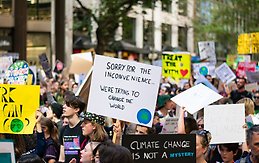
She also works with colleagues on research related to environmental protest, social movement legal mobilization and environmental court decisions in Sweden. She recently co-authored an article on protest and environmental policy in Social Forces and has a paper under review that examines union representation and employment outcomes during the COVID-19 pandemic in the US, with a focus on the potential mediating role of work-life balance policies.
One of her publications (in 2023) was named a finalist for the Rosabeth Moss Kanter Award. One of Engeman’s ongoing research projects is supported by a 2024 Starting Grant from the European Research Council. This project studies the role of organized labour in the over-time development of care leave provisions across 22 affluent democracies with additional focus on Ireland, France, and the Netherlands.
Engeman received her PhD in Sociology from the University of California, Santa Barbara in 2016 and has been a Research Fellow at the Swedish Institute for Social Research (SOFI) at Stockholm University since 2017. Previously, she held guest positions at the Berlin Social Science Centre (WZB) and Uppsala University's Department of Government.
Cassandra Engeman regularly leads two class meetings of the graduate-level Family Sociology course for the Sociology Department at Stockholm University (Fall term). She also supervises masters and PhD theses.
Recent publications address data gaps in paid parenting leave research and the politics of environmental and (separately) family policy.