


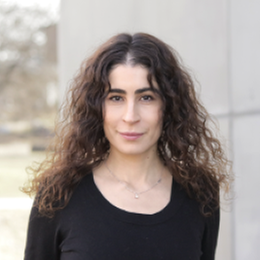
Zeynep Ünsal Senior lecturer
Contact
Name and title: Zeynep ÜnsalSenior lecturer
Mail: zeynep.unsal@su.se
Phone: +46812076210
ORCID0000-0003-2300-7224 Länk till annan webbplats.
Workplace: Department of Teaching and Learning Länk till annan webbplats.
Visiting address Room P405Svante Arrhenius väg 20 A
Postal address Institutionen för ämnesdidaktik106 91 Stockholm
About me
I am a Senior Lecturer in Science Education with a focus on primary education. I have a background as both a preschool and primary school teacher, and I am qualified to teach biology, physics, chemistry, mathematics, Swedish, and Swedish as a second language. My research focuses on science education and assessment for multilingual students, as well as on scientific inquiry.
I teach and supervise in various courses at the undergraduate, master's, and doctoral levels. I am also course coordinator for Science and Technology for Primary School Teachers, Preschool class to grade 3, I and School Placement I, Programme for Primary School, pupil's age 9-13
My research focuses on science education in primary school (grades 1–6), with two main areas of specialization: science education and assessment for multilingual students, and teaching scientific inquiry. Within the area of science education and assessment for multilingual students, I pay particular attention to those who are in the process of acquiring Swedish. I am interested in how science education can be designed to provide these students with opportunities to both develop and express subject knowledge in science. I explore how various resources, such as the students’ mother tongue, gestures, and visual representations, can be used to support multilingual learners. I also study how teachers can implement multimodal forms of assessment that extend beyond spoken and written language. I also conduct research on how teaching can promote a deeper understanding of scientific inquiry. By teaching scientific inquiry as an explicit content, students are given the opportunity to understand how science works and how knowledge in the field is generated and tested. This is a key component of scientific literacy that schools aim to develop in order for students to function as informed members of society.