News

  • European Research Council funding for outstanding joint project in quantum physics

    Markus Hennrich, professor in quantum physics at Stockholm University, together with Igor Lesanovsky from the Institute of Theoretical Physics at the University of Tübingen and Ferdinand Schmidt-Kaler from Mainz University, has been awarded the European Research Council's most prestigious grant, the ERC Synergy Grant worth EUR 10 million, about SEK 116 million, over a period of six years. The aim of their project is to study open quantum systems using quantum simulators based on ion crystals in highly excited electronic states. These can be used not only to answer questions in physics, but also to shed light on complex processes in chemistry, biology, and information processing. “It is beautiful to receive as a team this ERC Synergy Grant. This Grant allows us to work with the best specialists in this field and together develop a quantum simulator device that may help to understand complex quantum phenomena in material science, chemistry and biology”, says Markus Hennrich.  In the ERC project Open 2D Quantum Simulator (Open-2QS), the researchers will realize precisely controllable quantum systems. For this purpose, ions are stored in Paul or Penning traps and form regular two-dimensional structures known as ion crystals. Selected ions are then excited with laser pulses and thereby brought into strong interaction. The dynamics that arise in such a synthetic quantum system are so complex that predicting them is far beyond the capacity of conventional computers. About the ERC Synergy Grant The European Research Council (ERC) provides substantial and long-term funding for cutting-edge research in all fields of science. The ERC is part of the EU's Horizon 2020 Framework Programme for Research and Innovation. The ERC Synergy Grant is aimed at small groups of excellent researchers with research projects with high synergy effects. A Synergy Grant is a grant of up to €14 million for a period of up to six years. Read more about the ERC Synergy Grant 2024 here.  
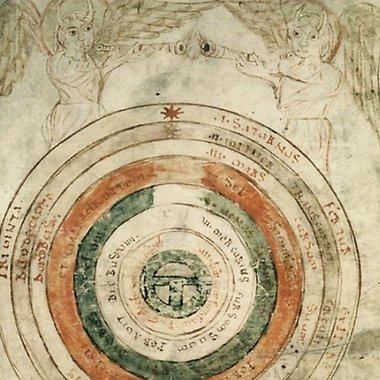
  • Spiritual beings in medieval learned magic

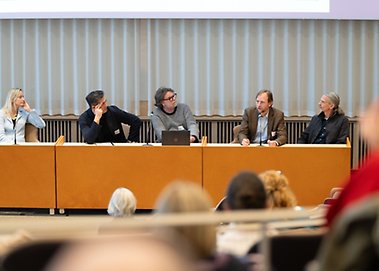
    How did practitioners of learned magic in the late Middle Ages think they could summon spiritual beings and how did they believe they could create safe spaces for interactions with these beings? These are a couple of the research questions that Andrea Franchetto answers in his recently published thesis "Rituals of perceptual presence". When Andrea Franchetto defended his doctoral thesis on 18 October, there was great interest in his dissertation. Among the visitors to the defence event were students from the international course Magic in the European History of Religions, in which Andrea teaches.

  • Exploring the ethics of deterrence

    Are we allowed to form defensive alliances even if this makes our neighbors worse off? May we install a surveillance camera on our home even if this makes a burglar more likely to break in next door? Can deterrence be a legitimate motive for war? Philosopher Helen Frowe is examining the ethical aspects of deterrence, giving us better tools to determine whether or not a given method of deterrence is acceptable.

  • Rewarding talks, Swedish fika and peer support at ScientiFika

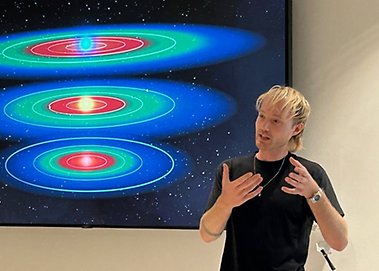
    On Friday afternoons, students from undergraduate and postgraduate programs gather at Nordita for Swedish fika and open lectures. The concept is called ScientiFika and the event is not only about broadening one's knowledge, but also about meeting across different subject areas to exchange ideas and experiences.

  • Winners of the Stockholm Prize in Criminology 2025

    The International Jury of the Stockholm Prize in Criminology Foundation has announced their decision to award the 2025 Stockholm Prize in Criminology to Frances Crook and Bryan Stevenson, for their applied criminological research as practitioners that succeeded in reducing cruel and unusual punishment. The Stockholm Prize in Criminology is the world’s most prestigious award in the field of criminology. It is awarded annually and amounts to 1.5 million SEK. The 2025 prize winners are two outstanding practitioners who applied criminology to help reduce cruel and unusual punishment. They were announced in a ceremony at Stockholm University on October 23. The awards will be presented next June in Stockholm.   Reducing imprisonment of young offenders

  • COP16: “We need to bend the curve for biodiversity loss”

    How should biodiversity be monitored, measured and financed to protect our planet? Researchers from Stockholm Resilience Centre and the programme Swedbio are attending the ongoing COP16 in Colombia to help shape the implementation of the Global Biodiversity Framework.

  • Connect your university card to the new Printomat system

    As of November 1, the university will have a new supplier for the Printomat printing service. Before then, you need to connect your university card to the new system to continue printing. The University has a new supplier for the Printomat printing service. In order to continue printing after November 1, all students will need to link their university card to the new printing system.  An email has been sent from uniflow online (see picture) with a registration code that is needed to link the University Card. If you do not have the email with the code, there are instructions on how to find your code and instructions on how to link your university card in Serviceportalen Use the old printers while they are still available and working, until October 31. These printers are located in Studenthuset Beta and in Albano, buildings 2 and 4. As the new payment solution is not yet in place, students will be able to print free of charge during a transition period (black and white, double-sided printing). We have previously advised you not to load more money than you need on the old system. This still applies, but we are working on a solution to transfer any remaining balance to the new system.  If you have any questions about this, please contact IT support via Serviceportalen The new public printers can be found here: Studenthuset, Alfa building, floor 2, reading room Studenthuset, Beta building, floor 2, reading room Building E, floor 2, outside the language studio Wallenberg Laboratory, computer lab, room 337 Building 1, Albano, student room D1217 Building 1, Albano, student room D1217 Building 2, Albano, Student Centre C2217 Building 2, Albano, Student Centre B2312 House 4, Albano, Student Centre B4201 House 4, Albano, Student Centre A4317  

  • Six researchers share SEK 175 million from the Wallenberg Foundation

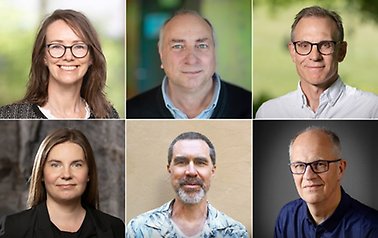
    The importance of Arctic methane emissions for the climate, how matter is formed and broken down, evolutionary shifts in the plant kingdom, and new effective methods for producing bioactive substances that will meet future needs for medicines and advanced electronics. These are just a few examples of basic research at Stockholm University that has received funding from the Knut and Alice Wallenberg Foundation.

  • Cutting edge research infrastructures celebrated at SU Imaging Day

    High-definition electron microscopy and fluorescence imaging held centre stage at SU Imaging Day, which is a recurring event aimed to highlight and celebrate the open research facilities at Stockholm University. Professors Gunnar Svensson and Edouard Pesquet organised the event, which aims to inspire, cross-pollinate and showcase the opportunities that exist, not only for researchers at Stockholm University, but also other academic institutions.