


Earth’s frozen regions have passed safe limits
The loss of land ice, sea ice, snow cover and permafrost poses major long-term risks to the planet, its ecosystems and human societies. This is shown by a new study in Science, presented on 13 November at the COP31 climate summit in Türkiye.
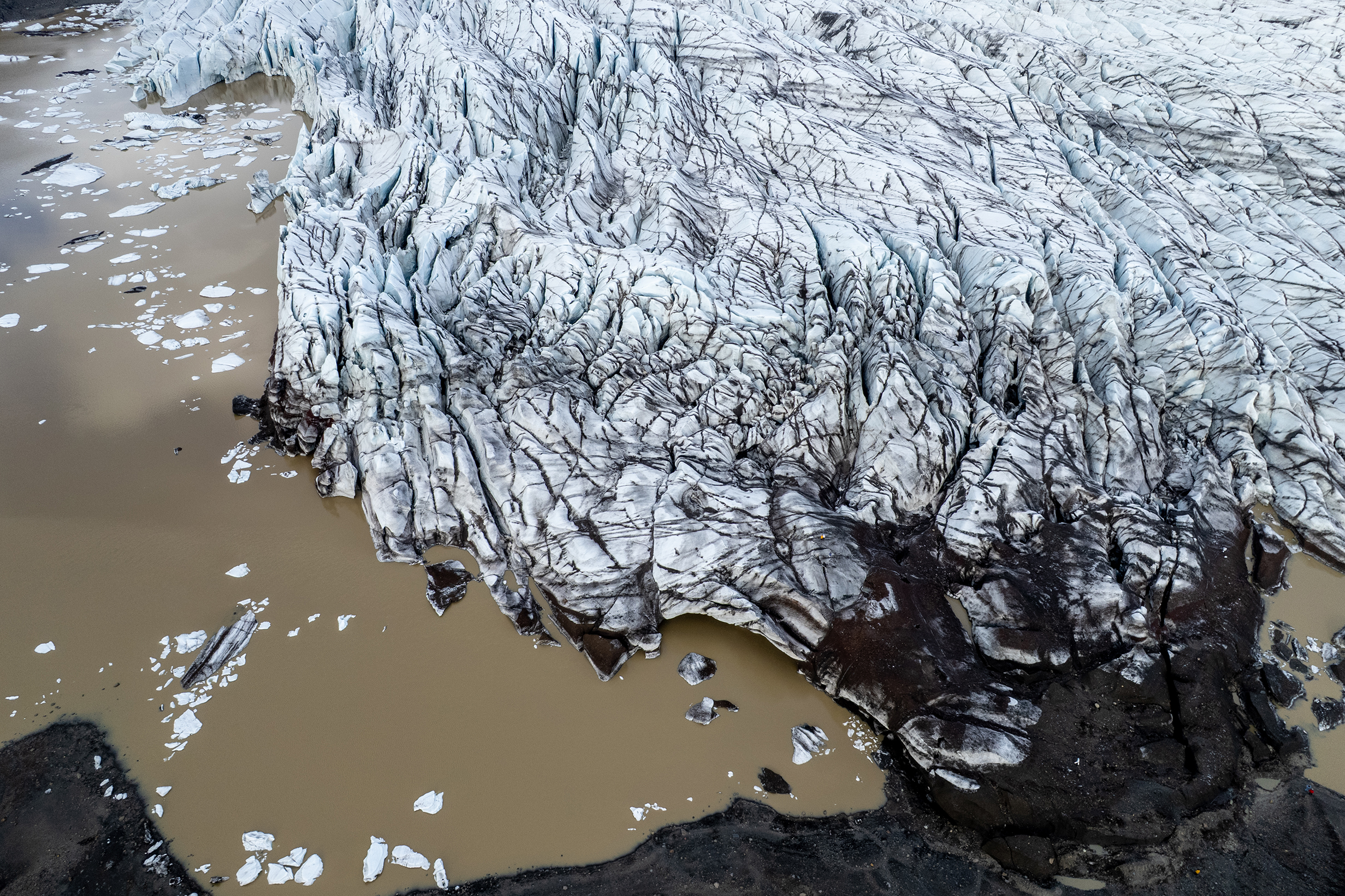
Melting glacier in Iceland. Photo: Mostphotos
The cryosphere – ice sheets, mountain glaciers, sea ice, permafrost and snow cover – plays an irreplaceable role in the planet’s energy, water, carbon and methane cycles. As human-driven climate change breaks down these frozen landscapes, the risks of sea-level rise, drought, flooding and ecosystem loss increase. This undermines the foundations of human societies, from coastal areas to mountain regions.
“The cryosphere has already exceeded its planetary safe operating space, threatening the frozen foundations of our planet that have supported human civilisations for millennia,” said Dr. Bo Su, lead author of the paper and researcher at Stockholm Resilience Centre and Beijing Normal University.
Beyond a safe operating space
The cryosphere’s “safe operating space” (“SOS”), a framework outlined in the paper, defines precautionary boundaries for the planet’s frozen areas, the absence of which has limited policymakers’ ability to understand and govern cryosphere stability to date.
The boundaries are defined using conditions over the past 11,700 years, an epoch known as the Holocene, as their reference point. This period was characterised by relatively stable global environmental and climate conditions that allowed human civilisations to develop and thrive.
Today’s changes, like those already set in motion by past emissions, are pushing the cryosphere ever further from these conditions. This risks creating a vicious circle that makes it increasingly difficult to reverse the trend.
Important reminder for global leaders
The loss of frozen landscapes is driven by human-induced climate change, mainly from greenhouse gas emissions, but also by regional factors such as black carbon emissions and the expansion of industry and infrastructure. The researchers urge decision-makers to use the newly defined safe operating space as a scientific basis for more ambitious targets to reduce greenhouse gas and black carbon emissions and to limit local impacts.
“As cryosphere risks unfold before our eyes – most recently with the floods and landslides in Nepal – the report’s arrival at COP31 issues an important reminder for global leaders of the significance of cryosphere governance,” says Johan Rockström, Director at the Potsdam Institute for Climate Impact Research and Professor at Stockholms universitet.
The Cryosphere Beyond a Planetary Safe Operating Space
Led by researchers at Stockholm Resilience Centre at Stockholm University, the study The Cryosphere Beyond a Planetary Safe Operating Space, offers an authoritative global assessment of the basic cryospheric conditions required for Earth system resilience – and concludes that these conditions are being transgressed.
It is compiled by an interdisciplinary and international research team of more than 30 scientists, including from the Potsdam Institute for Climate Impact Research (PIK), Tsinghua University, Beijing Normal University, the Earth Commission, the International Association of Cryospheric Sciences (IACS), the Climate and Cryosphere (CliC) Project of the World Climate Research Programme (WCRP), the Third Pole Environment Programme, and the WWF Arctic Programme.
Link to the scientific article:
http://www.science.org/doi/10.1126/science.aef5636
Last updated: 2026-11-13
Source: Communications Office