


Sophie praises the courage to take on ‘slightly crazy’ challenges
“Educational collaboration – that’s one of the many things made possible through CIVIS. There are plenty of international networks for researchers but usually not for educators in the same way. CIVIS provides cross-border, transdisciplinary courses that allow educators to learn from best practice in different faculties and countries.”
Sophie Haslett is a researcher at the Department of Environmental Science at Stockholm University and teaches on the CIVIS master’s programme TRACEE (an acronym for Transdisciplinary Studies of Climate, Environment and Energy). As a "civizen" she brims with enthusiasm as she talks about the university alliance's educational offer.
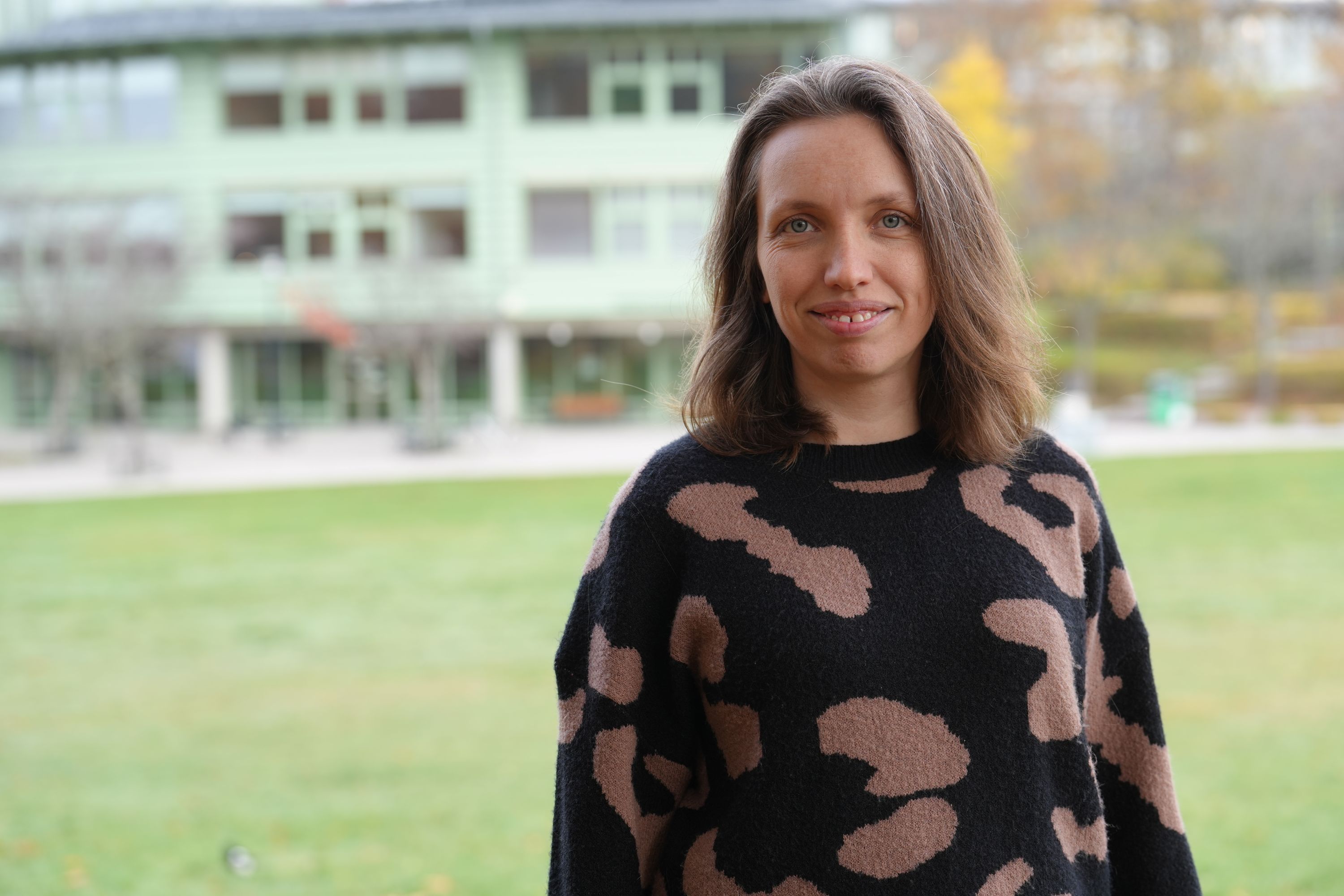
Researcher Sophie Haslett became involved in CIVIS in 2024.
CIVIS includes eleven European member universities and six African associate member universities. The civizen concept is a way to hightlight staff and students who are dedicated to the CIVIS community and share the values and vision of the alliance.
“Besides master’s programmes CIVIS offers blended intensive programmes called BIPs, micro programmes and flexible learning“, Sophie says. “Not only do our students get to know different countries and cultures but they also get to try different disciplines.”
Working for the same vision and goals
Sophie first got involved in CIVIS in 2024, as the new transdisciplinary master’s programme TRACEE was about to take shape. From her colleague Kevin Noone – Professor Emeritus and one of the driving forces behind the programme – she quickly learnt that this was a chance not to be missed.
Sophie Haslett is impressed with the dedication and involvement of her CIVIS colleagues.
“The dedication and the involvement of the people on this CIVIS team was something special. Everyone was working for the same vision and goals, and everything was planned in meticulous detail. I was thrilled to be a part of this; of the administration as well as the teaching. As a researcher I love researching but I also love teaching and interacting with the students.”
Students learn about different cultures
Sophie’s research focuses on the composition and impacts of aerosol particles. These tiny, airborne particles have big impacts on both human health and climate. As one of the five major societal challenges that CIVIS addresses is “Climate, Environment, and Energy”, being part of the TRACEE master’s programme is a way for Sophie and her colleagues to equip students with the knowledge necessary to make a difference in the world.
“The world faces major challenges that cannot be handled without collaboration between different countries. When the students study a master’s programme such as TRACEE, or any other of the CIVIS programmes and courses, they learn about different cultures and build an international network that can be really useful in the future. If they choose an interdisciplinary course they also learn about subjects from across academic disciplines.”
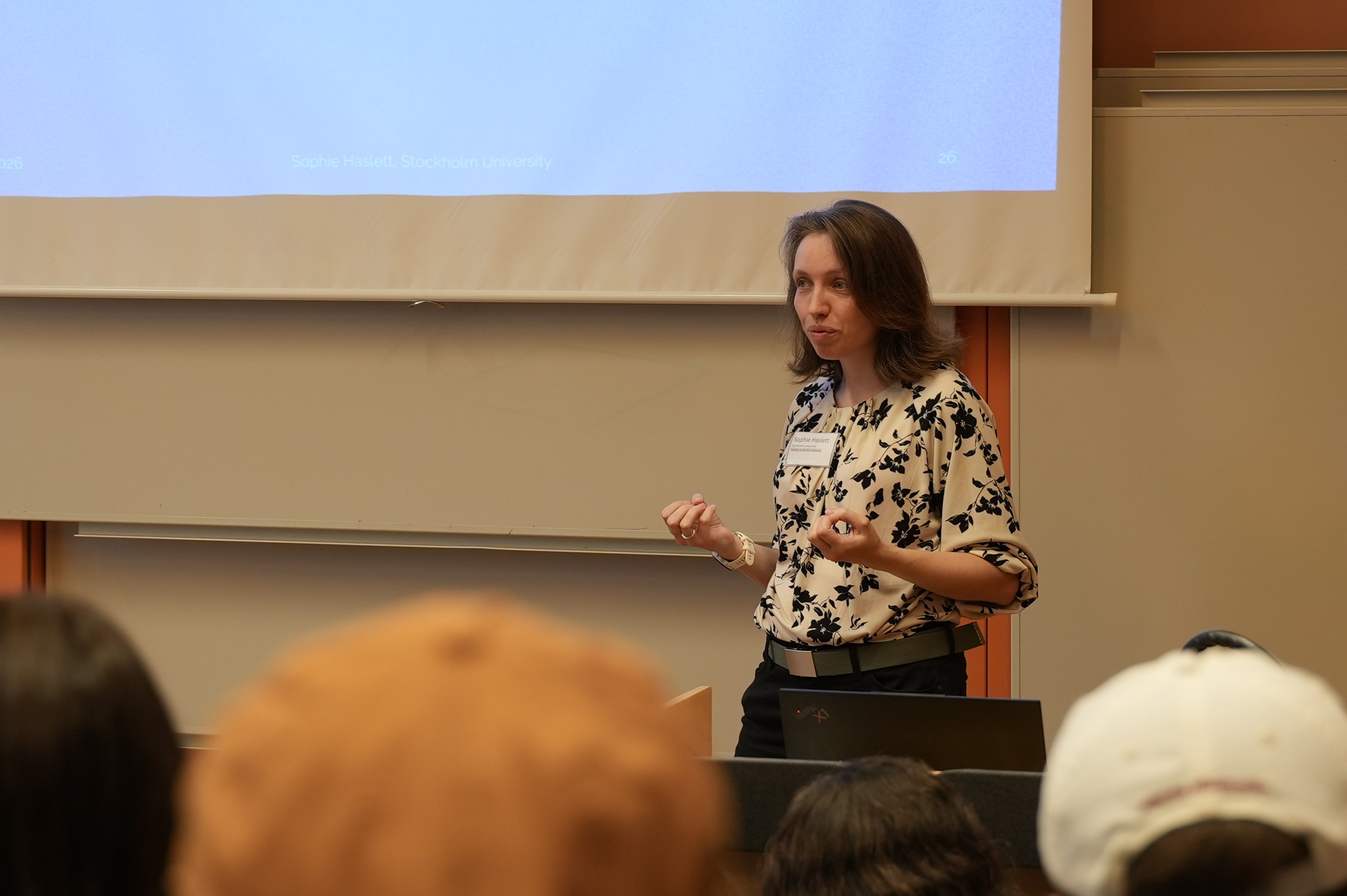
Sophie Haslett loves teaching and interacting with the students.
Freedom to do unusual and experimental things
CIVIS was established in 2019 and is co-funded by the European Union. As the alliance keeps developing, what does Sophie think is important in the future?
“I hope CIVIS stays ambitious and courageous enough to take on ‘slightly crazy’ challenges. TRACEE was kind of a crazy challenge and it turned out to be a great success. There is courage in this alliance and I really appreciate that.”
She ponders for a while and continues:
“In the classroom I find that there is more freedom to do unusual and experimental things. There is an openness and a willingness to try new things together. It just feels like CIVIS attracts really motivated and inspiring people, both on a student and a staff level.”
In addition to the eleven European member universities, CIVIS includes six African associate member universities.
“I hope that the CIVIS African associate members will play an even more important part in the alliance in the future”, Sophie says. “It’s not enough to collaborate within Europe to address the global challenges. I’m very keen to incorporate African perspectives more strongly in our teaching, to exchange ideas and keep growing together.”
What is CIVIS?
CIVIS is a university alliance currently consisting of eleven European member universities and six African associate member universities.
These are the eleven European members:
- Université d’Aix-Marseille (France)
- National and Kapodistrian University of Athens (Greece)
- University of Bucharest (Romania)
- Université libre de Bruxelles (Belgium)
- Universidad Autonoma de Madrid (Spain)
- Sapienza Università di Roma (Italy)
- Stockholm University
- Eberhard Karls Universität Tübingen (Germany)
- University of Glasgow (UK)
- Paris Lodron University of Salzburg (Austria)
- University of Lausanne (Switzerland)
These are the six African associate members:
- Université Hassan II de Casablanca (Morocco)
- Université Cheikh Anta Diop de Dakar (Senegal)
- University of the Witwatersrand, Johannesburg (South Africa)
- Makerere University, Kampala (Uganda)
- Eduardo Mondlane University (Mozambique)
- Université de Sfax (Tunisia)
Last updated: 2026-11-12
Source: Communications Office