


Babies, bubbles and the mystery of language
Language development begins at a very early age, long before infants are able to speak. At the Babylab at Stockholm University, researchers are working to understand how this process unfolds and what factors are crucial to its development.
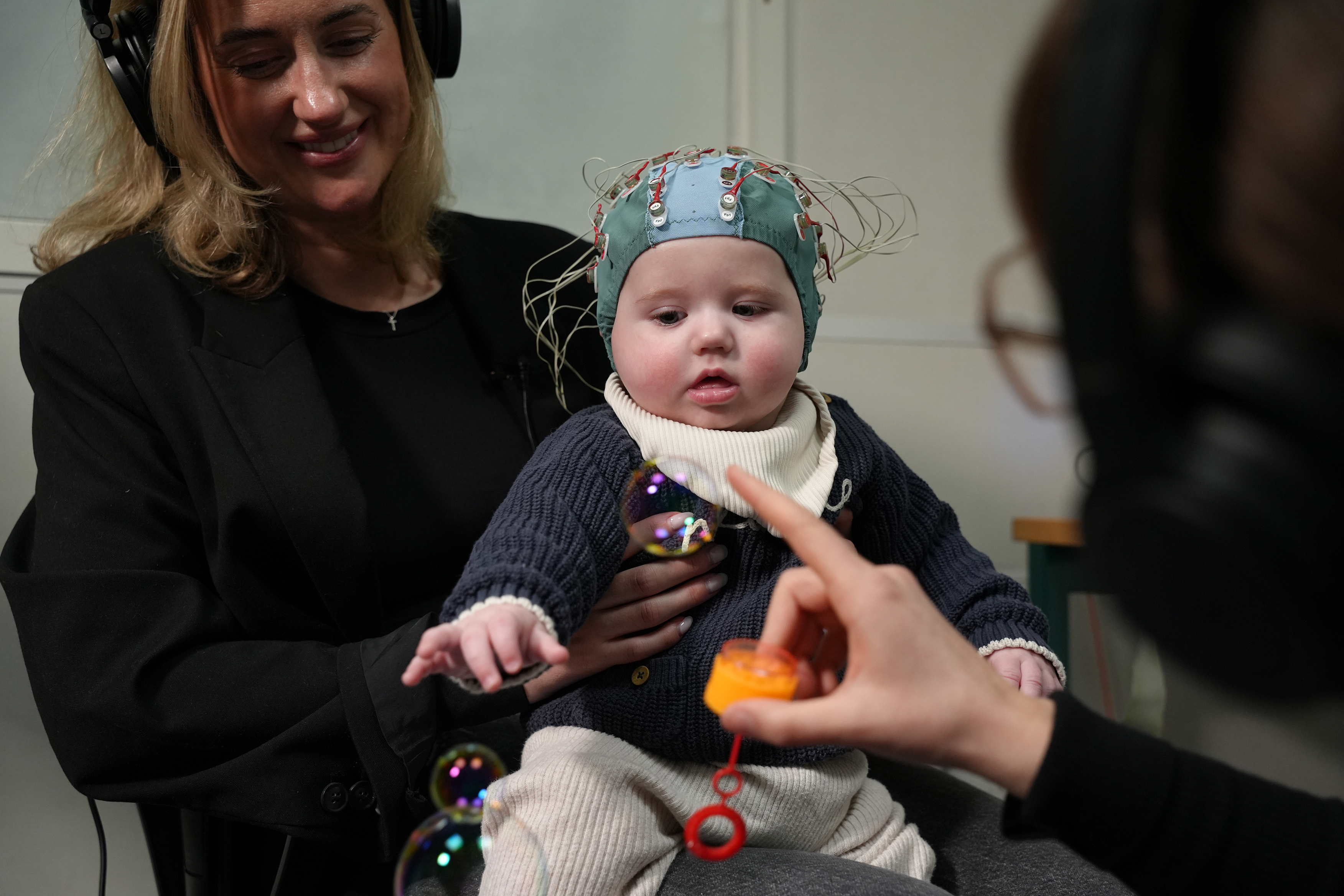
With the help of an EEG device, researchers can find out how far a child has come in their early language development. Photo: Johan Lundberg
Anyone who imagines research as something dry and purely academic has never visited the Babylab at Stockholm University. Here, such preconceptions are quickly put to rest. Located beneath Building C at Frescati, the lab feels like a cross between a preschool and an inventor’s workshop.
The atmosphere is warm and welcoming, and today there is an extra sense of anticipation in the air. One of the 89 babies taking part in the research project is due to arrive shortly, with another expected a few hours later.
Iris-Corinna Schwarz, who leads the project, explains that the babies are around six months old and are invited to participate by letters sent to families whose addresses the research team receives from the Swedish Tax Agency.
"Each child visits the Babylab twice, one to two weeks apart, accompanied by a parent. During these visits, we carry out a series of tests that, among other things, allow us to see how far the child’s language development has progressed, even though they have not yet started to speak,” she explains.
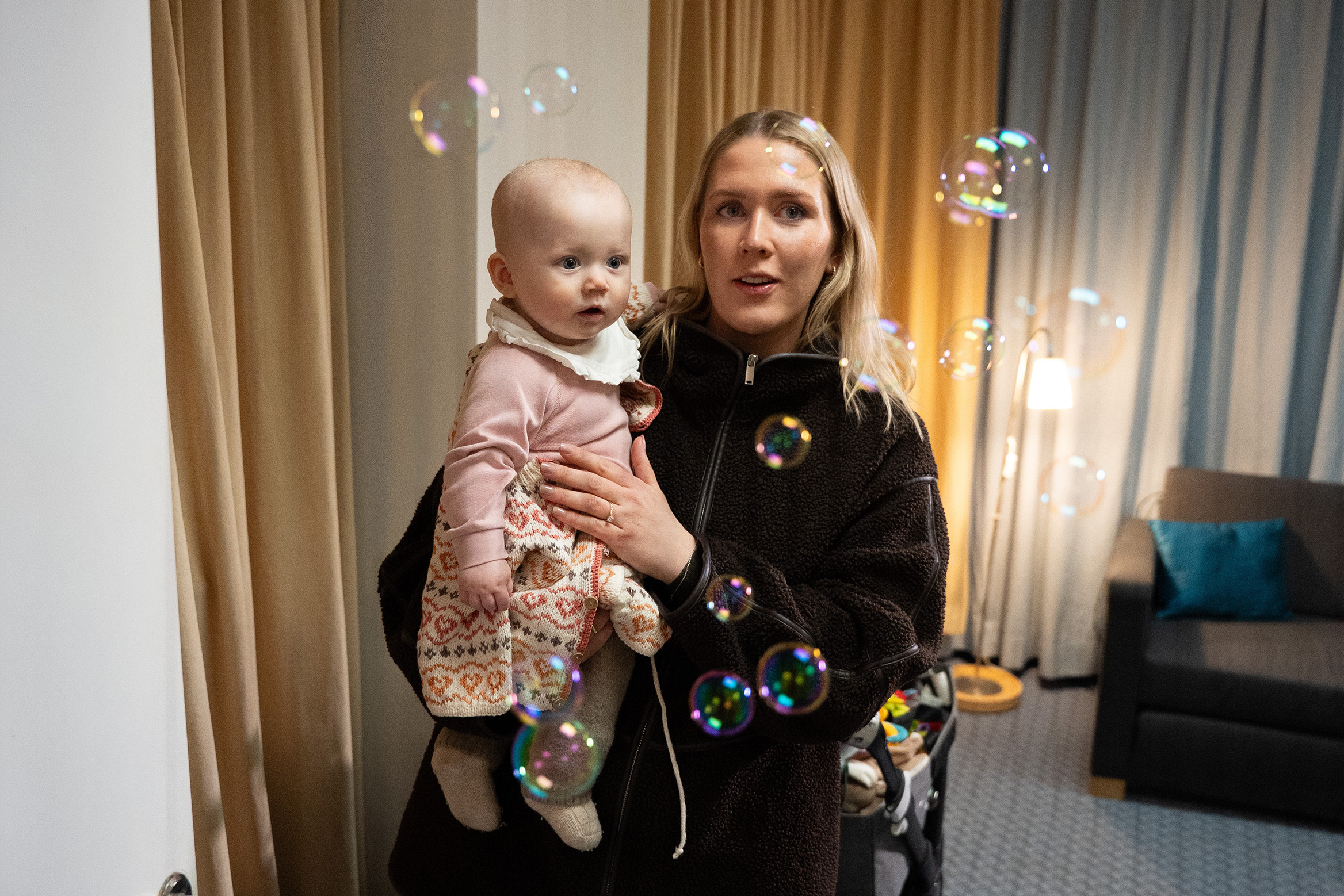
Today's second participant is getting acquainted with the Babylab. Photo: Johan Lundberg
Infant-directed speech
As soon as today’s first participant rings the entrance bell, it becomes clear just how well coordinated and experienced the research team is. Mother and baby are welcomed in a calm and reassuring manner and given time to settle into a comfortable armchair in one of the lab rooms.
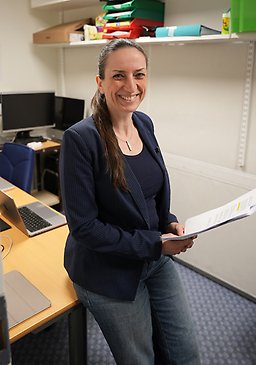
Iris-Corinna Schwarz. Photo: Johan Lundberg
After a nappy change, some breastfeeding and a little play with the university’s collection of fascinating stuffed animals, both mother and baby are ready for the day’s tests.
Meanwhile, Iris-Corinna Schwarz explains in more detail what the Babylab’s research into infant language development is all about.
“We already know that so-called infant-directed speech is central to infants’ language development. This way of speaking to babies – with a higher-pitched voice, clearer pronunciation and more emotion – comes naturally to parents and others who interact with young children, regardless of where in the world they live or what culture they come from. We want to understand more about why this helps learning, and, above all, which aspects of infant-directed speech are particularly important for language learning.”
To investigate this, the researchers measure how much infants prefer – or “listen more closely to” – infant-directed speech. They also measure how much and what kind of infant-directed speech the children are exposed to at home, and assess how far they have progressed in their language development.
“What we are particularly interested in in this study is the role of emotional engagement in infant-directed speech. The theory is that a warm and engaged voice makes the child more alert and attentive, which in turn helps them pick up and learn the subtle differences between sounds that make up a language more easily,” Iris-Corinna Schwarz explains.
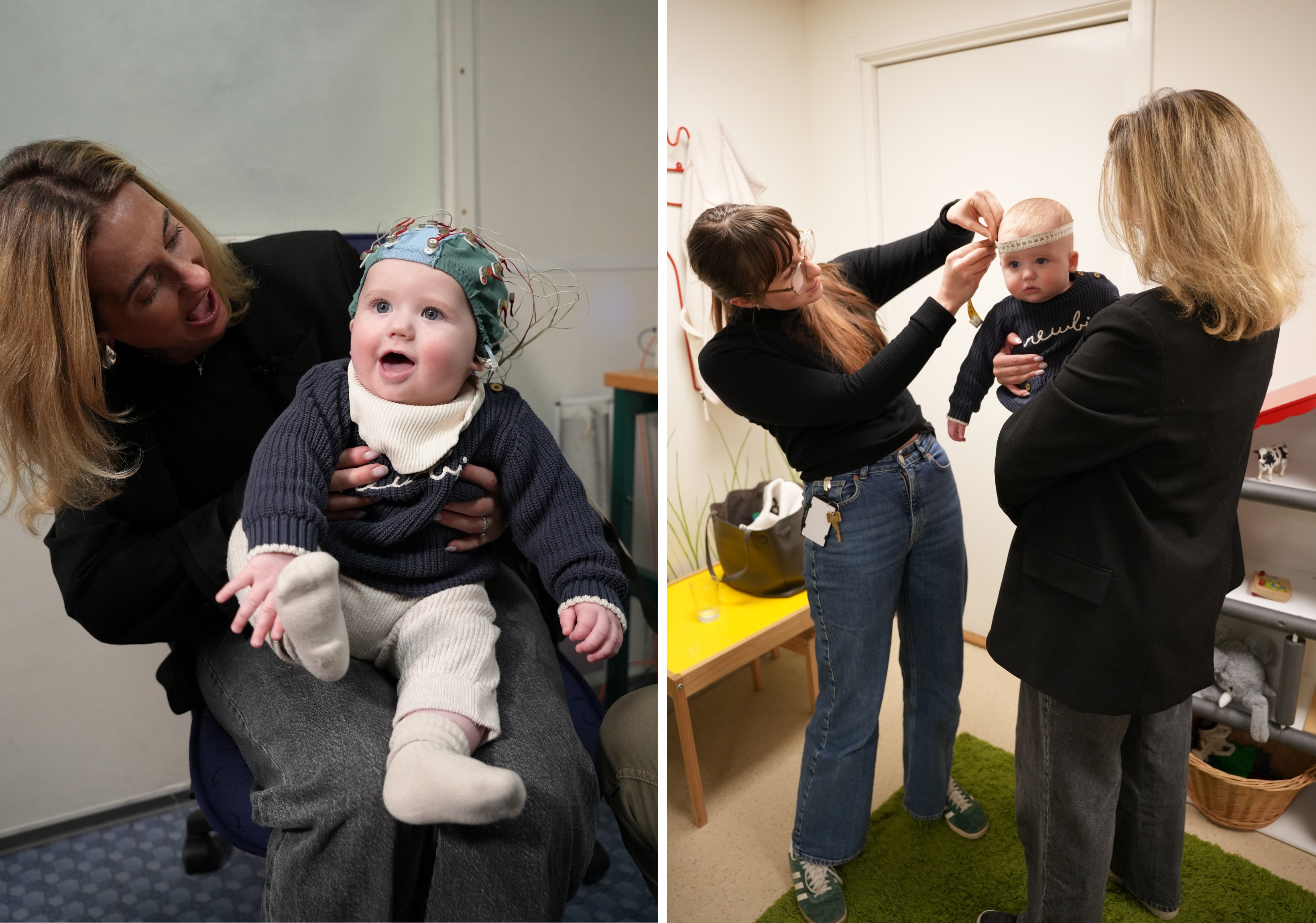
Science is fun! Research assistant Greta Gandini makes sure that the cap fits properly. Photo: Johan Lundberg
The impact of emotional engagement
After some time spent playing with soap bubbles, it is time to see whether our little participant is willing to put on the essential piece of equipment for today’s measurements: a small “baby cap” covered in wires – or, in research terms, an EEG device.
It quickly becomes clear, however, that pulling at the wires is far more interesting than wearing the cap on his head. Perfectly understandable. But after a while, the new cap starts to feel all right, and once more soap bubbles and playful research assistants capture his attention, it is soon forgotten and the measurements can begin.
Iris-Corinna Schwarz explains that this is the child’s second visit. During his first visit, a week ago, the researchers examined his preference for infant-directed speech. Over the following week, the family had a recorder at home documenting the child’s auditory environment for two full days. Now it is time to assess how far he has progressed in his early language development. In this case, the researchers are measuring how well his brain can distinguish between different vowel sounds.
“By analysing all this data later, across the children we have studied, we hope to identify general patterns and understand the significance of the emotional dimension of infant-directed speech. If a child is exposed to more or less infant-directed speech with a high level of emotional engagement, how does that affect early language development?”
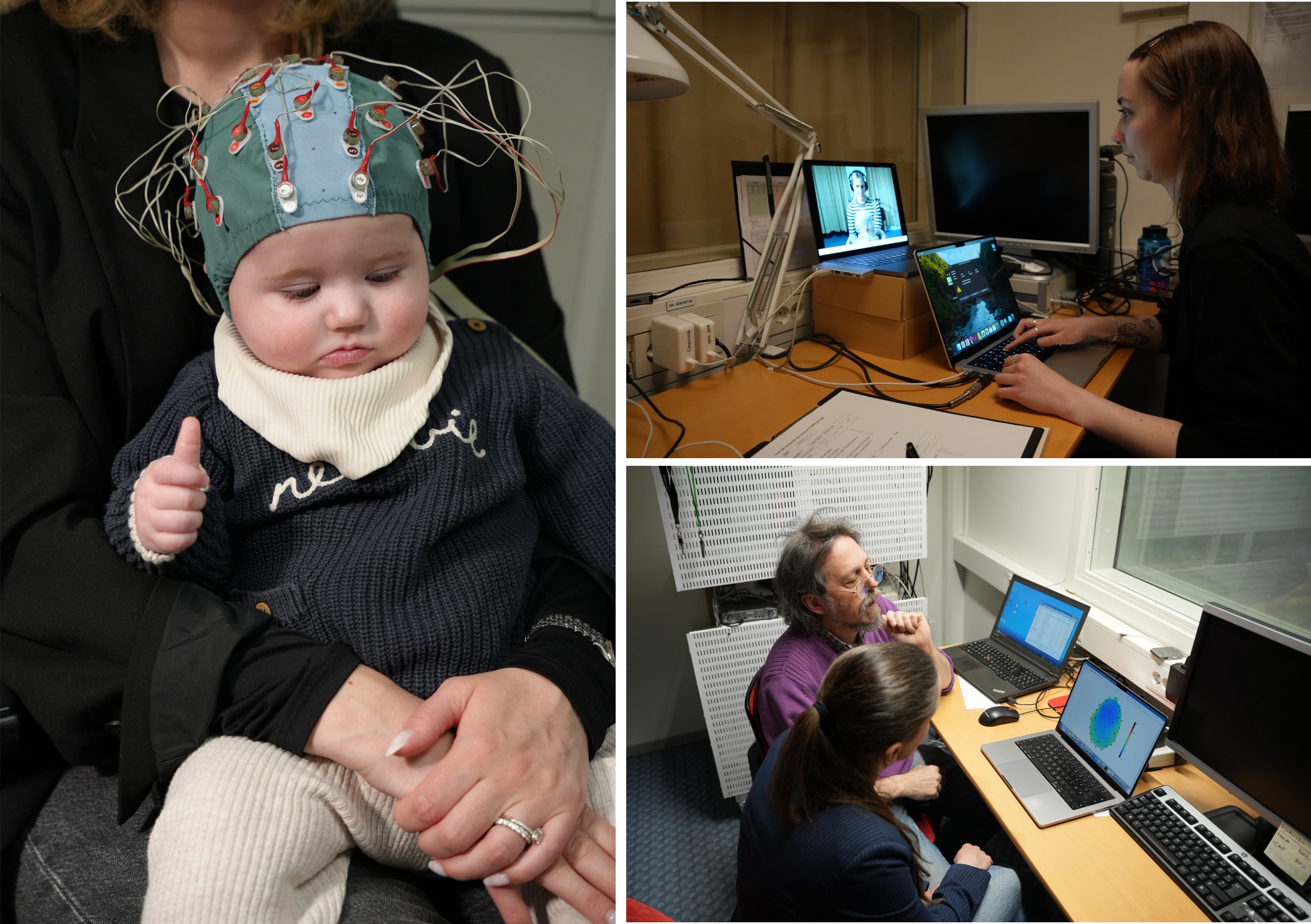
Ready to start! Research assistant Rebecca Finndell, researcher Petter Kallioinen, and Iris-Corinna Schwarz make sure all the data gets collected. Photo: Johan Lundberg
Several practical applications
After around 20 minutes wearing the “baby cap”, our young trooper has done his part for science this time around. Judging by his cheerful mood, it does not seem to have been too taxing. Mother and son are given some time to relax and take in the experience in the playroom before it is time to say goodbye and head home.
So what is the broader purpose of this fascinating research? Could the findings eventually be put to practical use?
“Yes, absolutely. In the area of early intervention – for children at risk of language delays, such as premature children, children with autism, or children growing up in language-poor environments – the insights could be used to develop targeted training programmes for parents,” she says.
The findings could also have applications in preschools and childcare, Iris-Corinna Schwarz explains, by giving educators better tools for communicating with the youngest children in ways that support their language development.
“In the long term, this research could help give more children a stronger linguistic foundation early in life, which can have a major impact much later on – in areas such as literacy development, academic achievement and social skills,” she concludes.
Is there anything in particular that parents need to keep in mind when it comes to supporting early language development?
“As a parent or adult, there is no need to consciously think about or worry about using infant-directed speech. In most cases, it comes naturally. What we do know is that it is important to interact and talk a lot with young children.
“We also know that screens cannot replace this human interaction when it comes to language development. In particular, the emotional dimension of infant-directed speech is lost when language is delivered through a screen,” Iris-Corinna Schwarz says.
Soon, the BabyLab’s doorbell rings again, and another little volunteer arrives to do their part for science.
Time to bring out the soap bubbles.
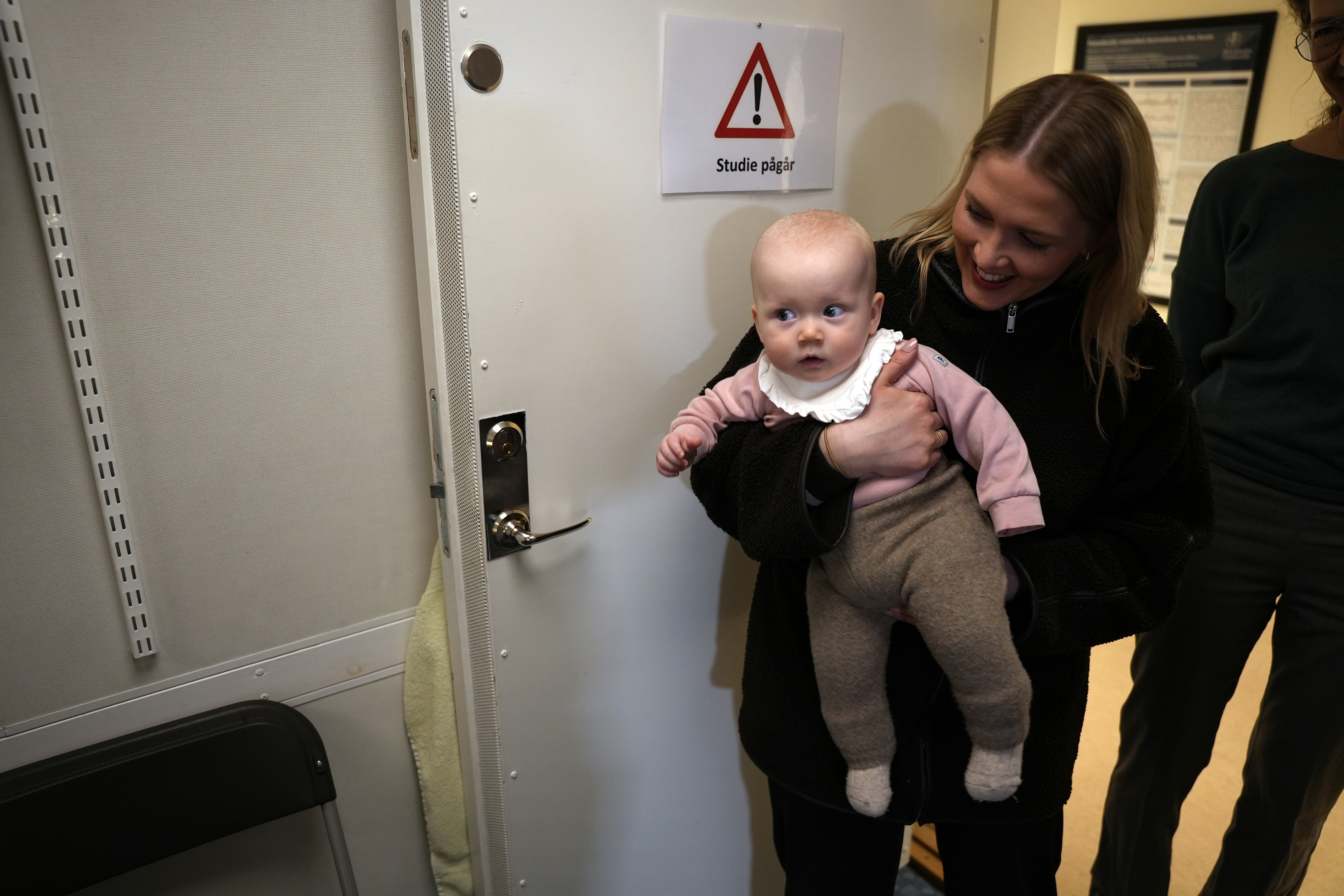
What’s going on here? The first visit to the Babylab is extra exciting. Photo: Johan Lundberg
about Stockholm Babylab
Stockholm Babylab studies the language development of infants and run several parallel research projects and participate in international research collaborations.
In this film, you'll learn even more about the research at the Baby Lab. The film was produced by Media Production at Stockholm University's Communications Office.
Last updated: 2026-09-22
Source: Communications Office