


Vacuum fluctuations can enhance superconductivity
Researchers have experimentally demonstrated for the first time that vacuum fluctuations can enhance superconductivity. Nobel Prize laureate Frank Wilczek, professor at Stockholm University, helped develop the theoretical model behind the findings. This work opens up for new ways to influence quantum states.
“This represents the first experimental observation of vacuum-fluctuation-enhanced superconductivity,” says Guanghui Cheng, professor at the University of Science and Technology of China.
A superconductor is a material can conduct electric current without electrical resistance, but this only happens below a certain temperature, known as the critical temperature. If that temperature can be raised, the superconducting state can exist under less restrictive conditions.
Vacuum is often thought of as empty space, but in quantum physics the situation is more complex. Even in the lowest possible energy state, there are so-called vacuum fluctuations, in which virtual particles are continually created and annihilated.
The effects of such fluctuations are usually too weak to produce clearly observable effects in macroscopic systems. Now, an international research team has shown that vacuum fluctuations can be used to enhance superconductivity.
The critical temperature increased
In a new study published in Nature, the researchers used NbSe2, a material that can become superconducting at low temperatures. This material was placed inside a special terahertz resonator, known as a dark cavity, which changes the electromagnetic environment around the material in a way that amplifies the vacuum fluctuations.
The results show that the superconducting critical temperature increases. In a six-layer NbSe2 device, the increase reached up to 5.4 per cent. The critical current and critical magnetic field were also significantly enhanced near the superconducting transition.
“With further optimization of cavity structures and material systems, vacuum-fluctuation coupling may enable more pronounced and widely applicable control of quantum states,” says Changgan Zeng, professor at University of Science and Technology of China.
A theoretical model explains the findings
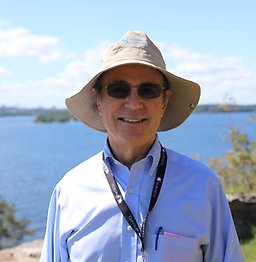
Professor Frank Wilczek. Photo: Gunilla Häggström
Frank Wilczek, together with researchers at Shanghai Jiao Tong University, developed a theoretical model to explain the findings. The model proposes that the superconducting state exchanges virtual photons with the cavity. This can lower the energy of the superconducting state and thereby strengthen superconductivity.
“In most practical physics, the vacuum serves merely as the passive stage on which phenomena play out. This work shows that the background itself can become an actor – engineered to strengthen superconductivity and reshape the behavior of quantum matter,” says Frank Wilczek.
About the study
The study Evidence for vacuum-enhanced superconductivity in NbSe2 is published in Nature.
Last updated: 2026-08-25
Source: Communications Office