


Investigating methane – a gas that could decide our future climate
As Arctic permafrost thaws, emissions of methane – a potent greenhouse gas – are rising. Örjan Gustafsson and his colleagues at Stockholm University are now investigating methane emissions from permafrost in the Arctic seabed. Their findings will provide a clearer picture of the global methane balance, and help societies to prepare for an increasingly vulnerable climate.
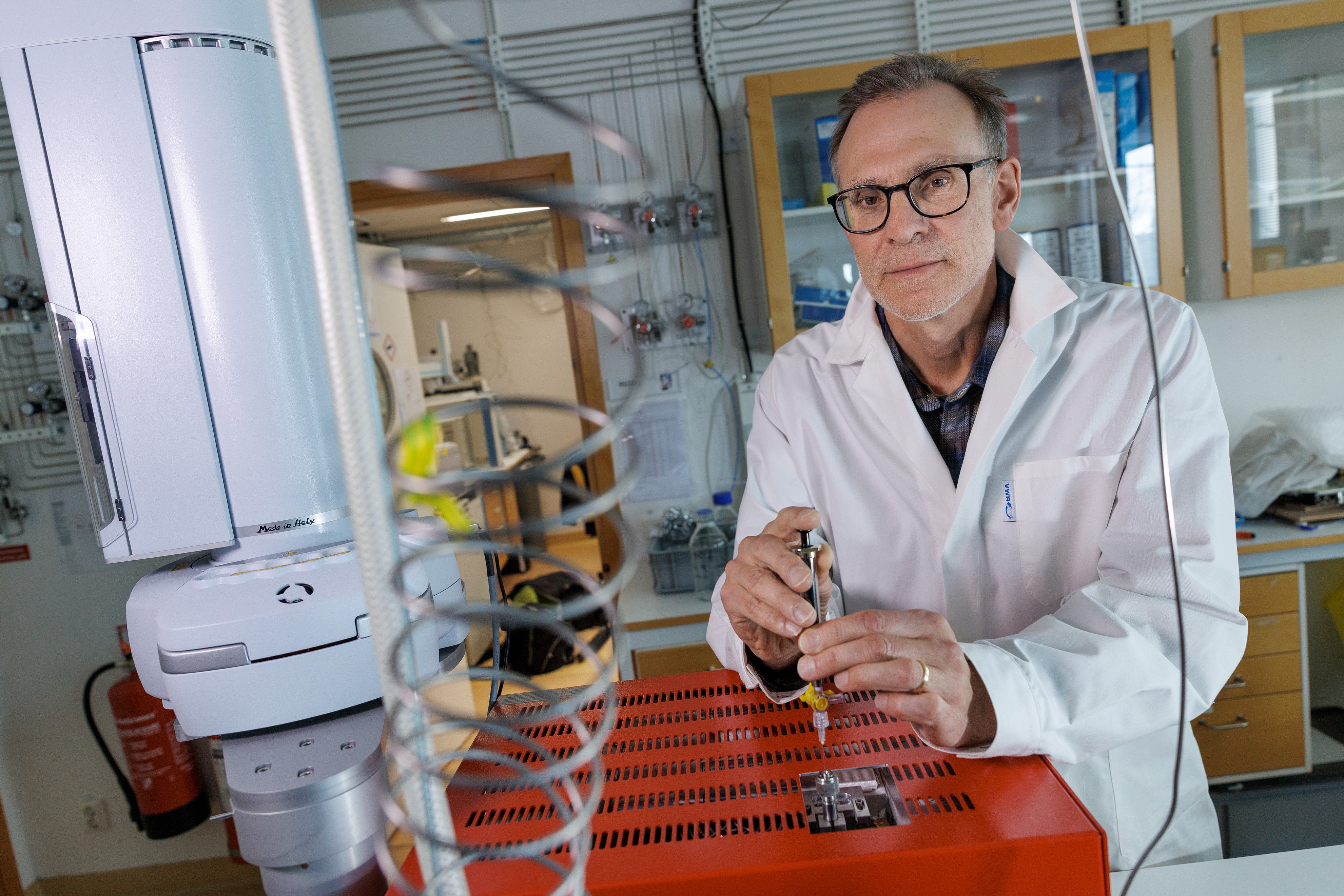
Professor Örjan Gustafsson. Photo: Magnus Bergström
Around 10,000 years ago, large permafrost-covered land areas in the Arctic were flooded by seawater. Over millennia, remains of decaying plants and animals on the seabed have formed large quantities of methane – a greenhouse gas that plays a major role in global warming.
Since the industrial revolution in the 18th century, methane in the atmosphere has increased by 200–300 percent. This is more than the figure for carbon dioxide, which has increased by around 50 percent. Emissions continue. One example is the Arctic, where large wetlands release ever greater amounts of methane as permafrost thaws and glaciers melt.
Methane emissions are caused by both humans and nature. It is well known that emissions from agriculture, energy and waste can be reduced by mitigation and verified by measurements. But it is more difficult to ascertain how much climate warming triggers a rise in emissions from nature.
Addressing the knowledge gap
Örjan Gustafsson, who is a professor of biogeochemistry at the Department of Environmental Science and the Bolin Centre for Climate Research, Stockholm University, aims to address this knowledge gap.
He points out that anthropogenic (human-caused) global warming interacts with natural processes in the Arctic:
“This type of amplifying feedback mechanism will worsen climate change, but we cannot yet say by how much. We know that permafrost in the seabed is thawing faster than researchers previously thought – and that this releases growing amounts of methane.”
Last updated: 2026-06-11
Source: Communications Office