


Portuguese Language Day celebrated with literature, language and music
When Portuguese Language Day was celebrated, Stockholm University Library was filled with literature, music and conversation.
The event was organised by Vera Fonseca, Visiting Lecturer at the Department of Romance Studies and Classics, in collaboration with Instituto Camões and with support from the embassies of Portuguese-speaking countries.
After opening remarks by Vera Fonseca, Portugal’s Ambassador, Francisco Alegre Duarte, spoke about the spread of Portuguese, its variations and its capacity to change over time. He also highlighted the beauty of the language and expressed his pride in representing a country where the poet Luís de Camões is one of the foremost national symbols.
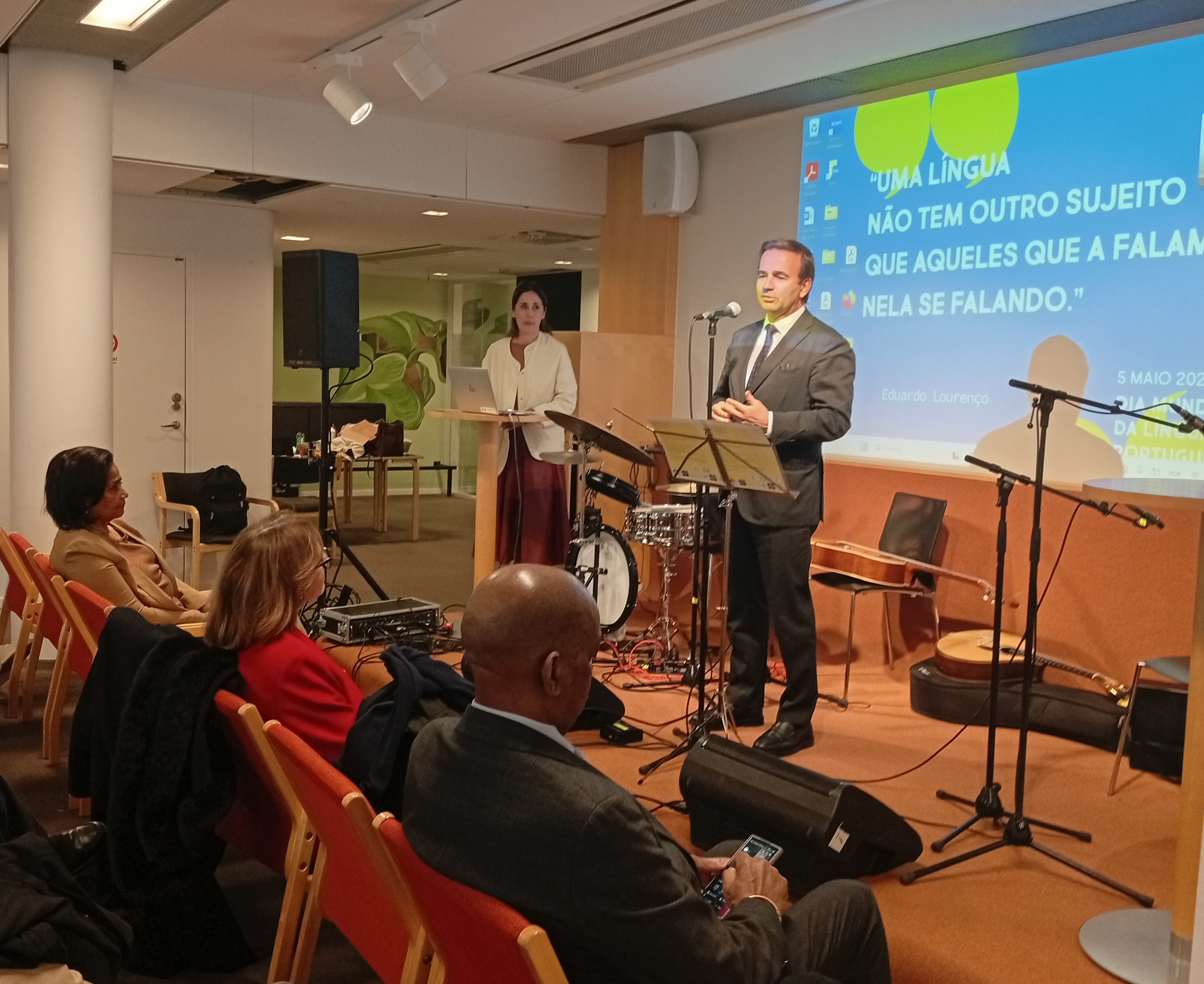
Vera Fonseca, visiting lecturer at the Department of Romance Studies and Classics and Portugal’s Ambassador, Francisco Alegre Duarte.
A quotation by the Portuguese essayist, philosopher and literary critic Eduardo Lourenço was projected behind the speakers: “Uma língua não tem outro sujeito que aqueles que a falam, nela se falando.” The words set the tone for the day: a language lives through those who speak, write and shape it. Brazil’s Ambassador, Maria Edileuza Fontenele Reis, emphasised how Portuguese both borrows from and contributes words in its contact with other languages. She also noted that the United Nations’ recognition of Portuguese Language Day highlights the language’s importance internationally.
“A good example is the word samba, which emerged from contact between Portuguese and African languages and has since travelled across continents - including into Swedish. It is listed in the Swedish Academy Dictionary and reminds us how languages are constantly shaped through human interaction,” says Laura Álvarez López, Director of the Forum for Language and Literature.
An online roundtable brought together colleagues from universities in Brazil and Mozambique, along with the Portuguese author Bruno Vieira Amaral, to discuss literature in Portuguese and the many forms the language takes in different parts of the world.
The day concluded with a performance by Trio Saudade, featuring musicians from Mozambique, Portugal and Brazil. Voices and rhythms from across the Portuguese-speaking world reminded the audience of the diversity, mobility and vitality of the Portuguese language.
Last updated: 2026-05-13
Source: Office of Human Science