


How art-science collaborations can succeed
A new study explores what it takes to build meaningful art-science collaborations. Drawing on a collaborative process between researchers and composers at the Baltic Sea Festival, it offers practical guidance for designing processes that foster dialogue, learning and trust.
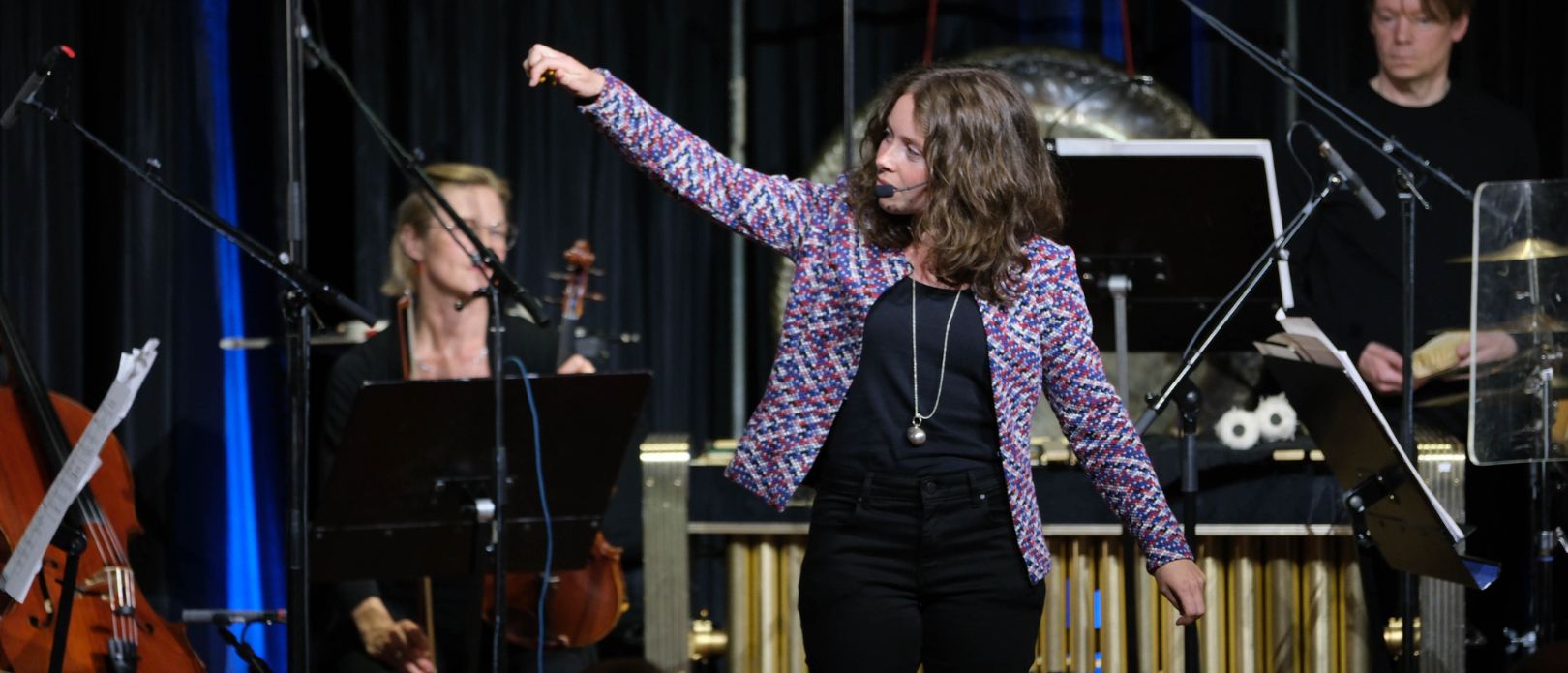
Heirloom brown beans, dropped on the stage floor, were part of Carolin Seiferth's performance. Photo: Arne Hyckenberg/Sveriges Radio
Art-science collaborations are often praised for raising awareness about sustainability challenges and motivating the public to engage in change-making, but rarely examined in terms of their potential as spaces for learning from and with each other through shared experiences.
To share learnings and provide guidance for those interested in such collaborations, a new study led by Carolin Seiferth at Stockholm Resilience Centre offers insights into a unique experiment bringing researchers and composers together. The paper, published in Sustainability Science, reflects on a co-production process between six researchers and six composers during the Baltic Sea Festival Science Lab in 2023. Together, they created orchestrated “calls to action” to protect the Baltic Sea by combining science communication and music.
“There is quite a lot of interest in art-science collaborations,” Seiferth says. “But there is very little guidance on how to navigate these messy processes on equal terms.”
Read full article on the Stockholm Resilience Centre web
Last updated: 2026-04-24
Source: Communications Office