


The brown bear was not inbred despite heavy hunting pressure
The brown bear was almost extinct in Scandinavia in the early 1900s. Despite that, neither the degree of inbreeding nor the genetic variation of the individuals has been affected. This surprising result can probably be explained by genetic exchange via migratory male bears.
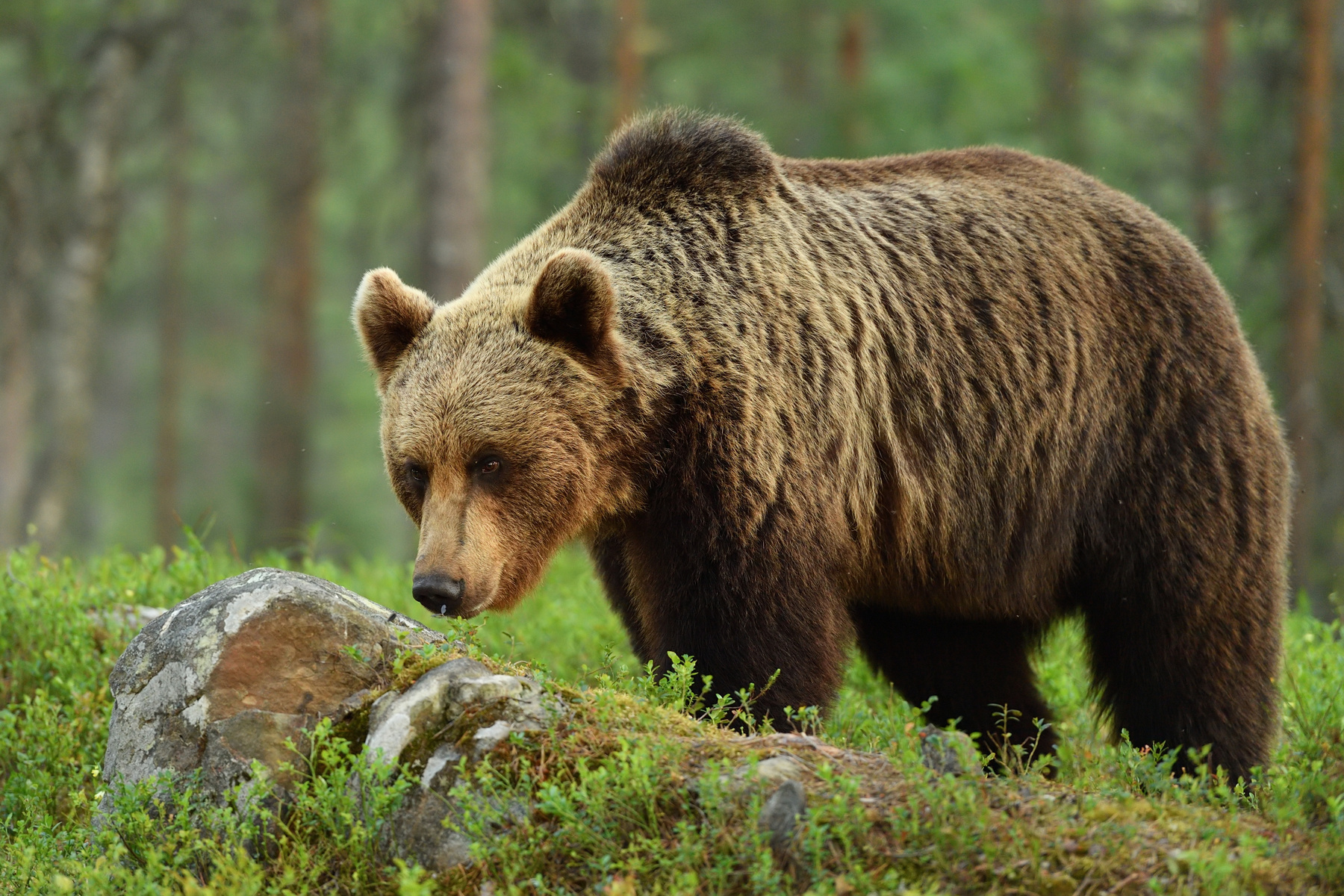
Although the Scandinavian brown bear population was on the verge of extinction in the early 20th century, this did not mean a loss of genetic variation in individual bears and an increase in inbreeding. Photo: Mostphotos/Erik Mandre
In the early 1900s, the Scandinavian brown bear was driven to the brink of extinction due to intensive hunting, with only about 130 individuals at its smallest. Today, the population has recovered and amounts to about 3,000 individuals. By mapping and comparing the entire genome of both historical and contemporary brown bears, researchers at the Centre for Palaeogenetics (CPG), a collaboration between Stockholm University and the Swedish Museum of Natural History, have investigated how the dramatic bottleneck affected genetic variation and inbreeding rates over time. The study, now published in the journal Royal Society Open Science, surprisingly shows no detectable loss of genetic variation in individual bears and no increase in inbreeding after the population crash.

Amanda Lindahl Photo: Private
However, clear changes in the relationship between the northern and southern subpopulations were identified. The results indicate that male bears from northern Scandinavia migrated south, which increased gene flow between the previously more genetically distinct populations. This genetic exchange between the northern and southern subpopulations appears to have been central to maintaining individual variation and counteracting harmful inbreeding, and shows how movement between subpopulations can act as a genetic buffer after sharp population declines.
"Our study suggests that populations that have almost become extinct may not have lost as much genetic variation as expected, if there is a possibility of gene flow between individuals from genetically distinct subpopulations," says Amanda Lindahl, a doctoral student at CPG and first author of the study.

Isabelle Feinauer Photo: Bilal Sharif
"However, it is important to remember that even if the genetic variation of individuals seems to have been preserved, the overall diversity of a population can decrease because unique variants can be lost. Such variants are important for a population's ability to cope with environmental changes," says Isabelle Feinauer, a doctoral student at CPG who led the study together with Amanda Lindahl.
Excellent database of the bears' genome
Love Dalén is a professor and research leader at the Centre for Palaeogenetics and also one of the researchers behind the study. According to him, the results of the study cannot be used directly in today's wildlife management of brown bears. But he believes that it is still good news that the inbreeding rate is not as high as one might have feared.
"It is also worth mentioning that with this study, there is now an excellent database of what the bears' genome looks like in different parts of the country, which could be used by the administration to develop new tools to monitor the population in terms of inventory of the number of bears and relationships between individuals.
Love Dalén emphasizes that these results illustrate how important gene flow is to get rid of inbreeding in small and/or bottlenecked populations, for example how important it is to get new blood into the Swedish wolf population.
The samples included in the study have been collected from the Swedish Museum of Natural History, the Natural History Museum in Oslo, the Natural History Museum in Gothenburg and the Biological Museum in Lund. DNA has then been sequenced at the Science for Life Laboratory (SciLifeLab) in Stockholm.
Research on brown bears at the Centre for Palaeogenetics is now continuing, among other things, with a new postdoc who is working to study the evolution of brown bears on longer time scales, for example how prehistoric climate change has affected the brown bear's distribution and population dynamics.
Last updated: 2026-03-25
Source: Communications Office