


“Will ALS be treatable in the future? Yes, definitely”
Why do some neurons withstand amyotrophic lateral sclerosis (ALS) better than others? It is a question neurochemist Eva Hedlund has been pursuing since she began researching the fatal neurological disease more than two decades ago.
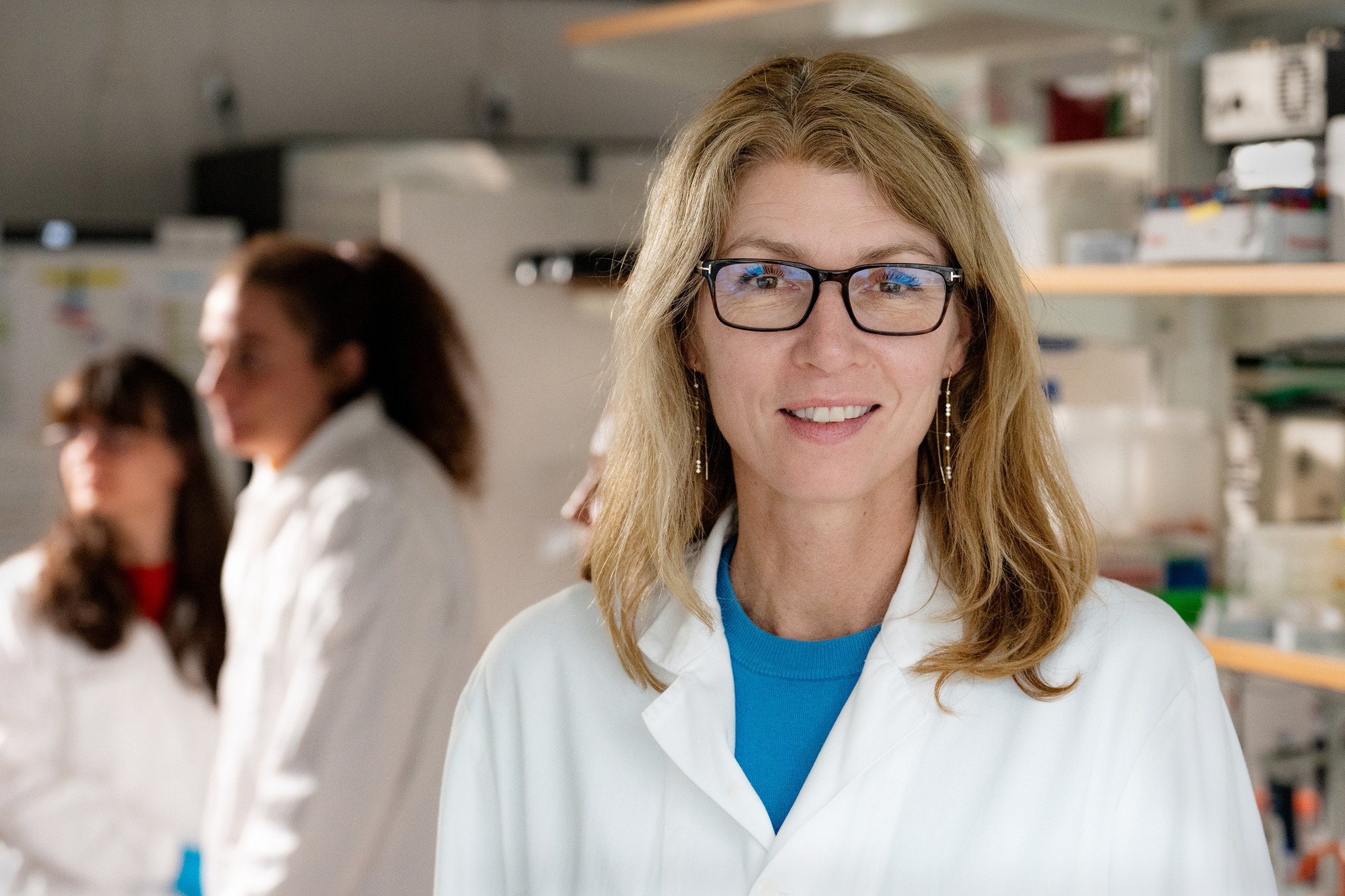
Professor of Neurochemistry at the Department of Biochemistry and Biophysics, Stockholm University. Photo: Anette Gärdeklint Sylla/Stockholm University
“As a former athlete and coach, I’ve always been fascinated by how the body works, how fast muscles are built that allow you to run fast and jump far,” she says. “In my research, I focus on understanding how to protect the neurons in the spinal cord, known as motor neurons, that control fast muscle fibres and are lost first in ALS.”
FACTS
- In ALS, the neurons that control our voluntary muscles, known as motor neurons, gradually die. The synapses, the points of contact between motor neurons and muscles, are the first structures to break down, causing the muscles to weaken and eventually waste away.
- In around 10–15 per cent of ALS cases the disease is inherited in an autosomal dominant manner, and researchers have now identified the majority of the genes responsible. However, in the remaining 85–90 per cent of people who develop ALS there is no clear family history, and the disease is considered sporadic.
“That means we still do not understand why the disease arises. What we do know, however, is that genetics plays an important role here as well.”
See a short video where Eva Hedlund explains her research.
Different levels of resilience
Not all motor neurons are affected equally by ALS. Eva Hedlund’s research group has shown, among other things, that the motor neurons controlling eye movements are highly resistant to the disease.
“We have identified several mechanisms that appear to protect these resilient neurons in ALS. Our goal is to transfer such protective properties to more vulnerable motor neurons, for example through gene therapy, in order to slow down the progression of the disease. In preclinical studies* we have shown that this approach may work.”
*Preclinical studies are the first experimental stages in drug development, in which potential treatments are tested in the laboratory animals before being evaluated in humans.
Mini-models of the spinal cord
In the laboratory, the Hedlund team combines several techniques to study how motor neurons in the brainstem and spinal cord, with their long projections to skeletal muscles, function, both in healthy conditions and when affected by ALS.
One method involves growing human tissue in the lab to create organoids: small, three-dimensional models of skeletal muscle and spinal cord tissue that contain motor neurons. These miniature systems allow the researchers to observe how the connection between motor neurons and muscles works.
Eva brings up a magnified 3D image of an organoid on her computer screen. It looks like an irregular cluster and moves slightly, despite having no brain. None is needed. The muscle receives signals from the motor neurons and contracts in response.
Video of an assembloid where a muscle organoid has been fused to a spinal cord organoid with thousands of synapses having formed between the cell types. Credit: Melanie Leboeuf, part of Eva Hedlund’s research group.
Uses reprogrammed skin cells
“We use pluripotent* stem cells that have been reprogrammed from human skin cells, taken both from healthy individuals and from ALS patients. This allows us to study the causes of sporadic ALS, something that is extremely difficult to model otherwise, since we do not yet know what triggers the disease.”
*Pluripotent stem cells (iPS cells) are similar to human embryonic stem cells in their capacity divide indefinitely and ability to generate all the cell types that the human body is built from, but they originate from mature cells, for example skin cells from an adult, that have been reprogrammed back into a stem cell. The discovery that mature, somatic cells from an adult individual can be reprogrammed into a stem cell state was awarded the Nobel Prize in Physiology or Medicine in 2012 and has been a ground-breaking technology to model human disease in a dish.
Early signs of disease
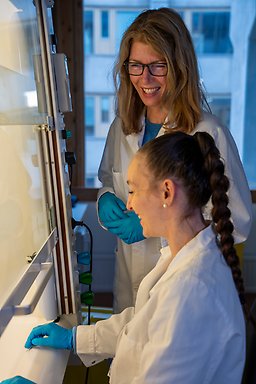
Postdoc Melanie Leboeuf is processing neurons made from human stem cells for antibody stainings. Photo: Anette Gärdeklint Sylla/Stockholm University
The research group also uses the gene-editing tool CRISPR/Cas9* to both introduce ALS-causing mutations into stem cells from healthy individuals and remove such mutations from stem cells derived from patients with dominantly inherited ALS.
This allows the researchers to study how cells respond to the mutation and compare them with control cells that are identical in every aspect except for the ALS-causing change. They can also compare sporadic ALS with inherited forms of the disease to determine if the underlying disease process is similar, even when the causes differ.
“These techniques allow us to study how cells are affected by ALS long before they become sick, and to follow the very earliest stages of disease development.”
*CRISPR/Cas9 is a gene-editing technology, often referred to as “genetic scissors”, that enables scientists to cut and modify DNA in living cells. The technology was awarded the Nobel Prize in Chemistry in 2020.
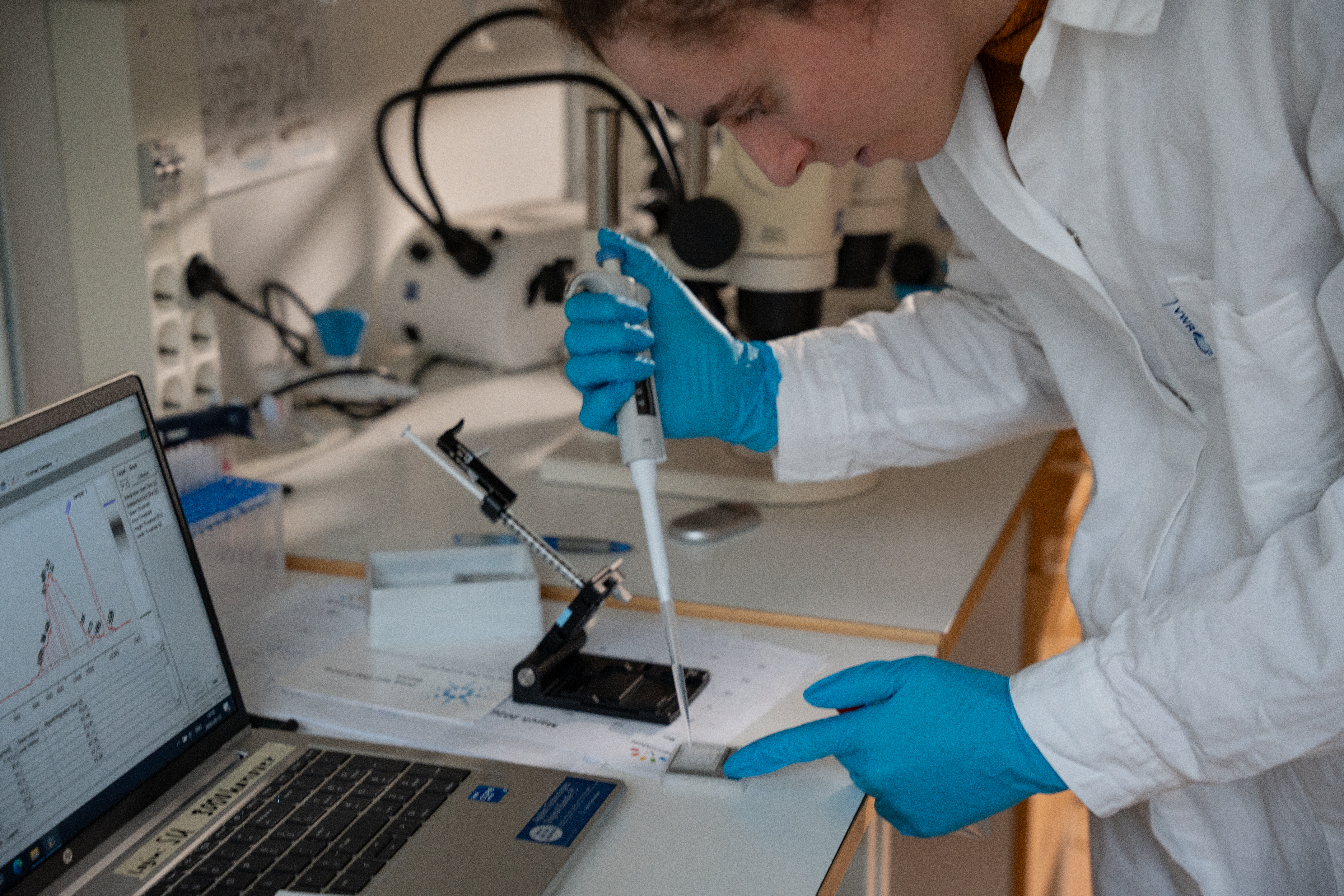
PhD student Irene Mei is analysing mRNA molecules in mini-organoids. Photo: Anette Gärdeklint Sylla/Stockholm University
Messenger molecules provide clues
To understand what happens inside motor neurons in ALS, the researchers study the disease at the level of individual cells by analysing the cell’s messenger molecules – mRNA* – using several techniques developed in the lab.
*mRNA is a molecule that acts as a blueprint, instructing the body’s cells how to produce specific proteins.
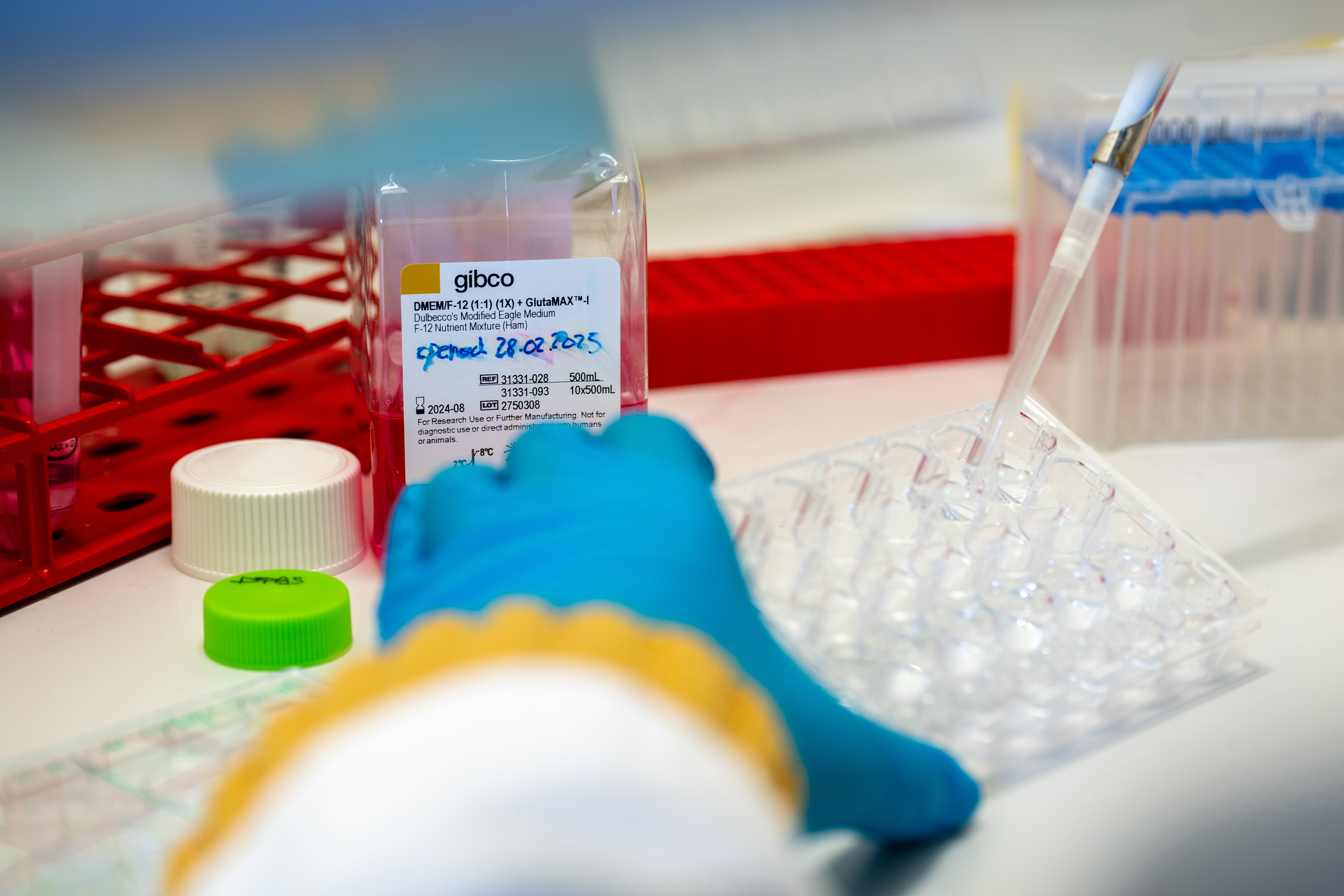
Antibody stainings of stem cell-derived muscle fibers are ongoing to determine that the correct cell types have been generated and to investigate how these are responding to disease. Photo: Anette Gärdeklint Sylla/Stockholm University
“By studying mRNA, we can determine what type of cell it is, how healthy it is and how it communicates with its surroundings. Using powerful bioinformatics* we can compare different types of motor neurons carrying ALS-related genetic changes with their healthy counterparts. In this way we have identified factors that characterise resilient motor neurons, as well as processes that contribute to the loss of more vulnerable neurons in the disease.”
*Bioinformatics is an interdisciplinary field that combines biology with computer science, mathematics and statistics to analyse large amounts of biological data, such as DNA and protein sequences.
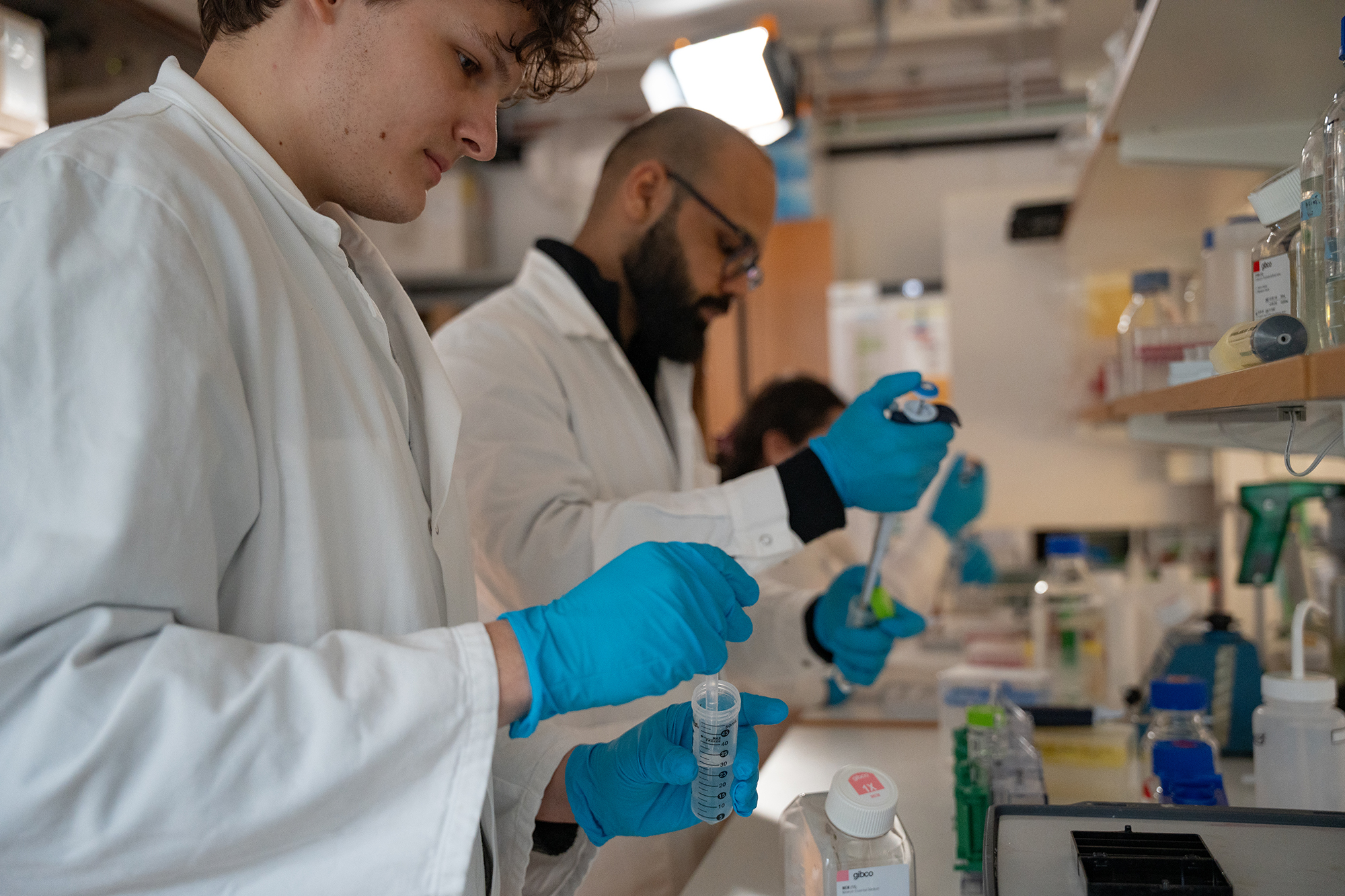
Master student Oleksii Doroshenko and postdoc Sagar Verma are conducting biochemical analyses on samples from ALS models. Photo: Anette Gärdeklint Sylla/Stockholm University
Science always her focus
When did you choose science and ALS as your focus?
“I have loved science since I was a child. I didn’t know any scientist growing up, but my father was very interested in physics, mathematics and biology, and that enthusiasm rubbed off on me. Whenever I had to give a presentation at school, I always chose a scientific topic.”
She became involved in ALS research when she was working as a postdoctoral fellow at UCLA in California in 2001.
“There I studied genes that determine where motor neurons settle in the spinal cord and which muscles they send their long projections, known as axons, to. That made me want to understand what happens when motor neurons stop functioning properly and a disease such as ALS develops.”
Establishing her own research line
After her time at UCLA, Eva Hedlund was offered a postdoctoral position at Harvard Medical School in Boston.
“They wanted to recruit a scientist to work with stem cells and Parkinson’s disease. I said: ‘I’ll come if I can spend half my time working on ALS.’ They agreed, which allowed me to establish my own line of research there. It was incredibly stimulating and rewarding.”
How were you able to make such demands?
“I had expertise in developmental biology, which was a skill set they needed. It may have been a little bold, but it was really important for me to work on something I was deeply interested in.”
Why did you become a researcher?
“I’m a curious person, and research gives me a real outlet for that curiosity. It’s incredibly rewarding to ask questions that no one yet has the answer to, and then try to understand how things work through experiments. I love coming into the lab, discussing ideas with colleagues, and I feel very fortunate to be able to do this.”
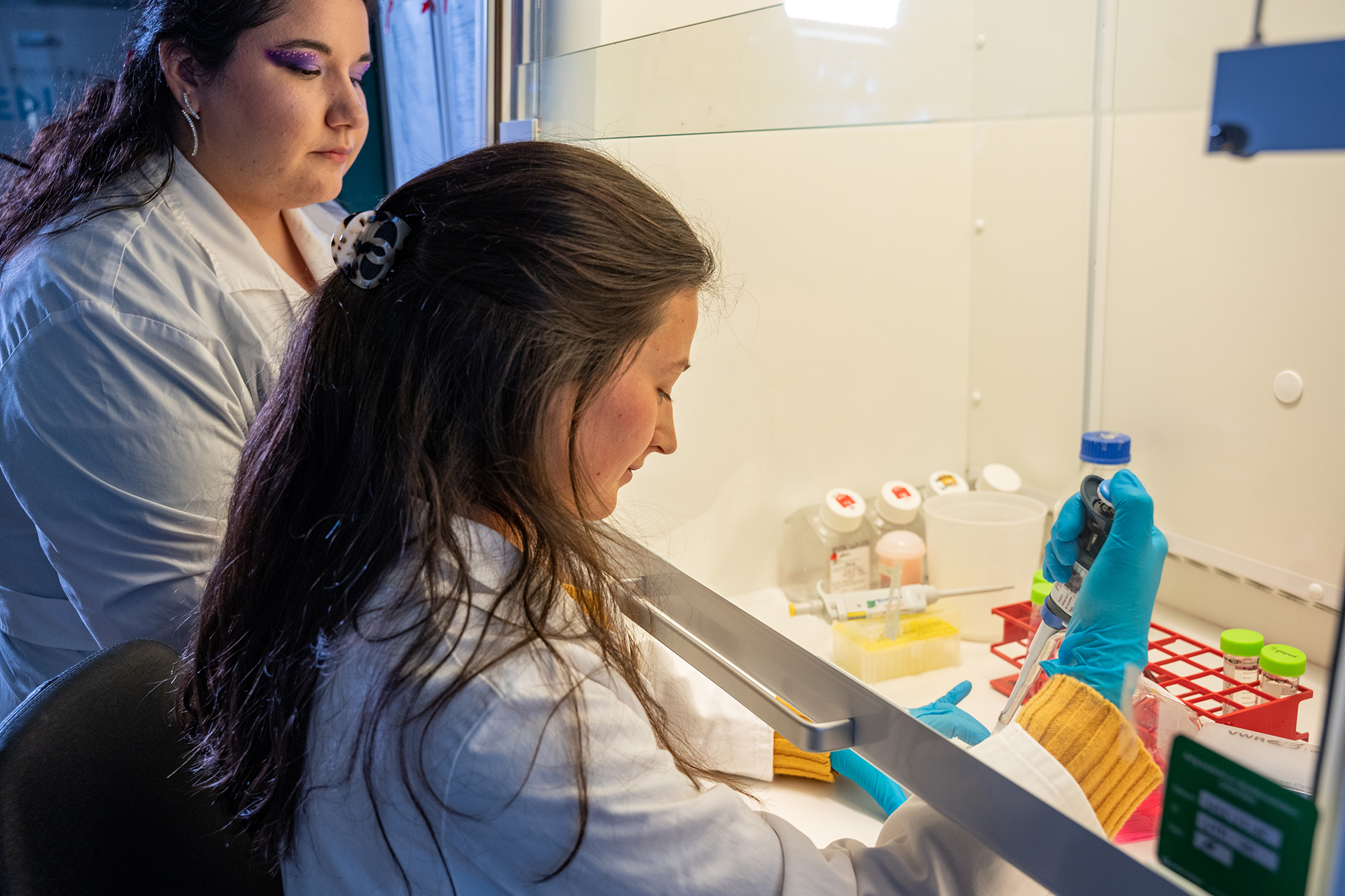
Masterstudentents Christina Toumpa and Maria Francisca Basaran Van Ham conduct neurochemical analyses. Photo: Anette Gärdeklint Sylla/Stockholm University
Cellular energy levels the next step
What are you working on right now?
“In ALS research there is strong interest in identifying factors that change early in the disease process and that could serve as biomarkers, making it possible to diagnose the disease at an earlier stage and to understand what goes wrong. The earlier ALS is detected, the greater the chances of slowing or halting its progression with future treatments.”
“At the moment we are particularly interested in energy metabolism – how cells produce and use energy. Our experiments have revealed signs of disruption in this process in motor neurons at very early stages of ALS. This could impair their ability to communicate with muscles, eventually leading to the breakdown of the connection between the two cell types.”
The cells’ powerhouses, the mitochondria, move within the axons of motor neurons. Credit: Christoph Schweingruber.
Will ALS be treatable in the future?
“Yes, definitely. When I began researching ALS more than twenty years ago, we knew of just a single gene linked to the disease. Today we know more than 50, and we understand far more about how these contribute to the disease and which biological mechanisms are involved, even in sporadic ALS. That knowledge is now helping us to begin designing new treatments.”
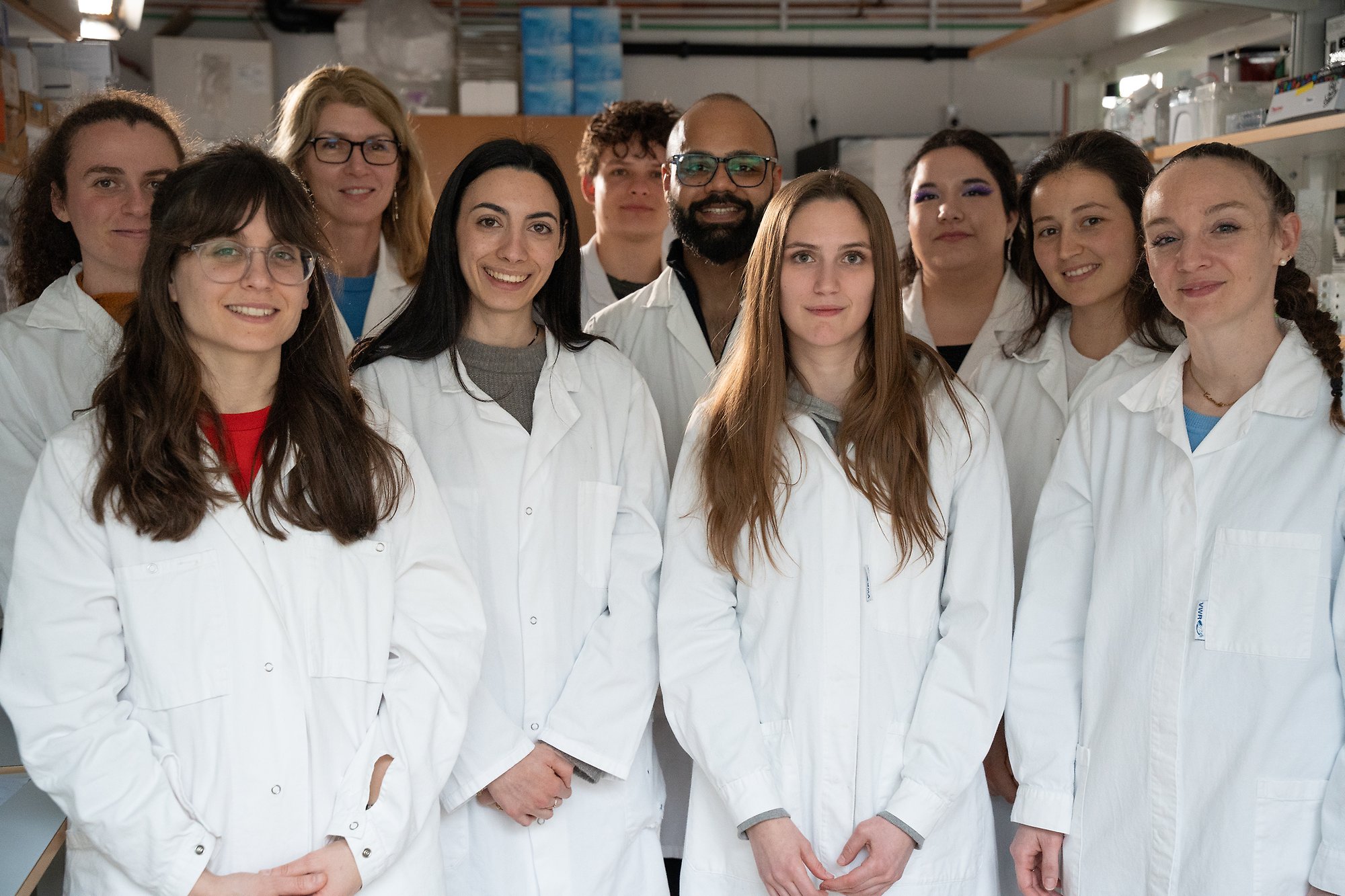
The Eva Hedlund research group: Frontline: Silvia Gomez Alcalde (PhD-student), Lara Leal Hernandez (PhD-student), Tina Karlsson Noreng (Master student) , Melanie Leboeuf (Postdoc) Backrow: Irene Mei (PhD-student), Eva Hedlund (Professor), Oleksii Doroshenko (Master student), Sagar Verma (Postdoc), Christina Toumpa (Master student), Maria Francisca Basaran Van Ham (Master student). Group members not present: Nils Dennhag (Postdoc), Rianne deJongh (Postdoc) och Larissa Kahnwald (PhD-student). Photo: Anette Gärdeklint Sylla/Stockholm University
More about Eva Hedlund’s research
Eva Hedlund is Professor of Neurochemistry at the Department of Biochemistry and Biophysics at Stockholm University and a specialist in neurodegeneration and stem cells. Her research group focuses on the mechanisms underlying ALS, analysing different cell types in depth to understand the processes that lead to neuron death.
This work includes:
- Organoids – laboratory-grown human tissue that forms miniature models of the spinal cord containing motor neurons, as well as skeletal muscle, allowing researchers to study how the connection between motor neurons and muscles functions.
- Microfluidic systems – platforms in which motor neurons are encouraged to extend projections into a controlled environment, enabling the team to study in detail how connections with muscles function in healthy cells and in ALS. Here the team has also developed a method to study the mRNAs in axons, called Axon-seq, to understand why motor neurons show a dying-back pathology with synapses being lost first, then the distal axons and finally the cell body in the spinal cord.
- In vivo models – studies using transparent fish to investigate how ALS-related changes affect motor neurons and their long processes contacting muscles, making it possible to observe how motor axon connections with muscle fibres degenerate in ALS using live-imaging and to investigate candidate molecules that may rescue disease phenotypes and induce regeneration.
- Tissue analysis combined with deep mRNA sequencing technologies –where human neurons are isolated from post mortem tissues, received from biobanks, and analysed in depth to dissect how different neurons and cellular functions within have responded to disease.
Read more about the Eva Hedlund research group
Further reading:
Nobel Prize in Physiology or Medicine 2012 – iPS cells
Nobel Prize in Chemistry 2020 – CRISPR
Last updated: 2026-06-08
Source: Communications Office