


IceCube upgraded with Swedish technology
Deep in the glacier ice at the South Pole lies IceCube, one of the world's most advanced observatories for studying neutrinos that reach us from outer space. Now, a comprehensive upgrade has taken place in which Swedish scientists have played a significant role. The upgrade is expected to lead to new discoveries in neutrino astronomy and particle physics.
Sensors on the way down one of the boreholes. Photo: IceCube/NSF
IceCube, located at the Amundsen-Scott South Pole Station, is an extraordinary telescope using more than 5000 light-sensors distributed over one cubic kilometer of deep Antarctic ice to detect nearly massless particles called neutrinos that reach us from outer space and the Earth atmosphere. Since they rarely interact with matter, neutrinos can provide a lens into otherwise obscured extreme cosmic environments, carrying valuable information about their sources.
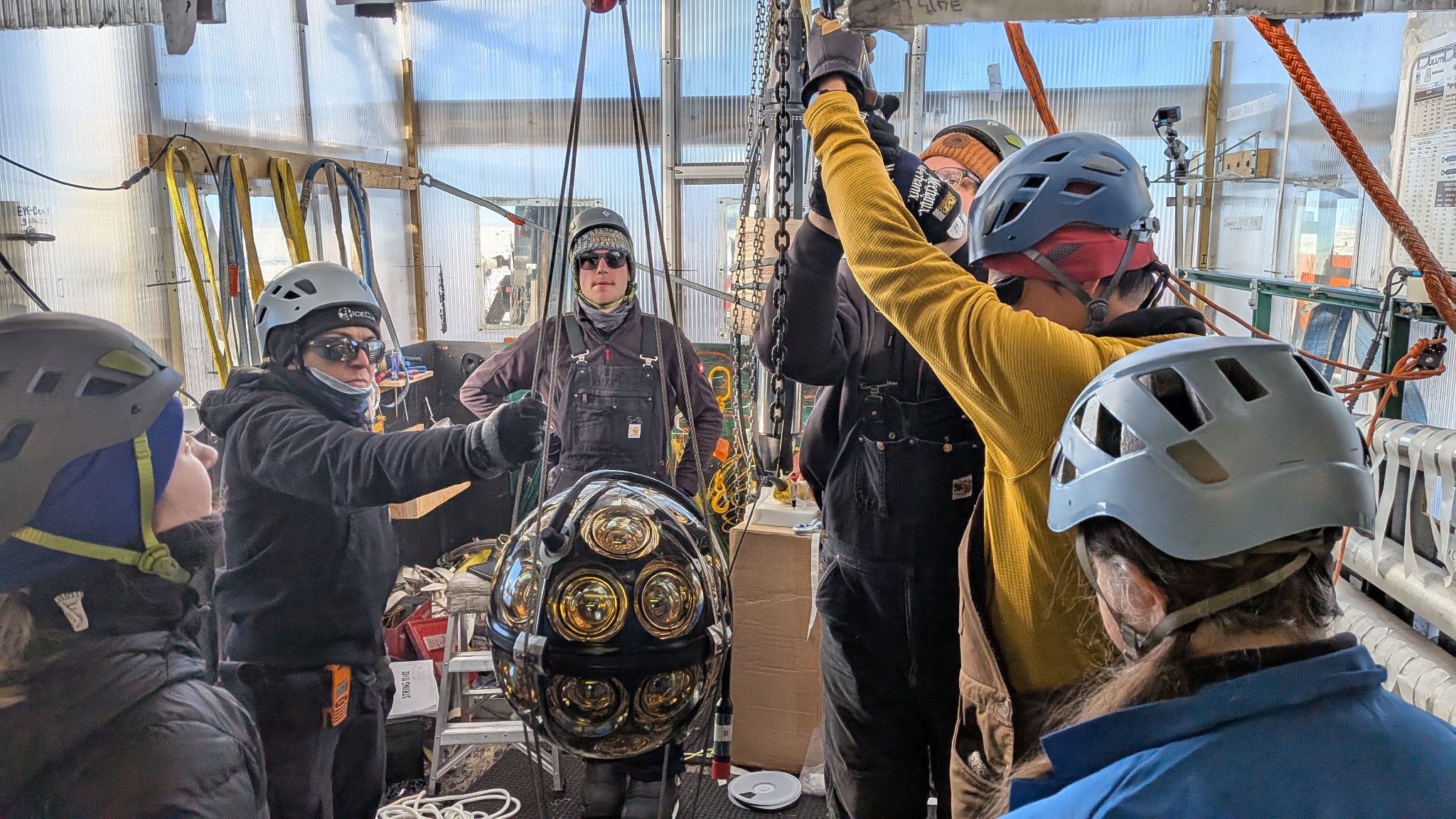
Drillers lowering one of the new sensors into a hole. Photo: Sven Lidström
In 2019, the U.S.National Science Foundation, together with US institutional and international partners, approved funding of the IceCube Upgrade project, an improvement that would significantly push the scientific capabilities of the IceCube Neutrino Observatory. Seven years later, the IceCube Upgrade has now been deployed, marking the first significant expansion of IceCube since its completion 15 years ago. The upgrade consists of six closely spaced and densely instrumented cables, or strings, of light-sensors at the bottom center of the existing 86-string IceCube array, adding more than 600 new and enhanced light-sensors and calibration instruments to the ones already embedded in the ice.
“This enhancement of the detector brings new possibilities for discoveries in neutrino astronomy and particle physics and is a significant step forward for the collaboration,” says Erin O’Sullivan, associate professor of physics at Uppsala University and IceCube spokesperson.
Improving ability to measure neutrinos
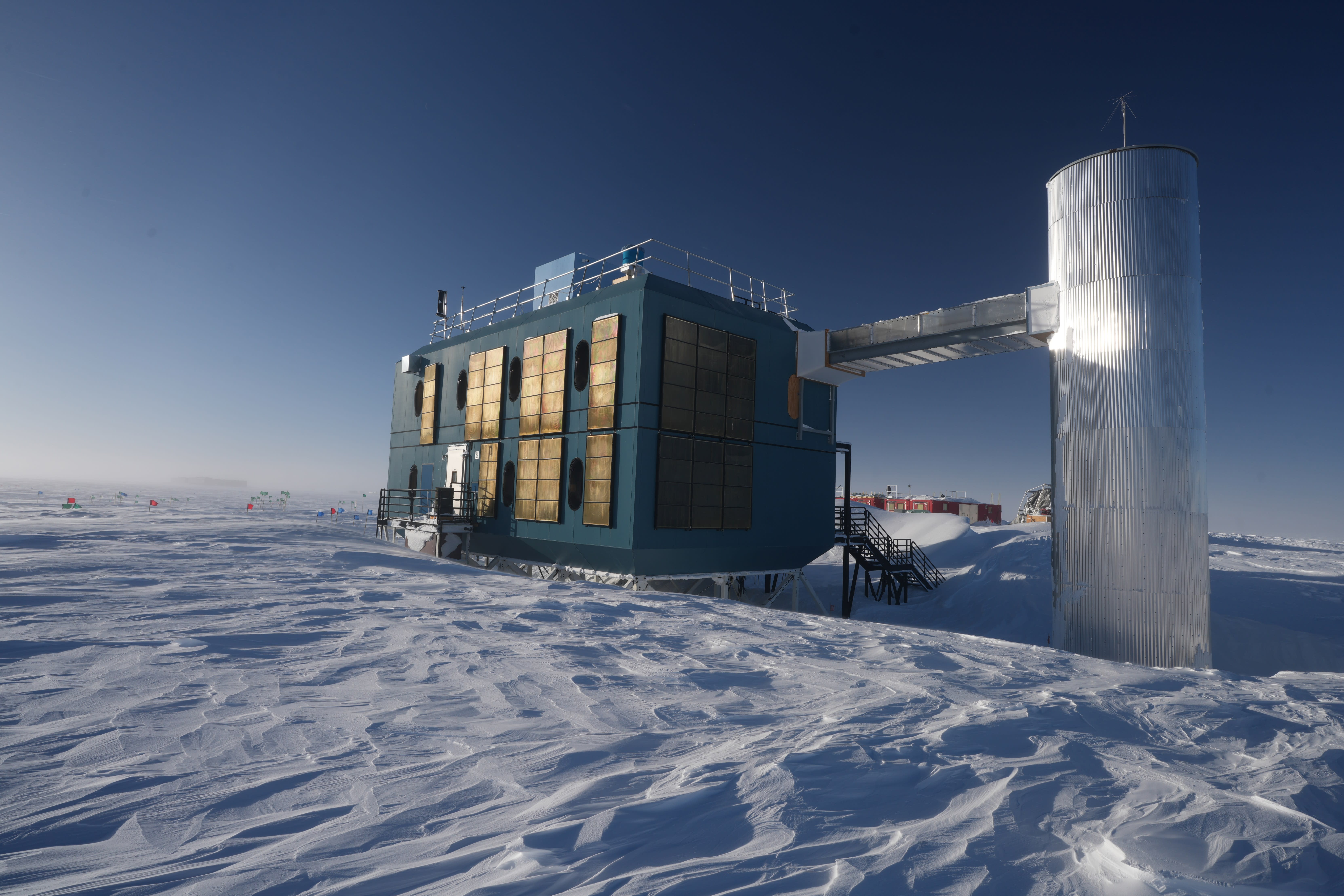
The IceCube laboratory at the Amundsen-Scott South Pole Station in Antarctica. Photo: Ilya Bodo, IceCube/NSF
The pristine quality of the Antarctic ice makes it an ideal medium to capture the faint light emitted by secondary charged particles produced by neutrino interactions in the ice. The IceCube Collaboration, with over 450 scientists from around the world, takes these light patterns to reconstruct the energy and direction of the neutrino in order to determine its origin. The enhancements implemented with the upgrade will allow more precise measurements of neutrino properties like neutrino oscillations, a phenomenon where atmospheric neutrinos can morph into different “flavors”, making IceCube the premier neutrino experiment for oscillation measurements using atmospheric neutrinos.They will also allow scientists to better characterize the surrounding ice, leading to improved reconstruction of neutrino events and a reanalysis of 15 years of archived data. In addition, the upgrade will improve the scientists’ ability to determine the cosmic ray composition and measure neutrinos from galactic supernovae.
Swedish technology central for both start-up and upgrade
Camera developed in Sweden and now used in the ice. Photo: IceCube/NSF
Swedish groups at the universities in Uppsala and Stockholm were among the founding partners of AMANDA, the South Pole prototype that demonstrated the feasibility of ice-based neutrino astronomy. Sweden later made significant contributions to the construction of IceCube, including building about 20 percent of the detector’s sensor modules and developing the deep-ice power and communications cables. For the IceCube Upgrade, Sweden has once again contributed to cable development together with the company Hexatronic in Hudiksvall who manufactured all the cables. Furthermore, researchers in Stockholm and Uppsala developed steerable cameras that will enable linking structural variations in the ice to calibration data. Six camera modules built in Sweden specifically for the upgrade have been deployed in the ice. They are used to monitor the freezing of the water-filled holes into which the upgrade strings were lowered.

Chad Finley Photo: Sören Andersson
”We started receiving the first images from the cameras while the installation of the strings was still ongoing. It was an amazing feeling to see that they worked as intended, two kilometers down in the glacier and under very high pressure as the water in the borehole freezes again, says Chad Finley, professor of physics at Stockholm University.
“The camera images will be used to characterize the properties of the refrozen ice in the holes as well as the bulk ice between the strings. Thorough understanding of the optical properties of the ice surrounding the sensor modules is critical for precise reconstruction of the neutrino directions and essential for neutrino astronomy,” says Olga Botner, senior professor at Uppsala University.
Seismology in the quietest place on Earth
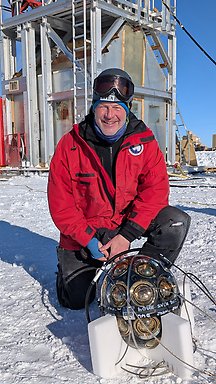
Sven Lidström, one of the drillers.
The upgrade also presented an opportunity to support other scientific endeavors along the way. In collaboration with the U.S. Geological Survey, the crew installed two seismometers beneath the Antarctic ice. These seismometers are the deepest ever deployed and will help scientists monitor earth quakes with unprecedented clarity. The research will be importance for seismologists and the research team has also collected water samples for microbiologists in the US who are looking for signs of life in the deep ice.
The Swedish efforts in IceCube Upgrade are supported by the Swedish Research Council/RFI and the Swedish Polar Research Secretariat with personnel who assisted preparation and installation of equipment at the South Pole. Four Swedes were among the 50 researchers participating in this winter's South Pole campaign, deploying the upgrade strings.
Last updated: 2026-02-18
Source: Communications Office