


Artwork highlights groundbreaking discovery about the speed of light
This year marks 350 years since Ole Rømer demonstrated that the speed of light is finite. This is being celebrated in Copenhagen with an art exhibition by artist Cecilia Ömalm and astronomer Göran Östlin.
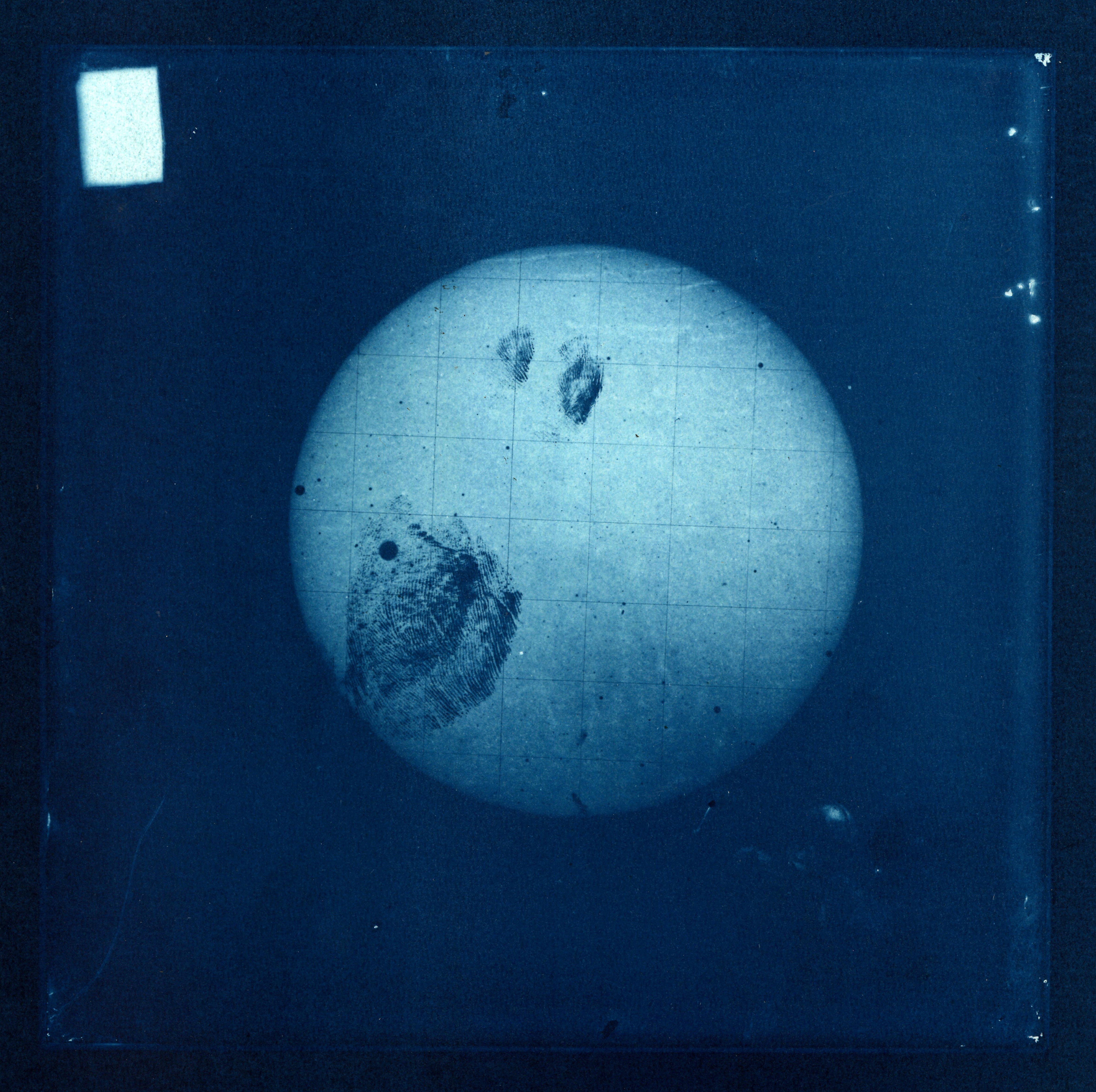
The Venus transit of 1882 from Patagonia with fingerprints from an observer. An image that unites humanity and the cosmos from a unique point in history. Artwork by Göran Östlin and Cecilia Ömalm
In the 17th century, the Danish astronomer Ole Rømer and the French astronomer Jean Picard observed the eclipses of Jupiter's moon Io from the island of Hven — where Tycho Brahe had worked a century earlier — while simultaneous observations were conduceted in Paris by Giovanni Domenico Cassini. Rømer later joined Cassini in Paris and continued his observations of Jupiter's satellites. Based on these measurements, it was in 1676 announced that he had determined that the speed of light is finite — and does not travel instantaneously. This discovery would later become one of the fundamental constants of nature and a cornerstone of modern physics.
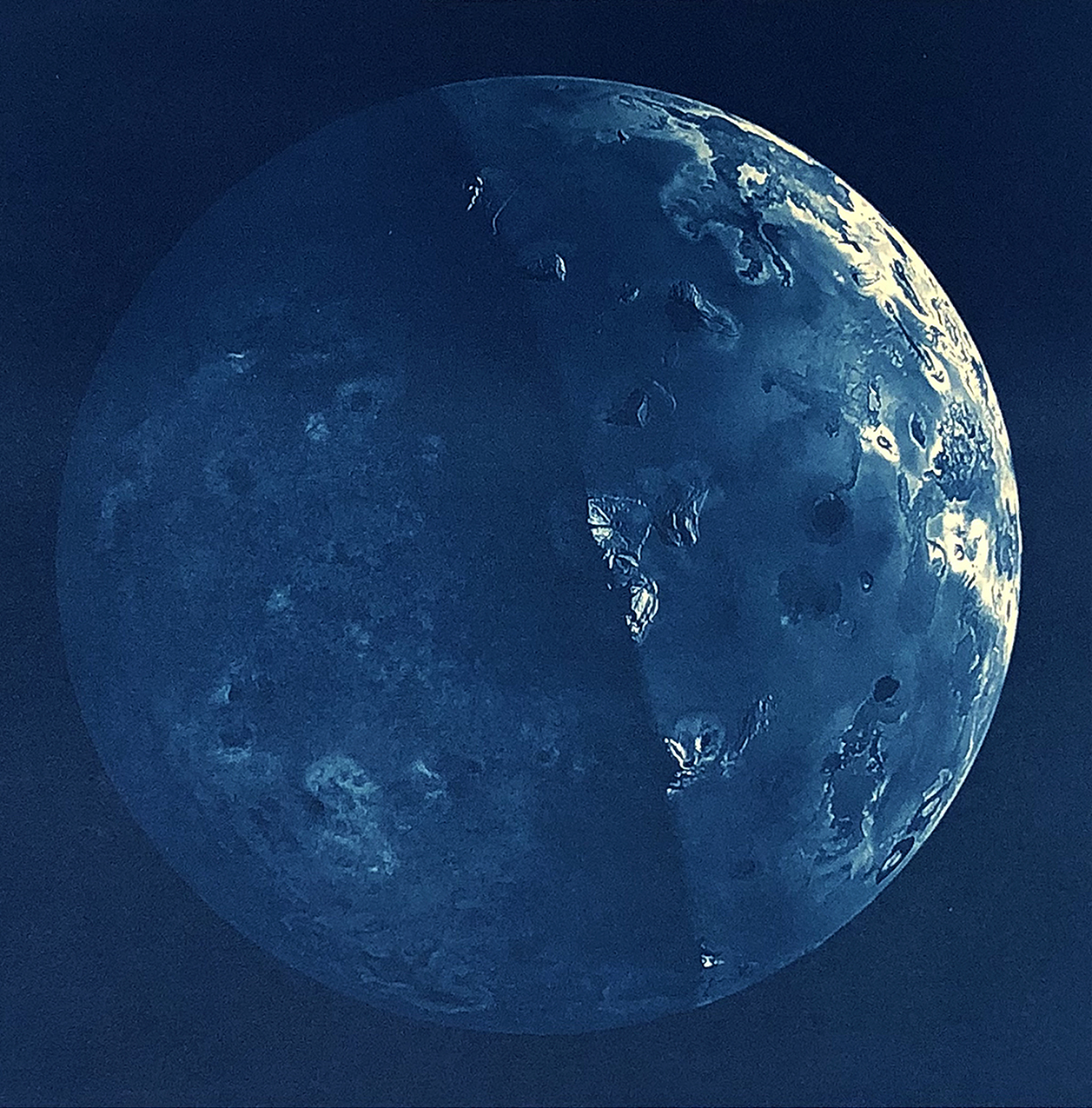
Image of Jupiter's moon Io, the moon that Rømer used to study the speed of light. Artwork by Göran Östlin and Cecilia Ömalm
In 1681, Rømer returned to Denmark. He became head of the observatory in Rundetaarn (the Round Tower) built in 1642 and located in the heart of Copenhagen, which is Europe’s oldest observatory still in use. Today, the tower also serves as an exhibition venue for contemporary art and concerts. In 2026 Rundetaarn will celebrate the 350th anniversary of Rømer's discovery under the theme Light Year 2026. During the year, four special exhibitions will be shown.
Stockholm artists open Light Year 2026
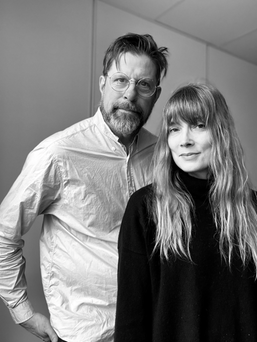
Göran Östlin and Cecilia Ömalm
The first is Ad Lucem by the Swedish duo Cecilia Ömalm, artist, and Göran Östlin, astronomy professor at Stockholm University. Working with the cyanotype process – one of the earliest photographic methods of the 19th century – they depict both historical and contemporary images of the cosmos, creating luminous meditations on light, time, and distance.
“With Ad Lucem, we want to convey how light and time are connected, both in the universe and when looking at the history of photography and science over the past centuries. Then the technology gives a completely different sense of space's incredible depth, compared to the usual colorful press images,” says Cecilia Ömalm and Göran Östlin.
How does it feel to be part of the anniversary celebration?
“It is, of course, very exciting. Our project is about light and originally had nothing to do with Rømer's discovery, but when we saw the call for exhibitions during “Light Years 2026” it felt completely right, and adds another dimension to our project, further connecting Scandinavia and Paris.”
What does it mean for you as a researcher to disseminate research through art?
“It is a different approach, which also broadens perspectives. In fact, art and science are not fundamentally separate phenomena, but both aim to explore the unknown,” says Göran Östlin.
The exhibition with Cecilia Ömalm and Göran Östlin runs from February 6 to April 6.
Read more about the exhibition and Light Year 2026
Last updated: 2026-01-22
Source: Communications Office