


From Crisis to Quality – How CBS Helps Schools and Preschools Facing Great Challenges
With its project “Collaboration for Better Schools (CBS)”, the Swedish National Agency for Education addresses organizers, schools and preschools facing great challenges. Participation in CBS means recognizing existing problems and, above all, being ready to do something about them. "Being part of CBS indicates a will for change and an ambition to create a better school environment. This is something to be very proud of, says Martin Rogberg who is responsible for the scientific support of CBS."
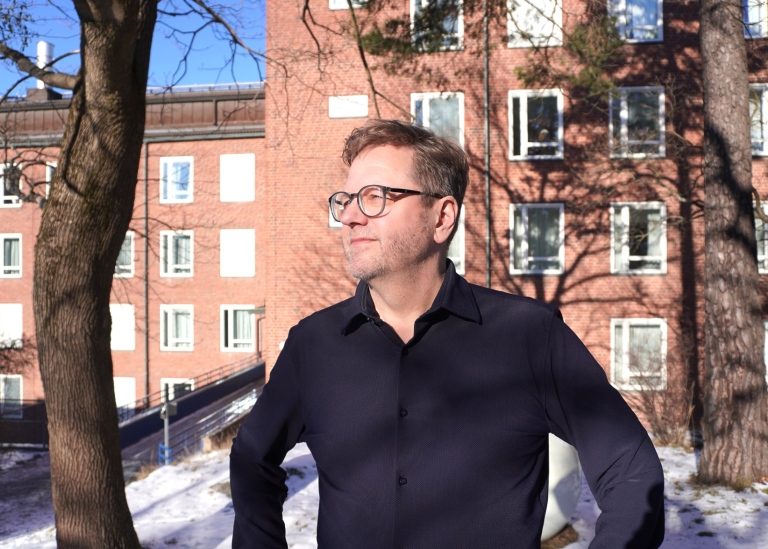
"Without CBS we would never have reached these school units," says Martin Rogberg who is responsible for the scientific support of CBS. Photo: Madeleine Bäckman
Poor learning results, quality and equivalence: this is the reality facing many organizers, schools and preschools around the country. In order to address the adverse developments, the National Agency for Education, commissioned by the government, started CBS, one of the most wide-reaching efforts for school development to be carried out in recent years.
A central part of CBS is building partnerships between the National Agency for Education, institutions of higher education and school organizers. Some 125 researchers and teachers from a number of institutions of higher education have participated each year. The scientific support is led by Martin Roberg at Stockholm University who has previously led several R&D projects and has a background as an organization and leadership researcher. He says that the focus of the project is to adapt the support to the specific needs of every organizer, school and preschool rather that to offer general solutions.
"You could easily assume that as researchers and teachers we would present ready-made solutions for everything, but this is not how it works. Rather, we must identify the things that actually work and build on them. This is a demanding but necessary starting point."
Concrete results and lessons to be learned
Participating schools face great challenges in terms of student turnover, staff turnover, low teaching qualifications, etc. These challenges then result in a negative spiral both in terms of teaching and the overall functioning of the schools.
"We have seen schools which have had 13 principals in nine years. This creates messy organizations where informal leaders can assume power and pull in different directions."
CBS has grown considerably since its inception in 2015. There are now 198 organizers, 498 schools and 161 preschools. CBS is a three-year process, after which the project comes to a formal ending – however, not without having created structures which live on," as Martin Roberg points out.
"We see that arenas for learning often remain after the end of the project. Collaborations between schools, preschools, administrations and staff continue. And once the common learning has taken off, we can often see that the students’ results begin to improve."
The experiences from CBS have clarified the need for long-term and forceful efforts. This in turn has inspired more school organizers to create their own initiatives inspired by CBS.
What happens after CBS?
The CBS mission is now approaching its end and it will be replaced by new targeted efforts from the National Agency for Education to address poor learning results, quality and equivalence. The work carried out by the institutions of higher learning which participate in CBS to strengthen organizers, schools and preschools also continues. Among other things, a National R&D network has been formed in order to carry out studies and spread knowledge about schools facing great challenges.
"Without CBS we would never have reached these school units. They could hardly have been able to request the kind of support that we give them now. We have learnt that the key factor to achieve development goals lies in an organized joining of forces. We have built arenas and created basic trust which is necessary in view of future work, and this is invaluable.
Some comments on CBS
Primary school principal:
"We received help and support to pinpoint and prioritize and also to help my management team prioritize what we should do. Leading, persevering and at the same time also monitoring the process. To keep our eyes open for visible effects. I also had help to sort all information and not lose my focus. Without this help, I don’t know if I and my team would have been able to continue the development work, given the kind of cross-pressure we are facing."
Manager of central pupil health services:
"They helped us find our own solutions and our own strategies. Change takes time, we are now confident that we can handle adverse situations."
Read more about the National R&D centre Collaboration for better schools here (only in Swedish)
Read more about engagement at Stockholm University here.
Text: Madeleine Bäckman, Communication Specialist, REIS
Last updated: 2025-04-09
Source: The Office for Research, Engagement and Innovation Services (REIS)