


Wallenberg grants to three mathematicians
Three of the sixteen grants awarded to prominent mathematicians within the Knut and Alice Wallenberg Foundation's mathematics program go to Stockholm University this year.
The mathematics program is a long-term investment by the Knut and Alice Wallenberg Foundation. During the years 2014–2029, SEK 650 million will be allocated to Swedish mathematical research. Every year, both younger and more senior mathematicians are recruited to Sweden. At the same time, young Swedish mathematicians will have the opportunity to travel the world on a postdoctoral position.
This year, eight young Swedish mathematicians will have the opportunity to travel abroad to start a postdoctoral position, while five researchers and three visiting professors from abroad will be recruited to Swedish universities.
As in the past, the Royal Swedish Academy of Sciences evaluates the candidates nominated by Swedish universities.
“This program is not only of huge significance for Swedish mathematical research, but also for the many other sciences that need mathematical knowledge, so we are extremely happy to be able to help by evaluating the candidates who could be the ones to receive funding,” says Hans Ellegren, Secretary General of the Royal Swedish Academy of Sciences.
Three grants to Stockholm University
Eight researchers receive international postdoctoral positions and funding for two years after they return to Sweden. Two of these researchers work at Stockholm University: PhD-student Axel Ljungström (University of Nottingham, UK) and Dr Simon Cooper, Stockholm University (Kings College London, UK). Five researchers receive grants to recruit a foreign researcher for a postdoctoral position in Sweden, including Associate Professor Daniel Ahlberg at Stockholm University.
Read below about the grants to Stockholm University.
Randomness that drives growth fronts
Associate Professor Daniel Ahlberg will receive funding from the Knut and Alice Wallenberg Foundation to recruit an international researcher for a postdoctoral position at the Department of Mathematics, Stockholm University.
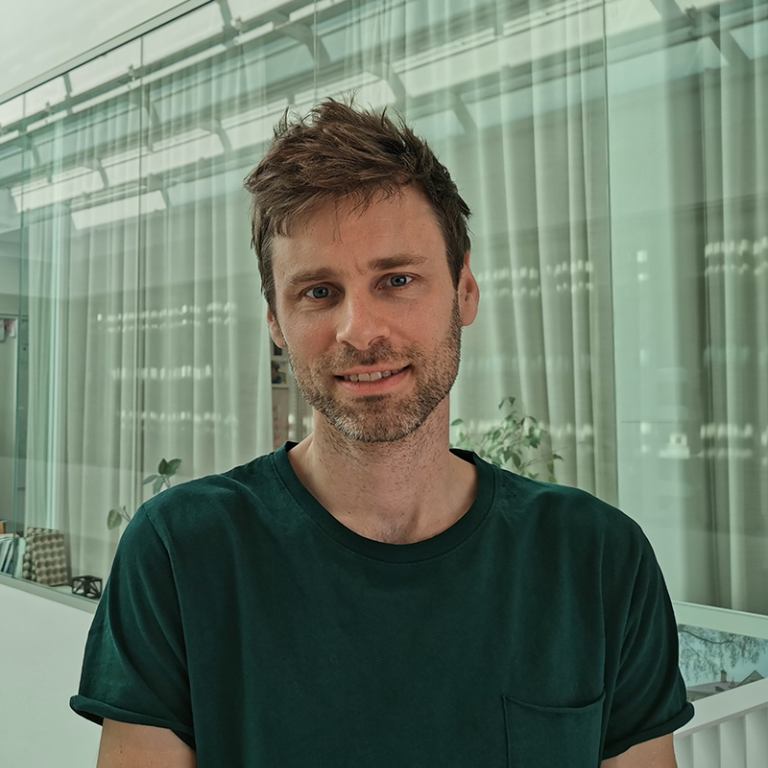
Daniel Ahlberg Photo: Tiffany Y Y Lo
Probability distributions describing the effects of randomness are at the heart of statistical mathematics. The most well-known is the normal distribution, the Gaussian bell curve. The wide occurrence of the normal distribution is explained by the central limit theorem, which shows that the bell curve can be expected by an entity consisting of many small and roughly independent parts. Although the bell curve describes many random processes, both in society and in nature, there are many random phenomena that follow other laws, and mathematicians seek an explanation for their occurrence.
One pioneering step was taken in the mid-1980s by physicists Mehran Kardar, Giorgio Parisi and Yi-Cheng Zhang. Empirical studies have shown that their differential equation (the KPZ equation) describes the evolution over time of the frontier of a growing interface in random spatial processes, such as bacterial growth or a burning sheet of paper. Understanding the emergence of phenomena related to the KPZ equation constitutes one of the main directions in the study of random spatial growth, which is the subject of the planned project.
Deviations from Gaussian behavior, which is predicted by the KPZ equation, is in statistical physics characteristic of critical behavior. One of the main goals of this project is to understand how the underlying geometry contributes to this deviating behavior. One way to address this problem is to explore geodesics (curves that provide the shortest path between two points) and the central role they play in understanding properties of the associated metric space. In this way the project hopes to increase the understanding of how complex phenomena observed in random spatial growth arise.
Photo: Tiffany Y Y Lo
New theories for computer verification
Axel Ljungström will receive his doctoral degree in mathematics from Stockholm University in 2025. Thanks to a grant from the Knut and Alice Wallenberg Foundation, he will hold a postdoctoral position with Professor Ulrik Buchholtz, University of Nottingham, United Kingdom.
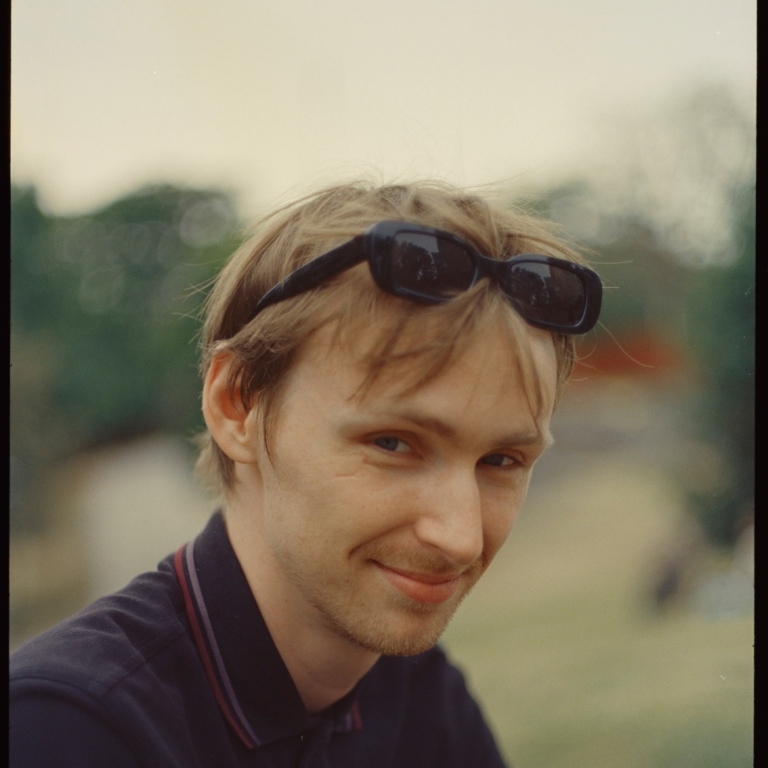
Axel Ljungström Photo: Elias Tingström
The more sophisticated mathematics becomes, the more difficult it is to find errors in mathematical proofs. One way to make proofs more reliable is to verify them using a computation software called a proof assistant. The project aims to develop theories that are the foundation for modern proof assistants. A particular focus is the use of proof assistants for doing homotopy theory, which is a part of algebraic topology.
For a computer to understand the abstract definitions of homotopy theory, a new language is required. Currently, many proof assistants are based on type theories, a collection of logical systems developed to form the basis of all mathematics. One of the most important modern type theories was invented in the 1970s by Per Martin-Löf, now professor emeritus of logic at Stockholm University. Eventually, a whole new mathematical system has emerged – homotopy type theory (HoTT). This is tailored for the computer verification of proofs in homotopy theory.
Homotopy type theory is a mathematical system with its own rules. Often, new mathematics must be invented to be able to express classical homotopy theory in other terms. Another step in the project is to then investigate whether algorithms can be used for conducting computer verification. In this way, proofs can be drastically simplified, even for mathematical theorems that do not appear to be computational in nature.
New insights into the geometry of highly symmetric spaces
Simon Cooper received his doctoral degree in mathematics from Stockholm University in 2024. Thanks to a grant from the Knut and Alice Wallenberg Foundation, he will hold a postdoctoral position with Professor Fred Diamond, King’s College London, United Kingdom.
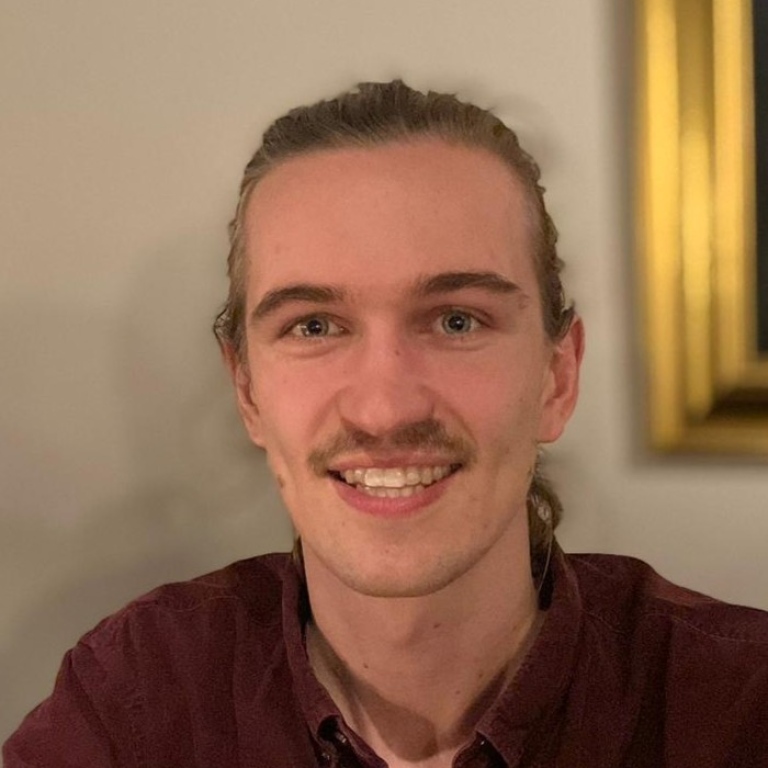
Simon Cooper Photo: Private
The field of arithmetic geometry tries to answer questions about numbers (arithmetic), by studying the underlying structure of the problem (geometry). The first part often seems deceptively simple, while the task of understanding the underlying structure is very difficult.
A famous example is Fermat’s last theorem, which dates from 1637. French amateur mathematician Pierre de Fermat claimed that there are no positive integer solutions to the equation xn + yn = zn for n greater than 2. It took over 350 years for this to be proven by the British mathematician Andrew Wiles, who used modern mathematical machinery, including significant parts of the Langlands programme. First formulated in the late 1960s by the Canadian mathematician Robert Langlands, the programme consists of a large set of conjectures that tie together several areas of theoretical mathematics: number theory, harmonic analysis and algebraic geometry.
In this project Simon Cooper aims to study Shimura varieties, which are highly symmetric spaces that play a vital role in the Langlands programme. The extra symmetries make their geometry unusually accessible. Of particular interest are the tautological rings of Shimura varieties, which contain a lot of refined information about the varieties’ geometry. The aim of the project is to move closer to a complete description of the tautological rings, to better interpret important geometrical features of the Shimura varieties.
Last updated: 2025-03-25
Source: Communications Office