


Sweden's first Master's programme in Environmental Humanities inaugurated
The university's exhibition space Accelerator was at capacity when the Master's Programme in Environmental Humanities was inaugurated on 5 September. Students, visitors, colleagues and researchers from several departments and other universities came together.
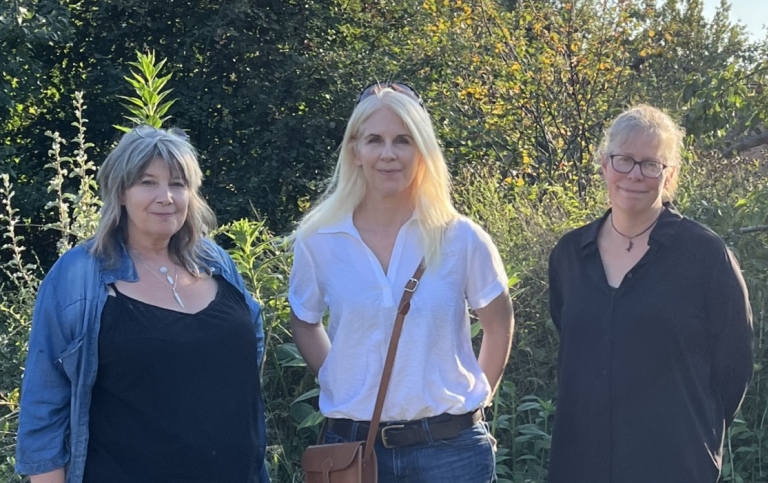
Karin Dirke and Christina Fredengren together with keynote speaker professor Sandra Swart, Stellenbosch University, South Africa. Photo: Jenny Rosen
Environmental humanities has been long established and developed at Stockholm University. Professor in Archaeology Christina Fredengren and Professor in History of Ideas Karin Dirke, together with several researchers, including Associate Professor in English Claudia Egerer, have led the initiative and, for example, managed postgraduate education in the subject. The new master's programme is a collaboration between several departments at the Faculty of Humanities.
Urgent challenges of our time
With its unusual warmth, 5 September was a suitable day for the inauguration, said Stefan Helgesson, Dean of the Faculty of Humanities, in his opening address. The deceptively pleasant heat fitted into a pattern of regular heat records.
We share the same planetary challenges and need to find solutions together. The humanities are an important part of finding solutions, to understand languages, cultures, knowledge and storytelling. Environmental Humanities explores the relationships between nature and culture, the relationships between the past, both historical and geological time, the present and the future, and what we can learn and re-learn to become better ancestors for future generations.
Environmental humanities and human animal studies seek, among other things, to understand the more than human world and the other animals. Humans are storytelling animals and stories affect us. We also need understanding and stories about climate change and biodiversity loss.
The Lion's historian
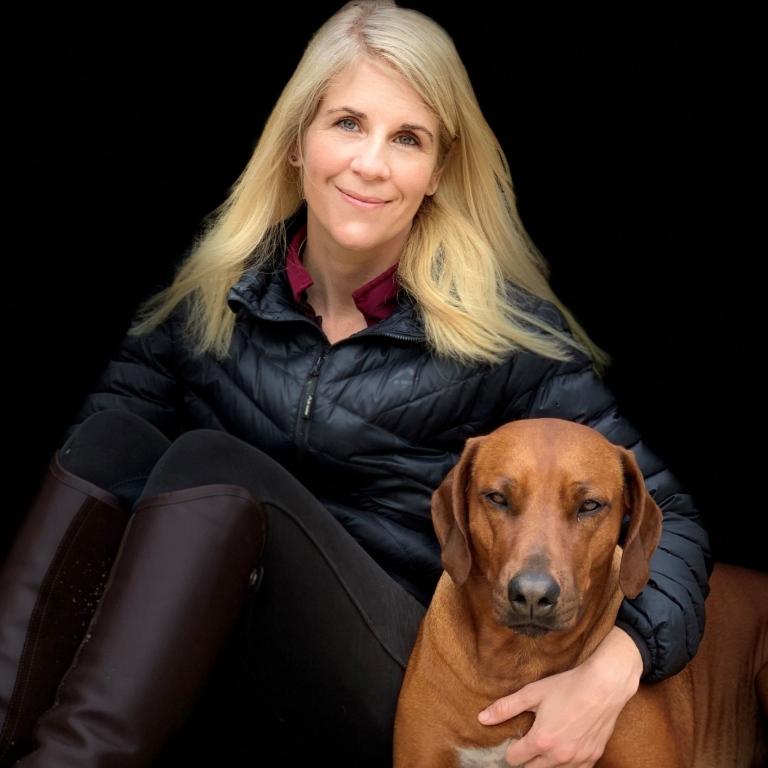
Professor Sandra Swart, Stellenbosch University, South Africa.
The inaugural seminar was keynoted by historian Professor Sandra Swart, Stellenbosch University, South Africa, who gave the lecture ‘Becoming a Lion's Historian: More-than-human solutions for living on planet Earth’. She spoke from her research on the culture and history of lions, and how humans and lions developed a culture of mutual communication and understanding in the Kalahari Desert. This culture, unique to the area and developed over centuries, shows that animal behaviour changes over time and that both human and animal cultures influence their mutual relationships.
"People who live with lions understand lions, because they have to," professor Swart concluded. Scientists could learn from local knowledge about different lion cultures.
Networking and dialogue
After the lecture, many people stayed on to deepen the conversations, mingle and to make contacts for future cross-faculty research collaborations.
"This is not a one-off event, but a beginning," said Accelerator's director Mårten Snickare.
The fact that the open seminar series is held at the university's exhibition space Accelerator is a conscious choice, to create space for dialogue between students, researchers and the public, cross-disciplinary, with art as a conversation starter.
The next event in the Master's Programme's open seminar series will be a book launch on 3/10, on eco-art history. The book's editors, authors and also the artists discussed in the book will be inviting conversations.
Find out more about the Master's programme in Environmental Humanities
The Master's programme starts every autumn. You can also apply for freestanding courses at advanced level each semester.
Master's Programme in Archaeology - Specialisation Environmental humanities
Master's Programme in Ethnology, Specialization Environmental Humanities
Master's Programme in Gender Studies, Specialization Environmental Humanities
Freestanding courses Autumn semester 2024
The courses are open to students with a Bachelor's degree. Open for late applications:
Environmental Humanities I – Environmental Humanities and Deep Time, 7,5 ECTS credits (study period Nov-Jan)
Environmental Humanities II -Human-animal-nature relations over time, 7,5 ECTS credits (study period Nov-Jan)
Freestanding courses Spring semester 2025
The courses are open to students with a Bachelor's degree. The application period for the spring semester is open between 16 September and 15 October.
Environmental Humanities – Environmental Humanities Orientation course, 7,5 ECTS credits
Environmental Humanities III – Environmental Humanities and sustainable development, 7,5 ECTS credits
Environmental Humanities IV – Fieldwork nature/culture environments, 7,5 ECTS credits
Humans and other animals: historical and critical perspectives, 7,5 ECTS credits
Living the Anthropocene: Caring for Nature in a Changing World, 7,5 ECTS credits
Text: Jenny Rosen
Last updated: 2024-09-13
Source: Områdeskansliet för humanvetenskap