


Materials Chemistry II
Future materials are shaping tomorrow’s solutions in energy, electronics, and sustainable development. In Materials Chemistry II, you will explore how semiconductors, polymers, and nanomaterials can be designed, synthesized, and characterized to enable new functionalities and innovative applications.
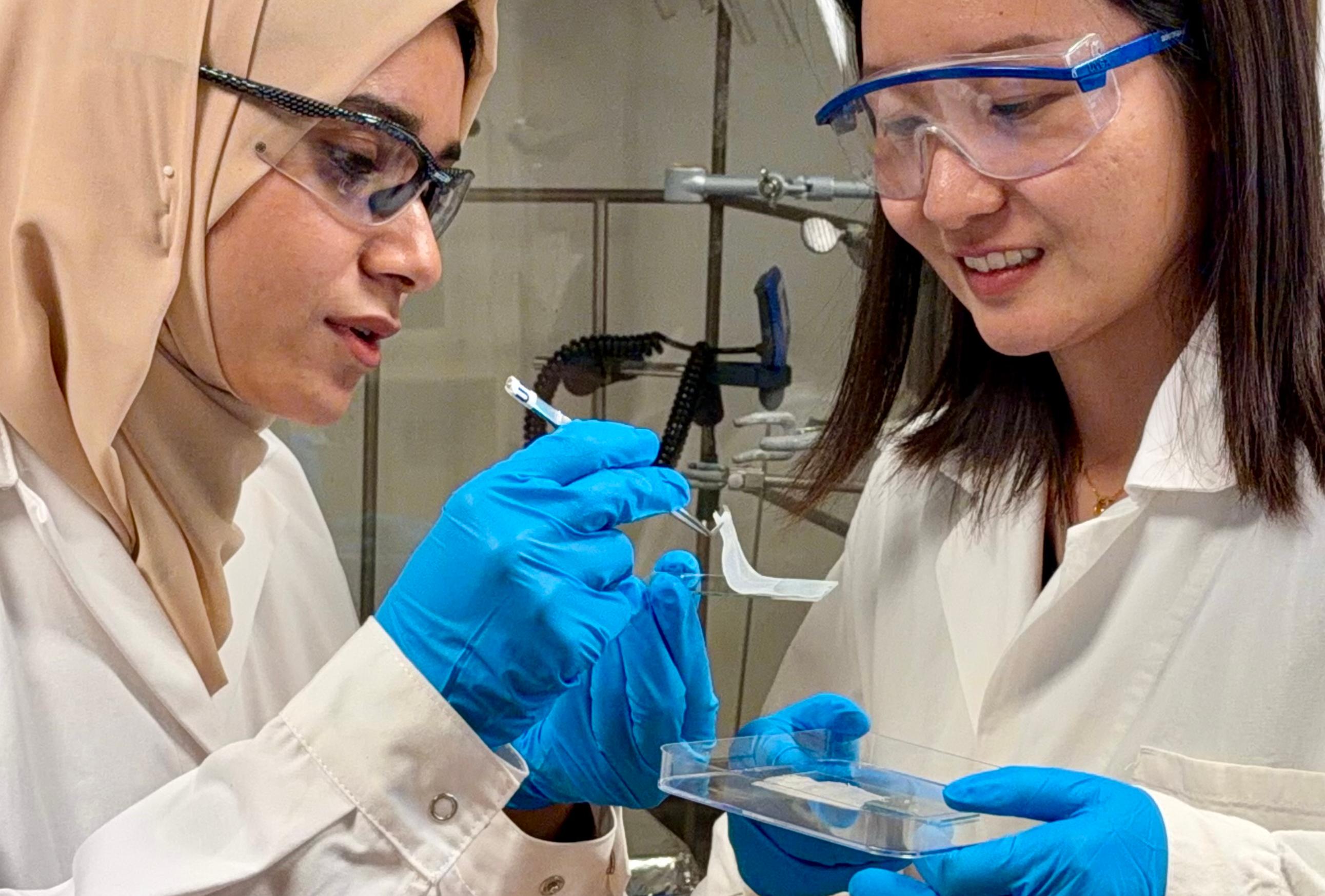
Materials Chemistry II provides an introduction to advanced materials and their applications in modern technology, energy, and electronics. You will explore polymeric materials, including thermoplastics, thermosets, polymer-based biomaterials, and electrically conductive polymers, and learn how these materials are synthesized, classified, and applied in a wide range of technological and medical contexts. The course also introduces semiconductors, transistors, LEDs, solar cells, and lithium-ion batteries, together with the chemical and physical principles that underpin their function and fabrication.
The course further explores nanomaterials, including colloids, their synthesis, and their unique properties. Particular attention is given to quantum dots and one- and two-dimensional materials, whose characteristics can differ significantly from those of their bulk counterparts. In addition, the course addresses important questions related to the origin, toxicity, and sustainable use of materials.
Through lectures, seminars, and laboratory work, you will gain an introduction to modern materials characterization techniques, including microscopic and spectroscopic methods of analysis. The course provides a broad foundation for understanding the relationships between material synthesis, structure, properties, and function, and highlights the vital role of advanced materials in driving both current and future technological innovation.
The course consists of lectures, laboratory sessions, and associated seminars, all of which provide both theoretical knowledge and practical experience of modern materials and materials characterization methods.
Modules
Theory (5 credits)
Lectures are scheduled either from 9:00 a.m. to 12:00 noon or from 1:00 p.m. to 4:00 p.m. Please refer to the course schedule for information on lecture topics and times.
The thematic areas covered are: (1) Semiconductors, transistors, LEDs, solar cells, and lithium-ion batteries, including how such materials are manufactured; (2) Polymers: classification, polymerization mechanisms, polymers for manufacturing, 3D printing and soft lithography, as well as conducting polymers; (3) Nanomaterials: classification, synthesis, properties, safety aspects, and applications of nanomaterials; (4) Materials characterization: microscopic and spectroscopic techniques, surface analysis, and light scattering methods for materials characterization.
In addition, the theoretical component includes a seminar with oral presentations based on literature analysis.
Laboratory Work (2.5 credits)
The laboratory component is project-based and integrates materials synthesis with materials characterization. Students work with modern experimental methods to investigate the structure, properties, and functionality of materials. The results are discussed and presented during the course seminars.
Teaching Format
Theory and Literature Study
The lectures provide an introduction to the different thematic areas of the course and deepen students’ understanding of the theories and models used in modern materials chemistry. Students are expected to complement the lectures with independent study of the course literature. In addition, the course includes a seminar involving a literature study and an oral presentation in small groups.
Laboratory Work
The course includes three mandatory laboratory exercises that are carried out as parts of a larger project. The laboratory work combines materials synthesis and characterization, providing practical experience with several analytical techniques commonly used in materials research.
Examples of methods used during the laboratory work include polymer synthesis, materials fabrication, and materials characterization using spectroscopy, light scattering, surface characterization, and electrochemical methods.
In addition to the laboratory exercises, students work in groups on a thematic research question within polymer synthesis, semiconducting materials, or biological colloidal dispersions. Students study scientific literature in the selected area and present their own experimental results in a broader scientific context. The aim is to develop students’ ability to present and discuss their own results in relation to current research and to deepen their understanding of relevant topics in materials chemistry.
Intended Learning Outcomes
Upon successful completion of the course, students are expected to be able to:
Theory
- explain the principles underlying the function and applications of semiconductors, including transistors, LEDs, and solar cells;
- explain the principles of battery operation;
- describe different types of polymeric materials;
- define a nanomaterial and explain how its properties differ from those of bulk materials;
- discuss environmental challenges associated with the development of new materials.
Laboratory Work
- characterize microstructure and chemical composition using microscopic and spectroscopic techniques;
- synthesize polymeric materials and determine their properties;
- evaluate the electrochemical properties of materials.
Assessment
The theoretical component is assessed through a written examination (90% of the final course grade) and through written and oral presentations of seminar and exercise assignments (10% of the final course grade).
The laboratory component is assessed through written laboratory reports. To pass the course, attendance at all laboratory sessions is mandatory, and all laboratory reports must be completed and submitted within the specified timeframe.
Examiner
Mika Sipponen mika.sipponen@su.se
Bradley D. Fahlman, Materials Chemistry, 4th Edition, Nature Springer 2023, 880 p.
Lecture Materials Provided by the Course Instructors
Additional reading material may be assigned as needed.
Course Director: Mika Sipponen, mika.sipponen@su.se
Chemistry Section & Student Affairs Office: kemi@su.se


