


French III, Literary studies
How can literary texts be analysed and understood in the light of different theories and methods?
The course French III: Literary Studies offers an introduction to key perspectives in literary theory and demonstrates how these approaches can be applied to French-language fiction. Through theoretical orientation and practical textual analysis, students develop analytical tools to interpret literary forms, meanings, and cultural contexts.
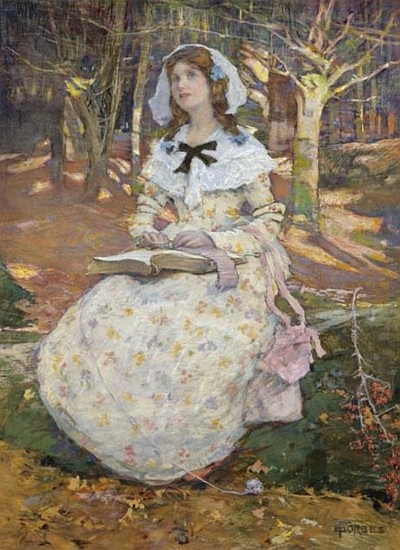
Elizabeth Forbes (1859–1912) . "The Open Book".Photographical reproduction. Elizabeth Forbes, Public domain, via Wikimedia Commons
The course French III: Literary Studies aims to provide students with a foundational orientation in literary theory and methodology. The course covers key theoretical perspectives with both a textual focus—such as formalism, structuralism, deconstruction, and semiotics—and contextual approaches, including reception studies, New Historicism, postcolonial studies, and ecocriticism. Through the application of literary methods to French-language fiction, students develop their ability to analyse literary texts and to reflect on their aesthetic forms, meanings, and cultural contexts.
Teaching is conducted in French and consists of lectures, seminars, tutorials, and practical exercises.
Teaching Format
The course combines theoretical instruction with collective textual analysis and student-centred learning activities. Teaching may take place on campus or online and aims to develop students’ ability to understand, discuss, and apply literary theories to works of fiction.
Assessment
One written exam on campus + one oral examination.
Examiner
Mickaëlle Cedergren
Christophe Premat


