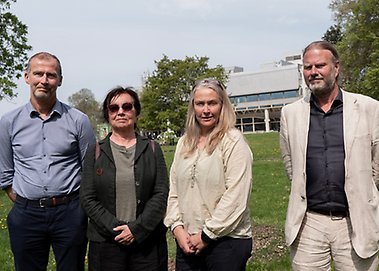
How do media narratives about brain research shape our understanding of the human psyche? This is the focus of an article by Robert Ohlsson, researcher at Stockholm University – and the first to be published in SU Dynamica, the university’s open access platform.
According to Stockholm University's (SU) open science policy, the university's research results and data should be published with an open license whenever possible. In 2024, Stockholm University spent SEK 28 902 206 on 1081 open access articles.
We would like to thank everyone who participated in the survey about the library's study environment. Your feedback is highly valuable and will serve as the foundation for our ongoing work.
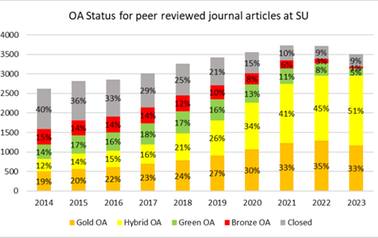
According to Stockholm University's (SU) open science policy, the university's research results and data should be published with an open license whenever possible. In 2023, 90% of all articles with a "corresponding author" from SU were published with open access. Stockholm University's central support for open access is managed by the university library. The library pays for scientific articles published under publisher agreements as well as for articles in fully open access journals. Stockholm University's open access costs for 2023 amounted to SEK 28,903,123. According to Stockholm University's (SU) open science policy , the university's research results and data should be published with an open license whenever possible. In 2023, 90% of all articles with a "corresponding author" from SU were published with open access.
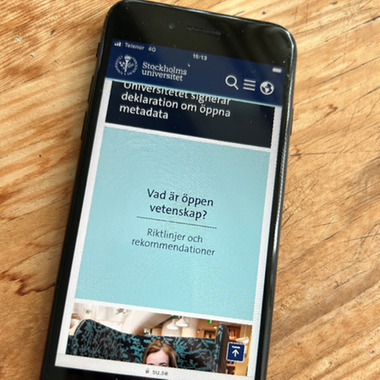
Stockholm University actively promotes an open science system, and as part of making open science an issue for the entire university, the information on open science has been moved to the central website and updated. There is now a new web page with summarised information about open science at Stockholm University at the central website, under the research tab. Previously, information about open science was available on the university library's website, but as a step in making open science an issue for the entire university, the information has been moved and updated. Stockholm University actively promotes an open science system, where everyone has free and open access to scientific texts, research results and research data. The purpose of making science open is to make research results and all parts of the research process more transparent, accessible and reusable for research, innovation and development. With open access to scientific information, the results and processes of research can benefit more people both within and outside the research community, while making research itself more robust and effective.
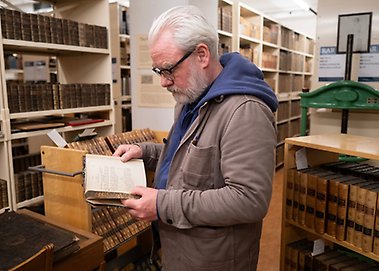
Works such as "The Sorrows of Young Werther" and "Faust" are among some of the most famous works by the leading figure of Romanticism, Johann Wolfgang von Goethe. They have now found their place among the special collections at the university library.
Stockholm University is highlighting this year's Open Access Week theme by showcasing the support available to researchers and doctoral students who wish to work openly, as well as shedding light on the costs that the university incurs each year to access and publish scientific articles.
In order for the chat to be visible on the library's website, you need to accept cookies from 7 March. If you choose not to accept cookies at all, the chat box is hidden and you can´t contact the library that way.
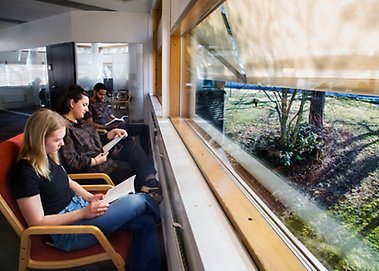
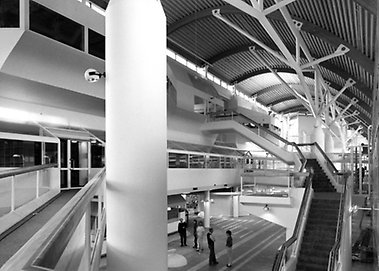
The Frescati Library was completed in 1983, created by the British architect Ralph Erskine (1914-2005), who lived and worked in Sweden for most of his life. Erskine was one of the most prominent figures in Swedish architecture during the 20th century, and always strived to integrate the surrounding landscape in his buildings, which the Frescati Library is a clear example of.
A Nordic collaboration for open publishing has been initiated between Stockholm University, the Arctic University of Norway (UiT), and the Norwegian University of Science and Technology (NTNU).