


Researchers to discuss the Nobel Prize in Literature
Who will be awarded the Nobel Prize in Literature, and what does the prize mean today? To mark the Swedish Academy’s announcement on 8 October, Stockholm University Library is hosting a live broadcast and discussion with literary scholars.
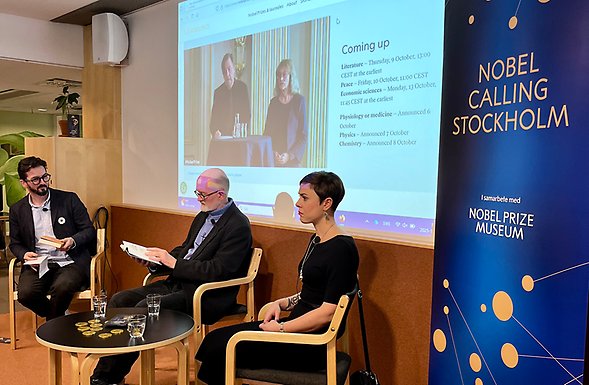
Last year's panelists on stage waiting for the announcement. Photo: Cecilia Burman
The Nobel Prize in Literature is one of the year’s most closely watched cultural events. Each autumn, the announcement raises questions about which authorships are recognised and what role the prize plays in world literature. To mark this year’s announcement on 8 October, Stockholm University Library is organising a discussion in which researchers will share their perspectives on the significance of the prize today.
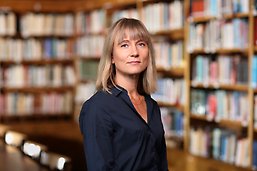
Frida Beckman. Photo: Sören Andersson
The discussion will be chaired by Frida Beckman, Professor of Comparative Literature at Stockholm University.
What would you like to discuss with the panel?
– I am curious about the lines of thought I hope to draw out from the participants, both on the broader significance of the prize and on which authorships they would like to see honoured, and why.
The event will begin with a panel discussion shortly before the Swedish Academy’s announcement from Börshuset in Stockholm, which will be broadcast live on stage in the library. Once the laureate has been announced, the discussion will continue with a focus on the winner.
"Triggering passionate disagreement"
Participants include Bo G Ekelund, Professor of English with a specialisation in literature at Stockholm University, and Christophe Premat, Professor of French with a specialisation in cultural studies and Director of the Centre for Canadian Studies at Stockholm University.
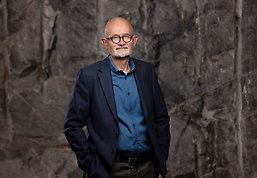
Bo G Ekelund. Photo: Rickard Kilström
What feelings and thoughts does the prize evoke for you?
– Curiosity, of course, and a sense of anticipation as we wait to find out what solution the Nobel Committee and the Academy have arrived at for the impossible problem they face each year. The prize also prompts reflections on how long the high-literary book as a cultural form will continue to capture the public’s interest. I also look forward to hearing my colleagues’ views on what literary value is and how prizes can increase the value of literature precisely by triggering passionate disagreement, says Bo G Ekelund.
– I look forward to the exchange itself and to the opportunity to reflect together on which literatures are currently in the spotlight, and why. It will be exciting to hear the other participants’ perspectives and to discuss whether we can see any changes in which languages, literary traditions or parts of the world are being recognised, says Christophe Premat.
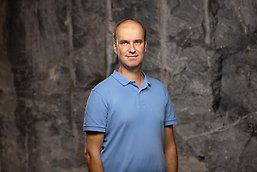
Christophe Premat. Photo: Rickard Kilström
– Another interesting aspect is the significance the Nobel Prize has for Sweden’s position in the international literary world. In the field in which I conduct my own research, Francophone writers and literatures, I notice, for example, that many writers are keen to come to Sweden, not least because of the prestige associated with the Nobel Prize.
When this year’s laureate is announced, what determines whether it is regarded as a bold choice or a safe choice by the Swedish Academy?
– There are no safe choices for the Nobel Prize, nor many that require any particular courage: if they do what is expected, that is in itself unexpected. The strongest norms are about genre, or rather about avoiding so-called genre literature. Two of the most controversial prizes in recent times went to Dario Fo and to Bob Dylan, the latter in particular requiring readers to accept a reassessment of what lyric poetry is. The literature known as speculative fiction, or science fiction, is a very important genre, but it is virtually unthinkable that the Nobel Prize would go to such an author: if N K Jemisin or China Miéville were to receive the prize, it would be bold to the point of foolhardiness, says Bo G Ekelund.
– For me, a bold choice is perhaps less about how well known or unknown an author is, and more about what it is in an authorship that the Academy chooses to direct our attention towards. I find it particularly interesting when the prize highlights an authorship in which, over a long period, a distinctive stylistic expression has developed, a way of writing that in some sense unveils the world and allows us to see it differently. I am thinking here of the image of “revealing” as drawing aside a veil, from the Latin “velum”. Literature can make something visible that had not really been visible to us before, says Christophe Premat.
A way to gather around literature
Even readers who have not followed the Nobel Prize closely may find that the discussion offers new ways into literature. Frida Beckman, who will moderate the discussion, particularly highlights the prize’s ability to focus attention on books and reading.
– Perhaps it will be a moment to gather around literature that becomes even more important as the role of literature otherwise diminishes? Whatever one may think of literary prizes, one major advantage is undoubtedly that literature is at least given a proper moment of attention in most media.
Text: Cecilia Burman
The talk takes place at Stockholm University Library
Read more about the Nobel Calling programme
Last updated: 2026-09-21
Source: Stockholm University Library