


Audrey Moores: Embracing Complexity in Green Chemistry
Trained in phosphorus chemistry, Audrey Moores, approaches chemistry as a field that must continuously expand. She’s now a leading voice in green chemistry and has built a career at the intersection of catalysis, sustainability, mechanochemistry and education. What defines Moores’ work is not only what she studies, but how she insists chemistry must evolve: by facing complexity instead of ignoring it.
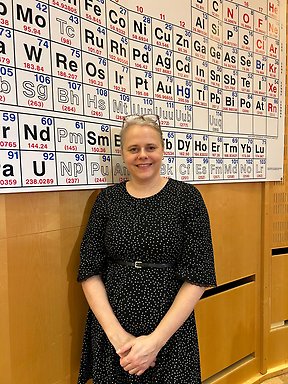
As a co-author of the Stockholm Declaration on Chemistry for the Future, Moores saw the writing process as a necessary moment of reflection for a field that has matured. Green chemistry, she notes, began over 25 years ago with a strong focus on molecules and reactions. Today, it demands a broader lens – one that includes education, toxicology, and environmental assessment. In the Declaration, she made sure this broad perspective was central.
The response to the Declaration confirmed that the timing was right. At McGill University, where Moores is based, students and colleagues received it with enthusiasm. Her research group signed together, and the Canadian Institute for Chemistry was one of the first scientific societies to support it – the same year, they also launched a new green chemistry division. For Moores, these signatures are important: progress in science is also about building shared momentum.
Education is where she sees the Declaration’s greatest potential. By integrating it directly into her teaching, she treats it as a living framework rather than a finished statement. Introducing green chemistry early on, at high school and university levels, is in her view, essential for attracting future chemists and anchoring the field in the present rather than the past. A declaration, she argues, only becomes meaningful when it shapes how people learn, question, and act.
Moores is dedicated to interdisciplinary discussions with engineers, toxicologists, and even philosophers, butalso speaks openly about the challenges of working across disciplines. Collaborating across fields requires time, trust, and a willingness to navigate different languages and priorities. Differences in the scientific language can make communication difficult, and publishing interdisciplinary work remains a challenge in a system focused on narrow specialties. Yet she remains committed to these efforts, convinced that chemistry’s position as the “central science” comes with a responsibility to reach outward, not wait for others to come in.
She approaches sustainability with care. Solutions are rarely simple, also in her own research field, biomass. “Sometimes biomass can be used in a way that is not sustainable. And so, there are these junctions where some parts are sustainable, but others are really not.” Balancing climate action with protecting ecosystems, she says, requires honesty and maturity.
Chemists are trained to handle complexity, and she believes the field is ready to confront difficult questions instead of avoiding them. Despite the weight of these questions, Moores remains optimistic. She frames the future of green chemistry not as a crisis, but as an invitation: to be brave, collaborative, and intellectually rigorous. “We are grown-ups,” she says, with a smile. “We can do it.” Her work reminds us that progress in chemistry is measured not only by innovation, but by our willingness to engage with the hardest questions – and to keep moving forward.
Fact Box: Audrey Moores
- Field: Green chemistry, catalysis, mechanochemistry, sustainable chemistry
- Based in: McGill University, Canada
- Role in Declaration: Contributor and signatory
- Research trademark: Interdisciplinary chemistry with a strong focus on education and sustainability
Last updated: 2026-05-07
Source: Department of Social Work